

Smart Money Shoppers Don't Buy OLED TVs: Here's What They're Getting Instead
We may receive a commission on purchases made from links.
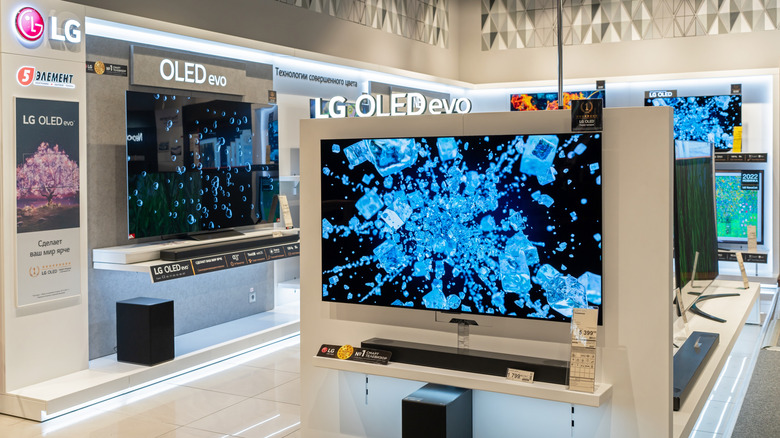
Let's face it: OLED TVs are great. The organic LEDs they use offer amazing picture quality, with vibrant colors, deep blacks, and near-infinite contrast. But while they're great to look at, they don't come cheap: the LG G5 OLED TV, which we consider one of the best TVs you can buy in 2025, will set you back more than $2,000 for a 65-inch model. Even the relatively budget-friendly LG C5 still costs north of $1,000 if you want a 65-incher.
While there are undoubtedly enthusiasts who will happily pay that much for a TV, it's not for everyone. Even if you can technically afford one, some of you may prefer to try and maximize what you have to spend, making sacrifices on the TV to allow for other upgrades to your movie-viewing experience — a soundbar, for example, in case you don't already have one. Thus, if value-for-money is what you're after, an LCD TV might be what you want to consider instead.
LCD TVs come in many shapes and forms these days, with the most desirable ones sporting some sort of mini-LED-based technology, including QNED and QLED. These are all LCD technologies, despite the differing nomenclature, and they can offer compelling alternatives to OLED — and also be more affordable.
A modern LCD TV can be a great choice for your living room
Now, don't get us wrong: we're not saying that LCD TVs are outright better than OLED TVs. However, mini-LED panels, for example, can be a valid alternative to OLED in certain situations. Some OLED TVs don't perform well in bright light; QD-OLED panels, for example, lack a polarizer and thus appear purplish and lose contrast in bright ambient light.
Even WOLED TVs, which don't have the purple tint issue, still pale in comparison to LED TVs in brightness. Tom's Guide, for example, tested the mini-LED Hisense U8N and found that it was five times brighter than OLED TVs in test situations. That'll translate to an appreciable difference in real-world performance, especially if you don't have the luxury of watching TV in a dark room.
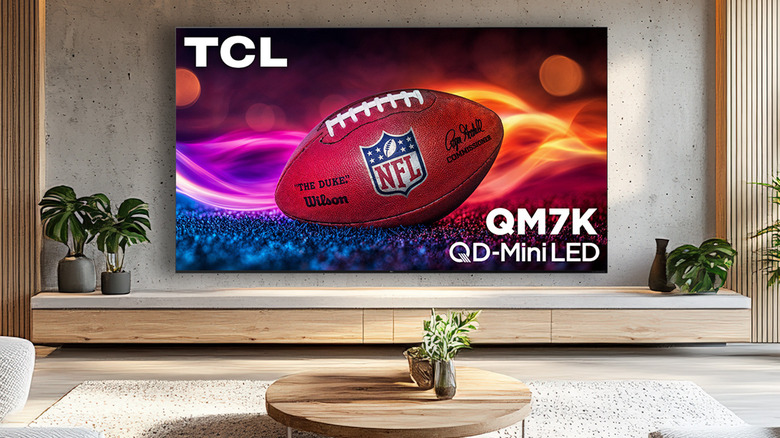
Mini-LED TVs can also offer strong HDR performance, since the smaller LEDs allow for many more dimming zones than older LCD technology. This reduces the blooming issues that older LCDs with direct-lit LED panels had, making for a delightful HDR viewing experience. On top of that, mini-LED-based QLED and QNED TVs, such as the $750 TCL QM7K 55-inch, use quantum dots to offer vibrant, eye-catching colors that can be a joy to watch. Put all of these together, and it's entirely possible to have a great viewing experience without splurging on an OLED TV.