

GM's Making A Half-Billion-Dollar Bet On The Future Of Gas-Powered Cars
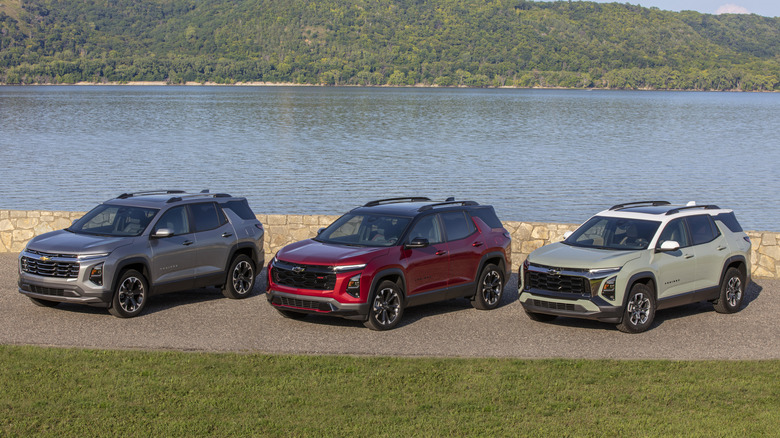
General Motors is still keen on internal combustion. Despite 2025 having been a good year for the conglomerate's EV sales, with offerings like the game-changing Chevy Equinox EV helping it sell 144,668 EVs as of Q3 2025, a couple of recent moves indicate an automaker that's not quite ready to leave its ICE vehicles behind.
On November 24, a GM spokesperson told the Detroit Free Press that the company is set to invest $300 million into Michigan-based Romulus Propulsion Systems, which will build 10-speed transmissions for GM's SUVs and full-size pickup trucks. This Romulus deal goes hand-in-hand with a roughly $250 million investment in GM's own Parma Metal Center in Ohio.
That $250 million is intended to support the manufacturing plans GM has for its Fairfax Assembly (Kansas City, Kansas), Spring Hill Manufacturing (Spring Hill, Tennessee), and Orion Assembly (Orion Township, Michigan) facilities. This $550 million expenditure comes months after GM pumped a cool $888 million into its Tonawanda Propulsion plant in New York, which is set to build the company's new V8 engine.
Speed bumps on the way to an EV future
It's important to note that some GM EVs are also set to benefit from this funding. The Fairfax Assembly plant in Kansas is scheduled to begin building the 2027 Chevy Bolt EV by the end of 2025, while the Orion Assembly facility has been earmarked to assemble gas-powered full-size SUVs and light-duty pickup trucks in 2027. Meanwhile, the Spring Hill Manufacturing facility in Tennessee will continue making the Cadillac Lyriq and Vistiq EVs.
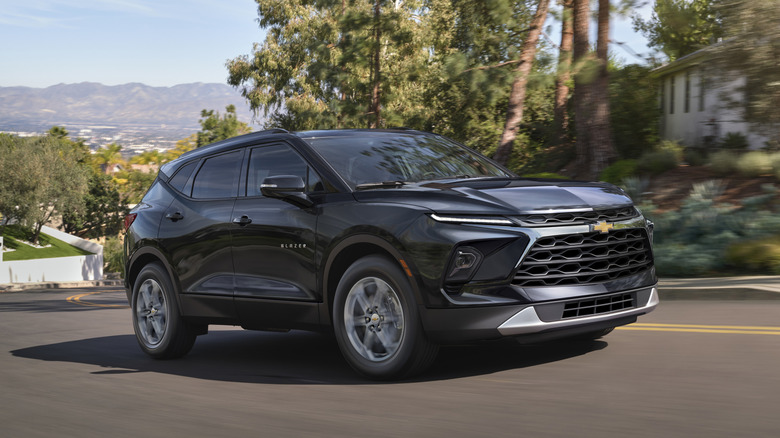
However, there's no way around the fact that GM's ICE portfolio will be the primary beneficiary. For one, EVs don't need the 10-speed transmissions that Romulus will build. Similarly, the three plants that the Parma Metal Center investment supports primarily manufacture gasoline-powered vehicles, including the Chevrolet Equinox, Chevrolet Blazer, Cadillac XT5, and a range of gas-powered full-size SUVs and pickups.
GM's investments come as fellow American automaker Chrysler has been forced to pivot away from its vision of an EV muscle car future. August 2025 saw the launch of the 2026 Dodge Charger Six Pack, which features a V6 engine rather than the divisive EV powertrain the next-gen Charger initially debuted with, and opinions were almost unanimously positive. While neither of these developments is a reason to proclaim the death of the EV — it's still a steadily-growing market — it's increasingly looking like American automakers won't be the ones leading the way to an EV-first (or EV-only) future.