

If Your Car Does This, You're In For A Huge Repair Bill
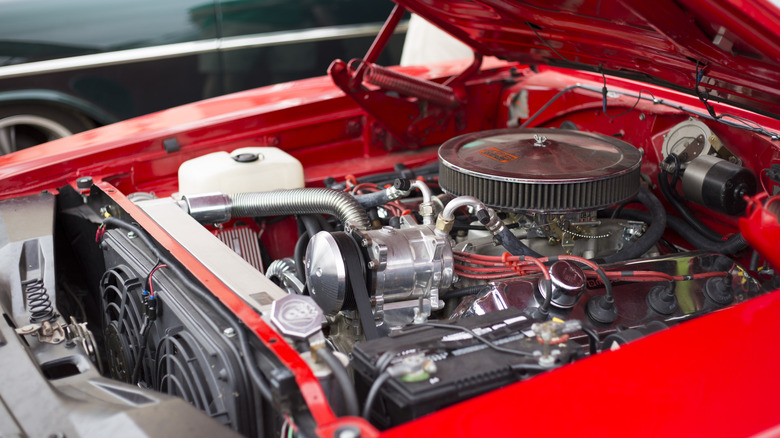
If you've ever owned a vintage car, you are probably used to hearing a wide range of mysterious sounds every time you drive. However, there's one sound that could mean something concerning — and expensive — is happening. The sound is a distinctive and loud clatter that's coming from the engine: a spun rod bearing.
While replacement rod bearings can cost as little as $25, the cost to have a mechanic repair a spun rod bearing can easily exceed a few thousand dollars. It will depend on your specific model, your mechanic's rates, and the extent of damage the rod bearing has caused to the engine. Basically, when the bearing shell is no longer secured, it will spin in place and potentially seize on the crankshaft journal. If metal bits from the rod bearing get into the engine or the constant spinning causes too much friction, various components could be damaged. Taking apart an engine and potentially replacing it can become very costly very fast due to the labor and parts involved. If you hear that sound, immediately contact a trusted mechanic before it worsens.
What causes a spun rod bearing?
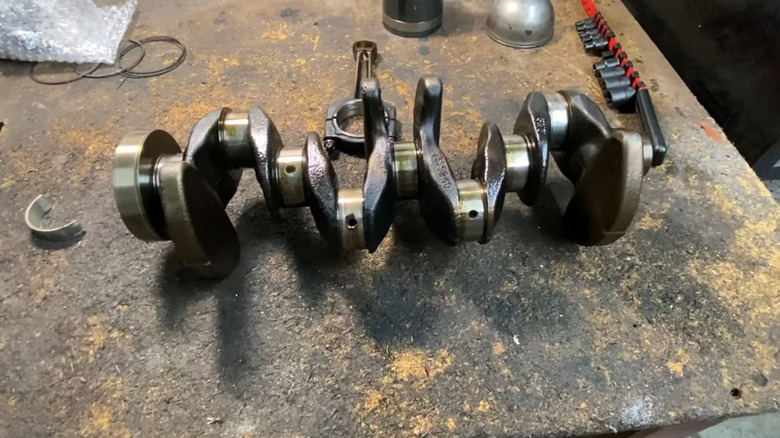
The main culprit of a spun rod bearing is a lack of oil. The reason oil is so important — and why you must always have your fluid levels checked — is that the oil lubricates all the engine's components. The lubrication reduces friction, which is a big deal for the crankshaft. The crankshaft converts the pistons' up-and-down movements into motion that drives the car's wheels. Due to the crankshaft's constant rotations, it definitely needs oil to avoid friction and overheating.
Rod bearings are found on the crankshaft journal. If there is a lack of oil, the friction between the rod bearings and the crankshaft journal will cause the rod bearing to heat up and become damaged. The tabs holding it in place will often fall off, causing the rod to spin repeatedly. This leads to that knocking sound — a warning to get the engine checked out before it seizes completely. The engine can sometimes be saved, but it won't be cheap. It's definitely easier to periodically check your oil level, especially if you're driving an older car, since many burn oil faster than their modern counterparts — also make sure you're using the right kind of oil for your older model.