

Stihl Chainsaws Are Great, But The Smart Money Buys This Brand

We may receive a commission on purchases made from links.
If you're a professional arborist or firewood supplier, it's hard to argue against the logic of using a Stihl chainsaw. The Stihl brand frequently tops the charts of heavy-duty chainsaws, and claimed the top spot in our comparison of major chainsaw brands. However, Stihl's warranty isn't the best and not everyone can afford to (or should) invest $540 to buy a saw like the Stihl MS 271 Farm Boss from Ace Hardware. A suitable alternative to the Stihl, based on personal experience with a variety of chainsaws, including Stihl and Echo, and side-by-side testing between brands by professional reviewers, would be the Echo CS-4920, available at Home Depot for $399.
Both saws feature relatively large displacement two-stroke engines, 50.2cc for the Stihl and 50.1cc for the Echo, with manual choke and pull-start mechanisms. The Stihl powerhead is heavier, with its listed weight at 12.3 pounds compared to the Echo at 11.1 pounds. Stihl recommends using an 18-inch guide bar on the MS 271, whereas Echo lists available guide bar lengths for the CS-4920 as 16, 18, and 20 inches.
Warranties from both brands are reduced if the saw is used in a professional capacity, whether in for-profit or non-profit enterprises. Echo has the better warranty on its chainsaw, with five years of protection for consumers and one year for commercial use. Stihl's warranty coverage is limited to one year for consumers and three months for commercial use on gasoline-powered rear-handle chainsaws, like the MS 271. Top-handle gas saws are limited to three months of warranty coverage regardless of use.
The best budget friendly entry-level chainsaw alternatives
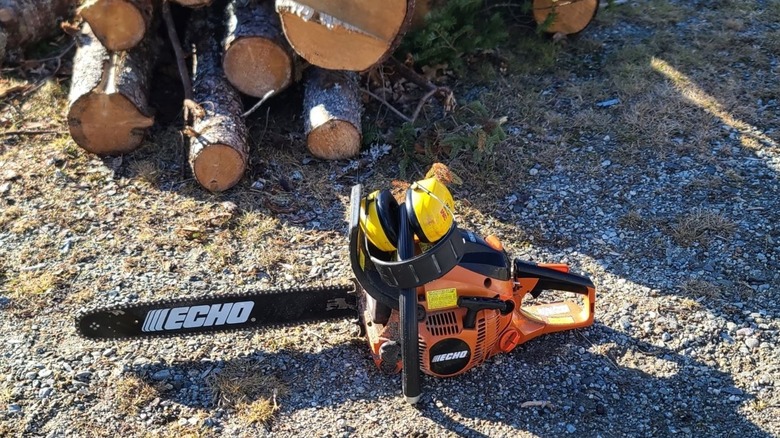
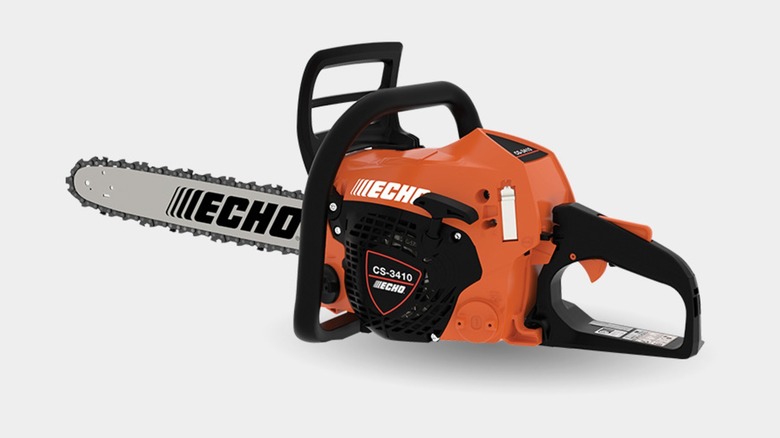
After testing a bunch of chainsaws, Popular Mechanics named the Echo CS-3410 14-inch chainsaw as the gas chainsaw offering the best value. While the Home Depot sells the Echo CS-3410 for a budget-friendly $219.00, the entry-level Stihl MS 162 is comparably priced at $219.99 at Ace Hardware. That revelation is somewhat surprising given that Home Depot's pricing is cheaper than Ace Hardware's in almost every department.
While we've discussed the differences between Stihl and Echo using their larger chainsaws, it's worth comparing their entry-level saws as well. Both saws again use two-stroke engines, the Echo CS-3410 displacing 34.4cc compared to 30.1cc for the Stihl MS 162. Despite its 14% larger displacement, the Echo CS-3410 is lighter with a dry weight of 8.2 pounds, 1.7 pounds less than the 9.9 pounds Stihl lists as the powerhead weight of the MS 162.
Stihl chainsaws generally produce more torque than comparable Echo models. The extra power delivers a higher resistance to stalling and faster cutting times, as demonstrated during testing by Project Farm. While torque can be advantageous, Echo chainsaws have other advantages.
Project Farm went as far as measuring the force required to pull start both brands, pitting the Stihl MS 250 against the Echo CS-400. The Stihl required 46.8 pounds of pulling force to crank the engine, while the Echo turned over with just 33 pounds of force.
Echo chainsaws are less finicky to start in my experience, a sentiment echoed (pun intended) across the usual forums. In the r/Chainsaw subreddit, LodestarSharp agrees, saying that after about ten years of experience, they "focused on Echo saws solely because of ease of start."
Why Echo chainsaws are the brand smart money buys
The price difference between each brand's premium chainsaws is one reason Echo gets the nod over Stihl. Echo chainsaws are tough, durable, and easier to use than Stihl. They also have a better warranty, which makes even similarly priced Stihl chainsaws less attractive.
I'm sure chainsaw enthusiasts loyal to a particular brand will chime in with opinions one way or another. After all, comparing chainsaw brands is much like comparing pickup truck brands.
I'll concede that at the top end of its lineup, Stihl chainsaws have little competition and make some of the best chainsaws. However, when it comes to consumer-grade saws, my experience with Stihl left me wanting. But I didn't just take my word for it. I searched for expert advice as well as anecdotal accounts of chainsaw brand preference on multiple forums, where Echo was recommended over Stihl for the casual user time and again.
Methodology
I came to this conclusion, in part, based on years of using chainsaws to cut firewood, clear storm debris, and trim the occasional tree limb. I've used chainsaws from Stihl, Echo, Husqvarna, Craftsman, and Poulan over the years, including a Stihl Farm Boss and Echo Timber Wolf.
Professional reviews from YouTuber Project Farm and user accounts posted on Reddit, Lawnsite, and The Garage Journal also factored into selecting Echo as the brand smart money buys instead of Stihl. However, one of the most convincing arguments came from the brands themselves: the difference in the warranties.