

This Cheap DIY Method Helps Get Rid Of Hard Water Stains On Your Car's Windshield And Windows
Keeping a car, truck, or SUV clean can sometimes feel like an endless task, even if you follow all the DIY car cleaning tips. After all, the moment you finish giving those vehicles a good rub-down, they start collecting dirt, dust, and grime again as you traverse every road. They're even subjected to those elements if you simply leave the vehicle parked in your driveway.
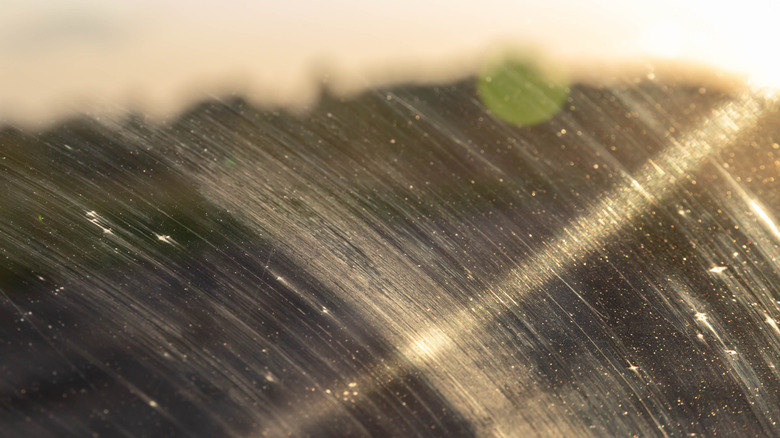
While a little grime is not always noticeable to the naked eye, a dirty windshield is far more difficult to ignore, especially because it can sometimes limit visibility on roadways. When glares from the sun and headlights come into play, it can make driving downright dangerous. That's particularly true when it comes to hard water stains on a windshield, which can be difficult to remove, even with a good car wash.
In fact, just washing your car may contribute to the buildup of hard water, which generally results from the collection of dissolved calcium and magnesium, minerals that are often left behind after water evaporates. Once hard water stains set in, they can be pretty difficult to remove, even with car cleaning solutions. There are other methods to remove those stains from your windshield, of course, with DIYers using everything from lemon juice to steel wool to get rid of hard water. There is, however, a safer and, perhaps, easier way to remove hard water stains from a windshield using just water and distilled white vinegar. Here's how.
Removing hard water the cheap and easy way
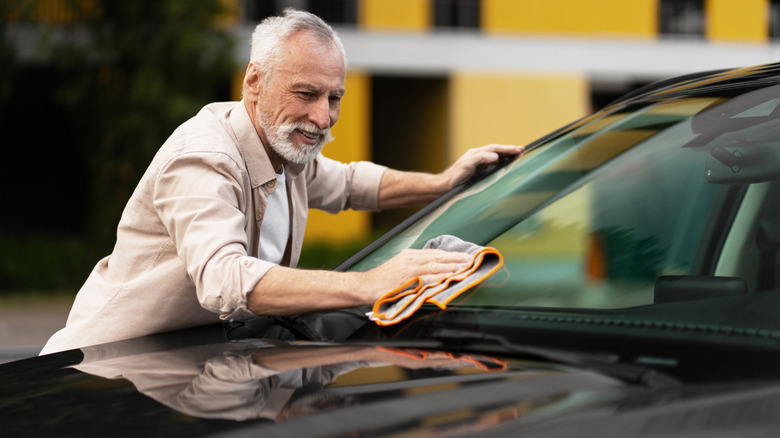
Just like baking soda — which, by the way, may also aid in the removal of hard water from our vehicle's headlights — distilled white vinegar is one of those common household items that can be used in a dozen helpful ways. Distilled white vinegar's mild acidity is helpful in breaking down alkaline mineral deposits without harming the glass itself. When using it on your windshield, you'll also need water, a spray bottle, a good scrubbing towel, and a dry microfiber towel. With those items on hand, here's what you need to do after you clean your windshield as you would during a normal car washing.
- Make a 50/50 mixture of water and distilled white vinegar inside of the spray bottle.
- Spray the solution on the affected sections of your windshield, ensuring you completely cover them.
- Allow the solution to dry, then reapply it.
- Wet the scrubbing towel and vigorously wipe down the covered areas.
- Dry the windshield with a clean microfiber towel.
If the hard water stains are not completely removed, reapply the water and distilled white vinegar solution and repeat the process. You may need to repeat these steps several times before the stains are completely gone. It should go without saying that cleaning your windshield with a water and distilled white vinegar compound on even a semi-regular basis will help to squash hard water stains before they become a problem when you are on the road.
Other methods to remove hard water stains on your windshield
On the off-chance that the distilled white vinegar method doesn't clean your windshield the way you need it too, there are more aggressive ways you might consider to remove those hard water stains. However, some methods may end up damaging your windshield if not done carefully.
Steel wool is, obviously, included in that list, though purveyors of this method insist that a 0000-grade product is safe so long as the scrubbing pad is properly soaped and lubricated and you don't scrub too hard. Likewise, you might also try using a razor blade or scraper to remove the hard water, though the potential for a scratched windshield there should be obvious.
As previously noted, a baking soda and water mixture will also work, though you'll need to be careful with the mix, as the semi-abrasive compound may damage the glass if it's too dry. You may already know it, but a clay bar is one of the methods many car owners prefer to remove hard water stains from a vehicle's body, and it can be equally effective on such stains spotting your windshield. In the end, you may also achieve a spotless windshield by using common glass cleaning products.
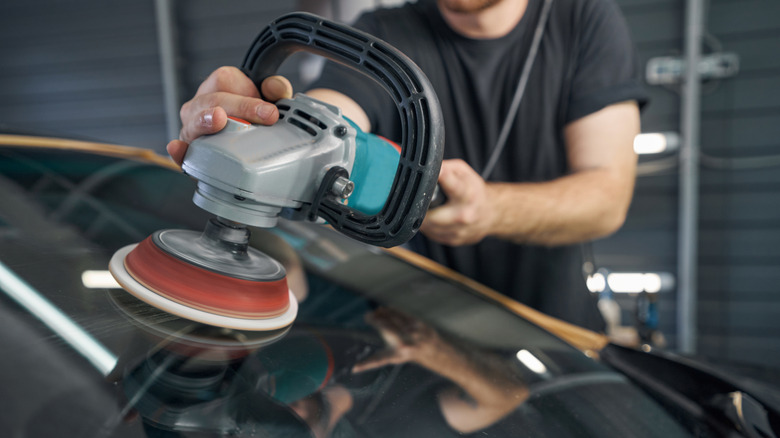
To that end, several companies manufacture specific compounds and polishes designed to combat hard water stains. These are typically applied the same way as a normal car polish, and for the best results on your windshield should be removed via a buffer or a buffing pad. And yes, applying a rain repellant to your windshield after the removal of hard water may help prevent future buildup.