

Neither In The Garage Nor The Basement: Here's The Safest Place To Store Propane Tanks
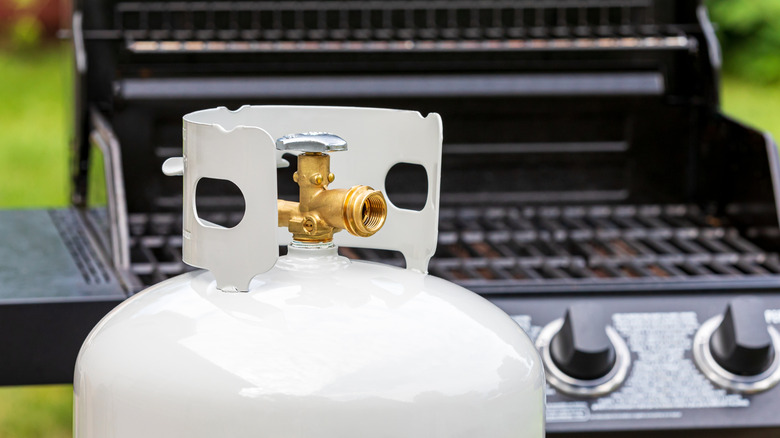
Many people may only use their propane tank to grill or BBQ for outdoor gatherings in the summer. If that's the case and you're planning to store your propane tank this winter, you'll need to find a safe place to keep it. You might be tempted to store it indoors, but this is definitely something that you should never store in your garage or shed. Instead, the safest place to keep it is outside.
The storage place you select should be well-ventilated and a safe distance away from your home. The National Fire Protection Association has standards outlined in its code, NFPA 58, on how far away tanks need to be from vents and building openings, but these will vary depending on the water capacity of the container and whether it is refilled on site. Once you have a spot, use a flat and firm surface, like concrete or thick wood, and set the tank on top, right side up. Keep the tank away from open flames, electrical wiring, and equipment. If you're storing it for the winter, covering it isn't necessary, as colder temperatures won't negatively affect it.
Whether you're storing your tank for the winter or during the warmer months, it's important to keep it out of direct sunlight. This way, the tank remains as cool as possible, and you won't run the risk of it heating up too much. Once you've taken all the appropriate steps and your tank is properly secured, keep a regular check on it. It's the only way to ensure that leaks and signs of distress are caught immediately, before any serious problems can occur.
Why it is important to store your propane tank correctly
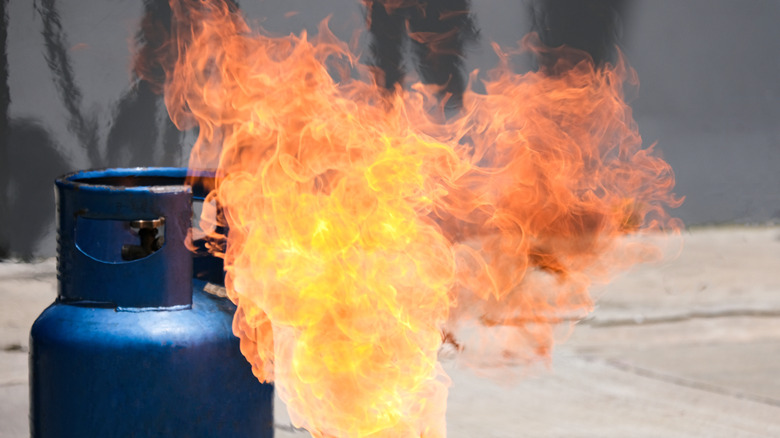
Some sites say storing your propane tank in a detached garage is okay because it isn't physically attached to your home. However, this goes against the National Fire Protection Association recommendation that tanks be installed outdoors. This is safest because it also keeps the tank away from fuse boxes, circuit breakers, and other electrical equipment. Any power source, including electrical outlets, are potential ignition points.
If leaks occur with a propane tank indoors, it can create a dangerous situation. Propane has an added odor, so if you caught it in time, you could detect it and know to turn off the valve. However, the big risk lies in undetected leaks coming into contact with a heat source. Plus, propane, though non-toxic, can displace oxygen, making it hard to breathe and leading to dizziness.
Using a propane grill in an enclosed space can cause problems as well. Improper ventilation could lead to incomplete combustion. If this happens, burned propane can produce carbon monoxide. This is an odorless gas, so you won't even realize you're breathing it in. Carbon monoxide poisoning can occur, and even small amounts can cause a serious reaction.