

How Long Do Diesel Engine Turbos Tend To Last? (And Can You Extend Their Lifespan?)
We may receive a commission on purchases made from links.
I first fell for turbo-diesels many years ago. A sporty-looking Rover model arrived in the family garage in a dreadful state — the owner had replaced the head gasket and then promptly fired it up without adding any engine oil. The result was a car that was beyond economical repair but suited my need for a new project perfectly. This car was something of an epiphany for me. Up until then, although I knew the difference between a diesel and a turbodiesel engine, I still avoided diesel like the plague. I thought they were noisy, dirty, and lacking in performance, but I went ahead anyway. I rebuilt the engine, replaced the turbo, and ran the car for years, loving every minute of it. Sure, it did initially have the performance of an elephant wallowing through mud, but then that turbo kicked in, and wow... I came to love the whine of the turbo whirring up and the surge of power that accompanied it.
Since then, through years of repair work and hands-on ownership, I've worked on and maintained dozens of turbo-diesel engines — and I've seen firsthand how long they can last with proper care, and how quickly they can fail without it. Under ideal conditions, a diesel turbo can comfortably last well over 150,000 miles without issue. However, I've also seen them give up much sooner, often due to simple oversights in maintenance or poor driving habits.
Factors affecting turbo lifespan (why some last longer than others)
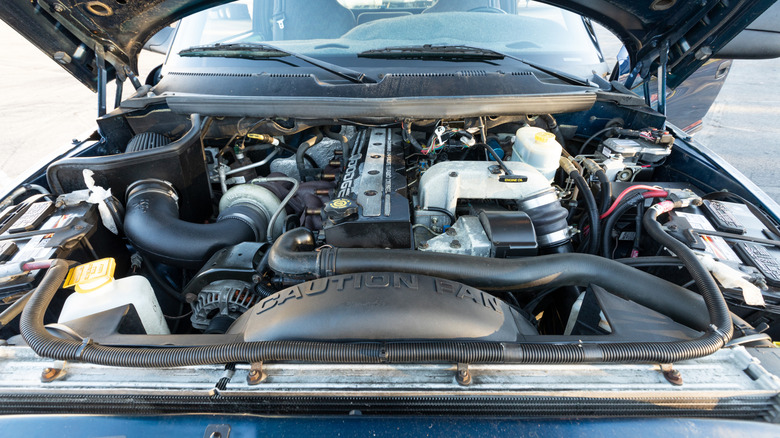
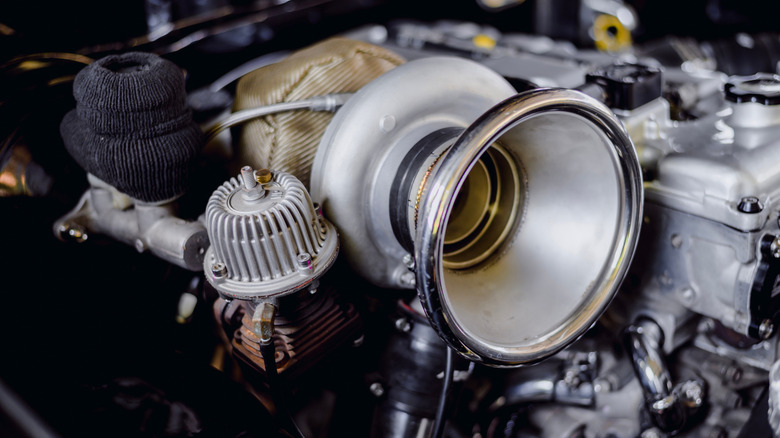
A turbocharger is an incredible piece of engineering wizardry, although the premise is simple — a turbo uses engine exhaust gases to spin a turbine at speeds often exceeding 150,000 rpm, forcing more air into the engine to boost power and efficiency. For comparison, the CF6-80 engines on Boeing 747s have a maximum rotation speed of a leisurely 10,850 rpm.
At such high rotational speeds, turbochargers operate under extreme stress and heat, with exhaust gases entering a diesel turbo at a toasty 1472 Fahrenheit (800 Celsius) during hard use. This places enormous demands on internal components such as bearings, turbine blades, and seals. The precision engineering required to withstand these conditions means that turbocharger durability varies widely based on a range of factors. Primarily, anything that spins at such rates will need to be properly lubricated with high-quality oils. In my experience, this is the top killer of turbos. Balance is also another factor, an unbalanced turbocharger will struggle to reach any sort of decent mileage before it fails. Commonly, a poorly balanced turbo can result in oil leaks, power loss, and even fan blade damage. In the worst cases, this can result in a turbo lifespan counted in days rather than years. Driving style is another factor that can impact the lifespan of a diesel engine turbo. Bearing this in mind, let's look at some of the best practices for extending the life of your diesel turbo.
How to prolong the life of a diesel engine turbo
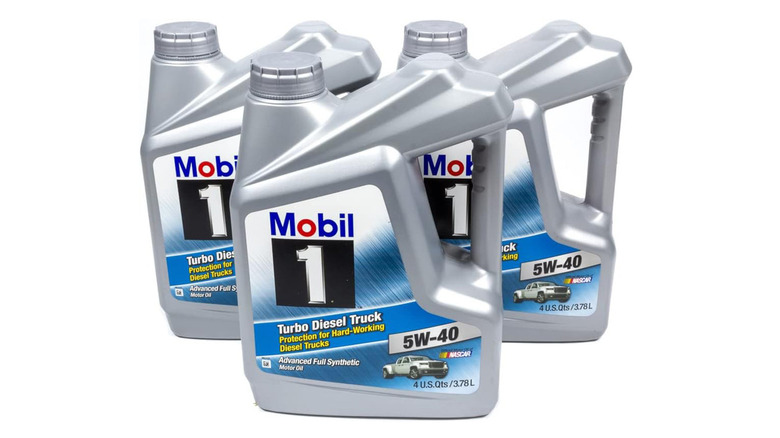
With blades spinning at thousands of rpm at extreme temperatures, it's a wonder that turbos don't fail more often. However, with the right care and attention, they can last the lifetime of the vehicle. The most important factor to consider is lubricant — turbos spin so fast that standard ball bearings have problems coping. To mitigate this, most turbochargers use fluid bearings. These use a flowing layer of engine oil to suspend and cool the moving parts. Using the right oil (like Mobil's Turbo Diesel Truck oil) is vital, as 90% of turbo failures are caused by oil issues.
Also important is driving style. Simple things like warming up the engine to make sure the oil is flowing freely and avoiding aggressive use of the accelerator can help. Similarly, at the other end of the journey, a good policy is to let the engine idle for a short while. I learned that the hard way — a turbo failure on a used van I bought was directly due to the previous owner shutting it down hot every time. This stops the heat in the turbo from boiling residual oil and causing a build-up of carbon particles. Finally, regular oil and air filter changes are vital. Anything that spins at 150,000 rpm on a bed of oil isn't going to appreciate the introduction of foreign objects, and clean filters help to mitigate this risk. There are plenty of reliable turbocharged engines in today's vehicles, but even the most reliable ones still need a little care and attention to keep on spinning.