

How Long Does A Concrete Driveway Take To Cure?
Sponsored Content. We may receive a commission on purchases made from links.
Once it's properly cured, you can trust a concrete driveway to give you exactly the kind of durability and longevity you need for decades of daily use. But their long-term performance depends a lot on what happens immediately after pouring. While many homeowners focus on getting that part right, curing is really the stage that ultimately decides how strong and resilient the finished product becomes.
A newly poured concrete driveway might look solid enough in the days after, but the material will actually continue to gain strength for weeks after the surface hardens. This is the curing timeline in action and knowing just how long it takes can help you avoid damage and make sure the driveway lasts throughout its intended lifespan.
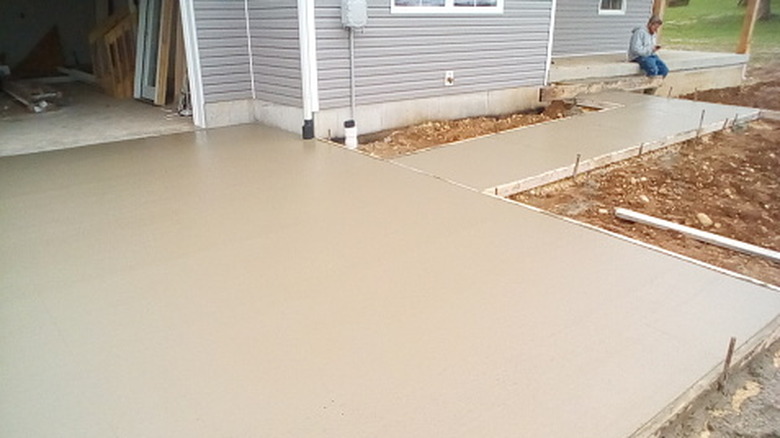
Concrete is made from cement, water, and aggregate such as gravel. When mixed together and poured into the frame of your future driveway, the chemical reaction known as hydration begins. During this time, the cement will bind the aggregate into a hardened mass. Though installation typically only takes a few hours or days, the curing process has to continue untouched for at least a week before it's safe to park your vehicle on it.
Your driveway continues to cure even after it's safe to park
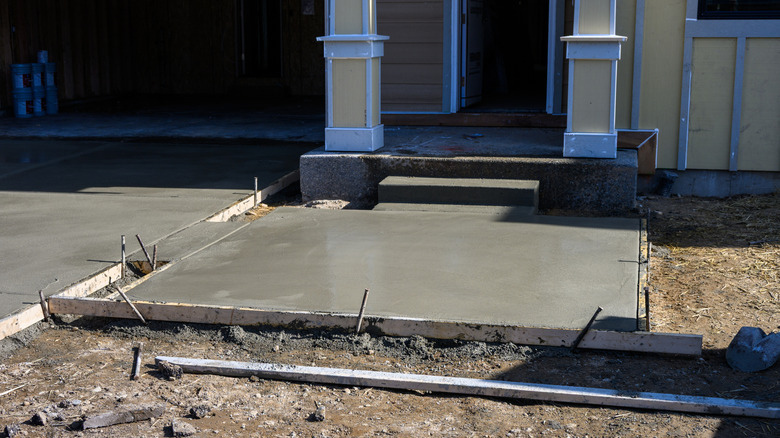
Even after the one-week mark, the concrete still has a way to go before it's at full strength. For brands such as Quikrete, the concrete has only reached a strength of approximately 2,500 pounds per square inch after seven days. By day 28, it's strengthened far beyond that point: about 4,000 pounds per square inch. With that in mind, you should assume it'll take a whole month for your concrete driveway to reach its max handling weight.
That's all assuming proper curing conditions. Curing at the right moisture and temperature levels can really make or break the hydration process. The closer temperatures are to freezing, the slower hydration takes. That'll extend your curing times and reduce the development of strength. The same goes for temperatures that are too hot or conditions that are too dry, or windy. This can cause moisture to evaporate too quickly from the surface, increasing your risk of shrinkage cracks.
As a rule of thumb, consider curing as soon as possible after placement by aiming for a window where conditions look ideal for at least five days of temperatures at 70 degrees Fahrenheit or higher. In cooler conditions – between 50 to 70 degrees Fahrenheit – the curing process should be given at least seven days. It's extremely important to avoid freezing temps or rain in the first 48 hours, as well.