

$120M 'Atlantic Net' Will Hunt Russian Submarines That Could Attack Underwater Cables
Satellites play a far smaller role in carrying data that powers the internet between continents than you might think. 99% of it is actually carried by hundreds of thousands of miles of fiber optic cables laid out on the seabed, often owned by private companies. Considering how crucial they are to the planet's communication infrastructure — everything from global banking to trade rests on it — it's only fair to think that adversaries may try to cripple them during war. So it's understandable for the U.K. to worry about intel showing specialist Russian submarines spending time over such infrastructure in the Atlantic, with the U.K. Ministry of Defence noting that they map the cables during peacetime with the goal of causing disruption during war.
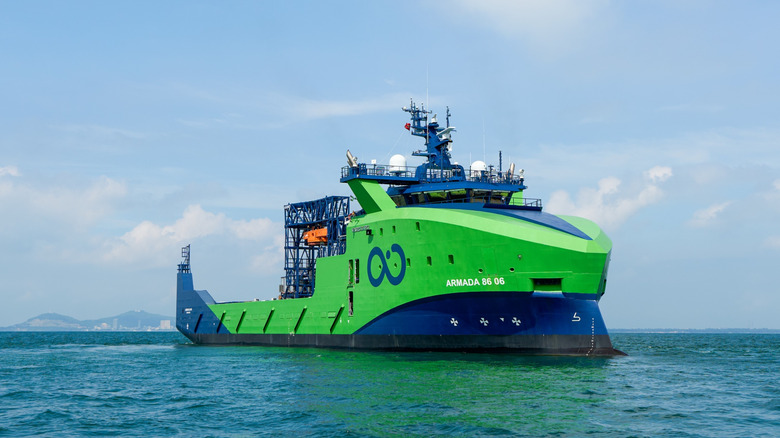
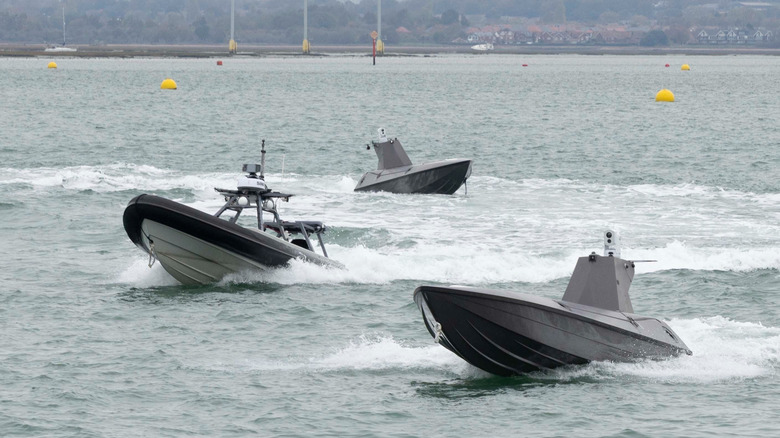
So now, the U.K. is looking to gain a strategic advantage in a unique way: by using underwater robotic drones. These will come as part of a new framework called Atlantic Net, announced by the country's Ministry of Defence on November 10, 2026. Developed by a Hampshire-based marine robotics company called Ocean Infinity Solutions, the solution involves putting sensors on uncrewed vessels and underwater drones. These would then patrol the North Atlantic and listen for Russian submarines or any other hostile activity.
To be clear, "listen" here is literal. That's because these sensors do actually record sounds, which are then sorted by AI software as acoustic data. The data is then relayed to the Royal Navy, specifically its remote operations center, for staff to analyze. Once the staff flags something, the Royal Navy's Astute-class submarines and anti-submarine warships are alerted, helping them identify threats sooner.
Why the U.K. is renting the service
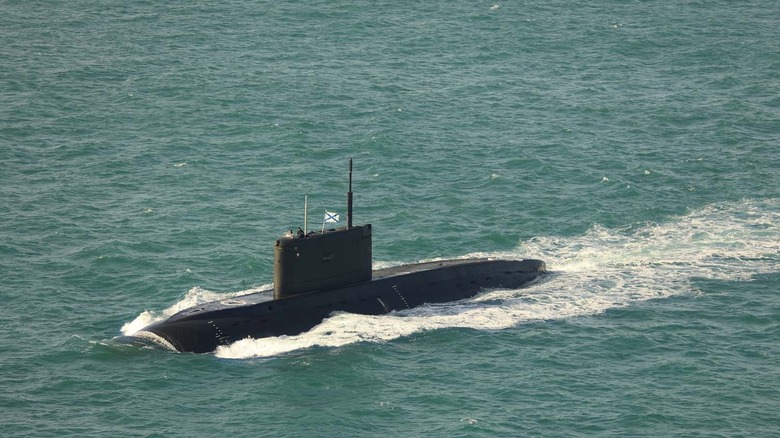
The U.K. MoD specifically names GUGI, which is Russia's Main Directorate of Deep-Sea Research, for sending those subs. In fact, in April 2026, the country's Defence Secretary, John Healey, spoke of one Russian operation involving three submarines — an Akula-class attack sub alongside two GUGI subs — in which the GUGI subs loitered over North Atlantic infrastructure. The Akula-class sub was suspected to be a decoy. The whole operation lasted for over a month. A Breaking Defense report that spoke to an expert also noted that the GUGI subs can be used to place wiretaps.
It's a tricky situation, hence the need for Atlantic Net. One unique aspect here is its contractor-run model — not only will the Navy not own these systems, but it also won't operate them on its own. Rather, Atlantic Net is more of a service it would be renting. According to the Navy, the arrangement offloads responsibility to the contractor and the drones (under oversight), which leaves its own ships free for other tasks. Besides protecting the cables, the MoD has also said that Atlantic Net would provide protection for the U.K.'s nuclear deterrent. The service is expected to go live in 2027.
Is a drone network well-suited for the job?
The thing is that this particular approach isn't really new. The U.S. Navy did it during the Cold War, when it used microphones called hydrophones to listen for subs. These hydrophones were attached to cables that ran across the seafloor to shore stations, transmitting the audio and other data. So in a way, Atlantic Net is a more automated, modernized approach to something the U.S. did decades ago.
While this system worked just fine for a while, it became less effective due to a new challenge: the Soviet subs kept getting quieter. By the end of the Cold War, in fact, the system's effectiveness had diminished significantly. Modern diesel-electric subs make matters worse, since they're even quieter and harder to detect. A lot of the challenges had to do with the fact that the hydrophones were tethered to the seabed and served as fixed listening posts. The new Atlantic Net systems, on the other hand, are mobile.
All in all, the Atlantic Net deal is set to unlock investments worth £90 million (roughly $120 million). One of the reasons why Ocean Infinity was able to secure it was because it has experience testing ships needed for the job. In fact, in December 2025, it finished building ships of its own — 14 of them — to create a fleet called the Armada. These were designed to serve as survey vessels for clients like offshore energy firms to map the seabed. Now, they are being used in defense.
That said, Atlantic Net's systems won't be used by the U.K. forever, since they're more of a stopgap measure. The country's Navy plans to eventually use its own vessels for the job by 2030.