

What Is The DVI Port On Older PCs For?
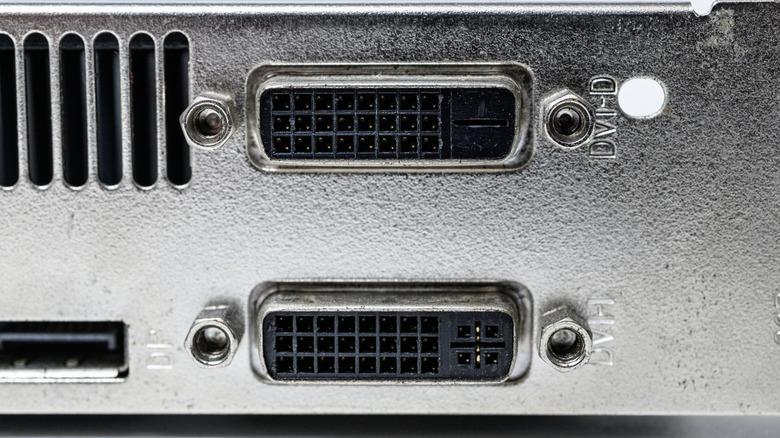
When comparing older desktop computers to newer PCs, you'll notice the new guys lack some of the ports found on the more dated machines. For instance, many old models came with a wide, rectangular port with an unusually large number of slots for connector pins. That's the DVI port, short for digital visual interface. Its main purpose was to send video from a computer to an external display. In the modern day, the DVI port has been replaced by HDMI, DisplayPort, and even USB-C connections (with some drawbacks).
DVI, nevertheless, played an important role. Back then, these ports gave desktop computers a way to deliver digital images directly to compatible monitors without converting the signal into an analog format first. But unlike HDMI, DVI didn't transmit sound. Audio had to be wired separately.
The connector also came in several configurations to accommodate the difference between analog and digital signals. For that reason, two DVI ports that looked similar wouldn't necessarily be capable of transmitting the same type of signal. DVI-A ports carried analog signals and could work with VGA equipment. DVI-D was meant specifically for digital video. DVI-I combined both, accommodating analog and digital connections alike. Dual-link DVI cables came with even more pins and greater bandwidth.
Why older computers needed DVI ports
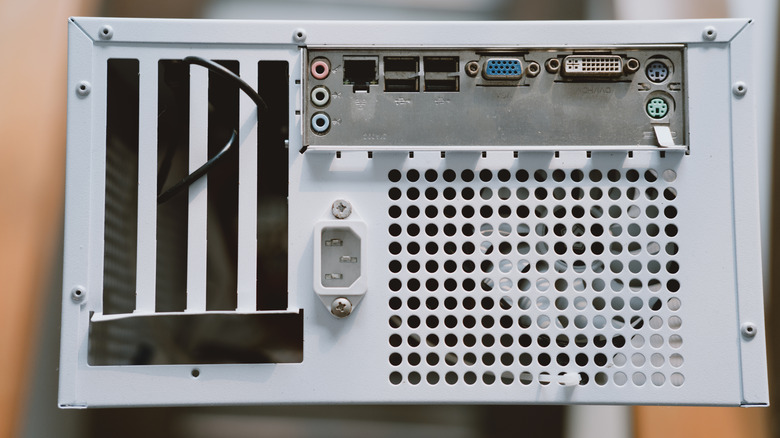
Before HDMI became the standard, DVI had a huge advantage over the older VGA connections because of its digital picture without analog transmission. That meant better image clarity over VGA. DVI also supported High-Bandwidth Digital Content Protection, or HDCP. That allowed you to hook up your computer to a projector and play protected material, such as a Blu-ray disc. HDCP is still used today with modern connections such as HDMI.
Despite being a step forward for digital display connections over VGA, DVI was eventually eclipsed. The lack of audio transmission was a big reason why. When HDMI came onto the scene, it was just so much more convenient than DVI. After all, HDMI has both audio and video capabilities and supports more modern standards such as 4K and 8K. It also offers HDR and much higher bandwidth and refresh rates. That's ultimately why DVI was largely phased out by the late 2010s.