

Boeing's B-1 Bomber Is One Step Closer To A Major Combat Upgrade
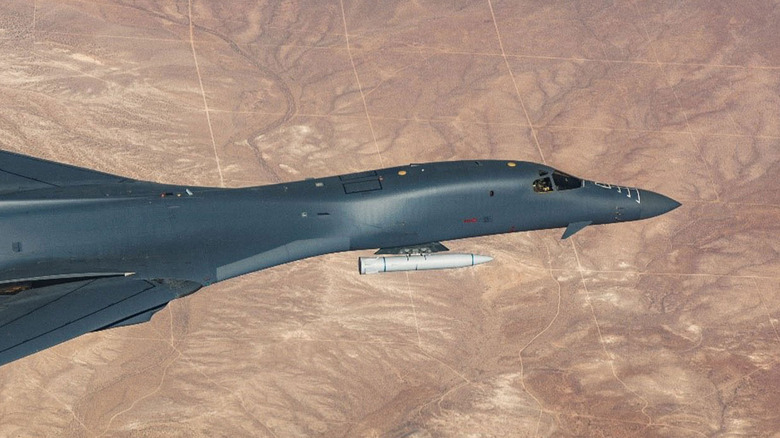
When it comes to famous military aircraft, the B-1 stands out from the rest for a variety of reasons. In fact, the U.S. is still sending B-1 bombers out, and now Boeing says the plane is "one step closer" to getting an important combat update. More specifically, the B-1's Load Adaptable Modular (LAM) mount has successfully gone through the critical design review. That means the bomber has cleared another hurdle on its way to carrying additional weapons.
Getting through the critical design review represents a major milestone for the B-1 because of what it determines. The B-1's LAM mount, or pylon, first had to have a workable design to carry weapons and other payload. But it also had to be capable of handling the missions it would face in the future. These decisions weren't made by Boeing alone, as the U.S. Air Force was also heavily involved, giving the green light to the LAM system in the end. From there, the Air Force also established the system's baseline, so there would be a point of reference moving forward.
The next move is to prep the equipment and computer software needed to begin manufacturing. That equipment will be used to test the new systems as well. Once that phase is complete, Boeing will continue to move the program forward and potentially increase the B-1's payload capacity twofold. This added capability will also allow the B-1 to become a more versatile aircraft down the road.
How the B-1 transitioned from nuclear weapons to the LAM pylon
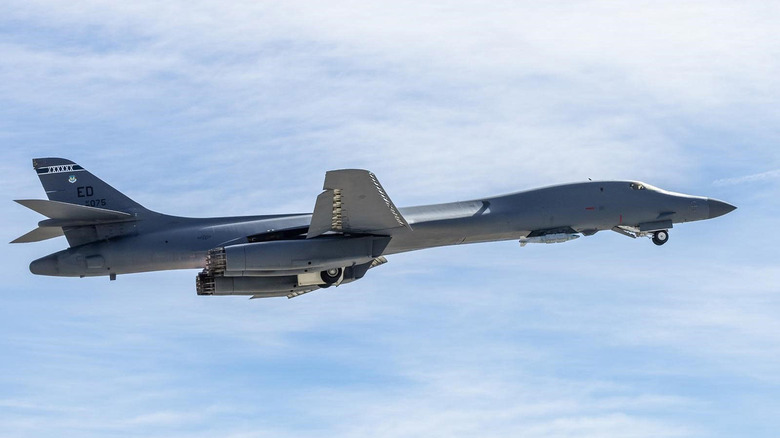
The newly approved LAM design for the B-1 bomber was spearheaded by engineers at Boeing's Oklahoma City site. The goal was to give the bomber added capability beyond the weapons systems it has traditionally carried. This would also allow the B-1 to engage in more missions. While Boeing was not necessarily focused on replacing the B-1's existing systems, the company was determined to equip the plane with the most advanced tech.
But the B-1 would not necessarily require a unique installation or a specially designed setup to handle the new LAM pylon. In fact, the pylon is actually built to fit into the exact spot where the Air-Launched Cruise Missile system was going to be installed. This means that the Air Force will have different options for what weapons to carry. This could include the most modern hypersonic weapons as well.
The decision not to use the cruise missile system has to do with arms treaties between the U.S. and Russia. The AGM-86B cruise missiles are nuclear-equipped, and as a result of those agreements, the United States deactivated the B-1's mounting points for the missiles. Rather than remove the installation points that would have held those missiles, the Air Force left them in place, which eventually led to the design of the LAM pylon.