

Why Your Diesel Truck Only Needs 2 To 4 Hours On A Block Heater
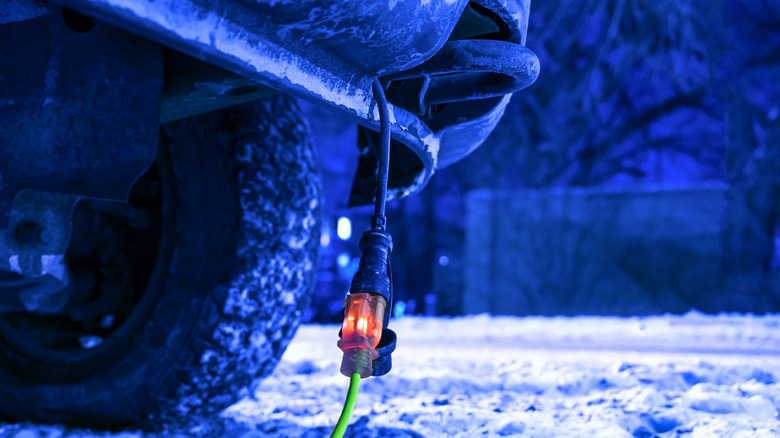
There are many pros and cons with diesel engines, but one of the biggest drawbacks is needing an engine block heater when temperatures dip below freezing. There are several reasons why it's a good idea for running your diesel truck in winter. One is quicker starting, since the block heater warms the oil and coolant, making them flow more easily. Accordingly, this also extends the life of your starter and battery. Warmer oil circulating through the engine gives parts better lubrication with less wear. And as a bonus, your interior will warm up quicker if you preheat the oil and coolant in your truck with a block heater.
But how long should you run it? What do industry experts say? The best and most efficient use is simply turn on your block heater two to four hours before starting your engine. Running it all night simply wastes electricity with no added benefit. It just means a bigger electricity bill. This is because most diesel engines cannot absorb more heat after four hours, making this the "sweet spot." Using a plug-in timer eliminates having to get up in the middle of the night.
At what temperature should you plug in a diesel truck block heater and what are the different types?
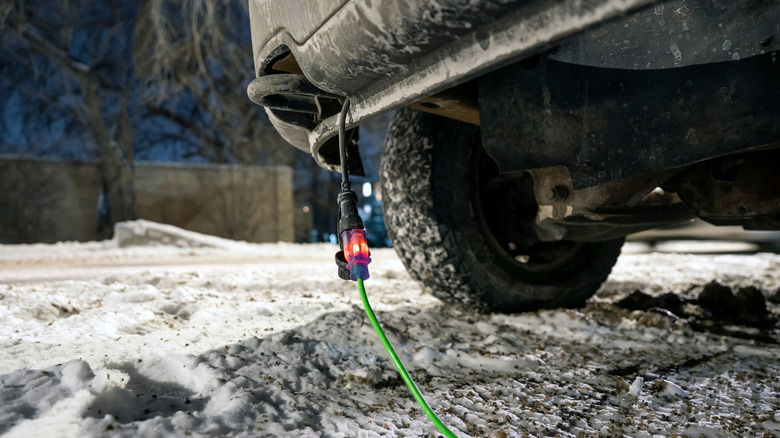
It's generally recommended to plug in your diesel truck block heater when it's 20 degrees Fahrenheit or lower. Some recommend turning it on anytime the temperature goes below freezing. Some newer diesel engines recommend block heaters at temperatures up to 40 degrees Fahrenheit.
There are several types of block heater alternatives for diesel engines, but newer trucks and those made for Canada likely have one installed from the factory. Core plug heaters use an internal heating element inside the engine to warm up the coolant. External heaters warm up the engine from the outside. Dipstick heaters replace the original dipstick and warm the oil in the engine. Engine-warming blankets are similar to electric blankets, radiating heat into the engine. Inline heaters wrap around the coolant hoses, using the coolant pump to circulate it through the engine. Another is an oil pan heater, which heats the oil pan itself.
If you live or drive where the temperature regularly goes below the freezing mark, block heaters do a good job of keeping your engine warm. The benefits are obvious — easier starting, less engine wear, longer battery life, and faster heat for your interior. And for only two to four hours' worth of electricity, it's a fair trade-off for better diesel performance and longevity.