

Classic Straight-8 Engines Had Some Big Disadvantages – Here's Why They Failed
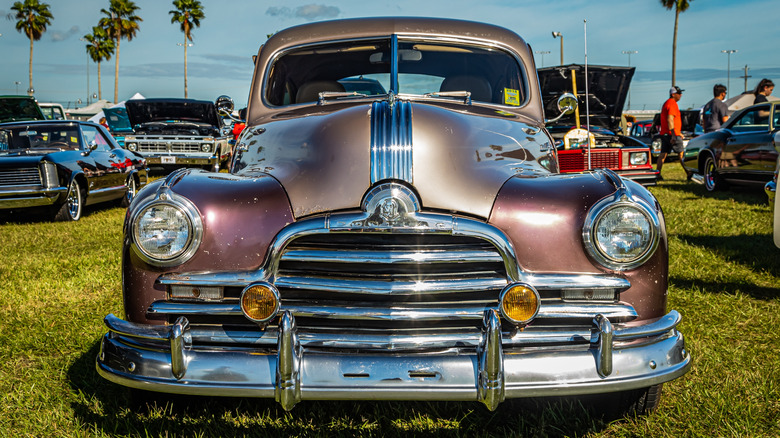
It goes without saying that the arrival and evolution of the mass-produced V8 engine is one of the most important things ever to happen to the auto industry. From pickup trucks to high-end sports cars, the V8 engine is ubiquitous — so much so that the term "V8" itself has become representative of all eight-cylinder engines.
To do that, though, is to overlook the shorter-lived but fascinating story of the straight (or inline) eight-cylinder engine, which powered a wide range of notable cars during the first half of the 20th century, and was offered in America as late as the mid-1950s. With even a basic understanding of engines, the modern disadvantages of the straight-eight become quite obvious, and nearly all of them have to do with its physical size and layout. This applies not just to the engine block itself, but to the parts it used as well.
Why did the straight-eight die? Ultimately, the increasingly common, cheap, and compact V8 engine simply made the straight-eight obsolete. With the same number of cylinders and overall engine displacement, the V-layout engine was able to make the same or better power while taking up much less physical space in a car's engine bay and chassis. Still, even after automakers like Ford had helped to popularize the V8, brands like Packard and Pontiac continued to offer straight-eight engines in mainstream applications, but those engines too would be replaced with V8s by the middle of the 1950s.
Powerful, but flawed
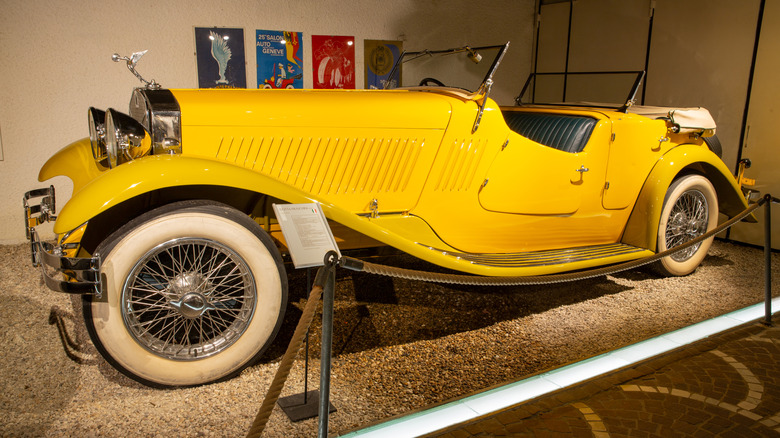
The Isotta Fraschini Tipo 8 of 1919 is considered the world's first production car to use an inline, eight-cylinder engine — and all it takes is one look at the Tipo 8 to understand this era of early, straight-eight-powered automobiles. The Tipo 8, along with the other numerous straight-eight-powered cars that followed in the pre-World War II years, was a large personal automobile with a long hood that allowed plenty of room for inline-eight engines. In America, it was the legendary Duesenberg straight-eight that probably represented this engine type at its peak, pre-war extravagance.
As with their inline-six counterparts, straight-eight engines were known for being torquey and smooth — but that smoothness came at the expense of physical size and weight, and cost that started to clash with a changing auto industry. With eight cylinders arranged in a straight line, these engine blocks were quite long relative to their displacement, and because of that length, they needed long, heavy crankshafts. Likewise, because of their layout, these engines needed more crankshaft journals and more main bearings, which increased their machining costs. At the same time, by the time World War II had ended, the automobile itself was becoming smaller and more mass-produced, and the straight-eight layout simply didn't make as much sense.
Gone, but not forgotten
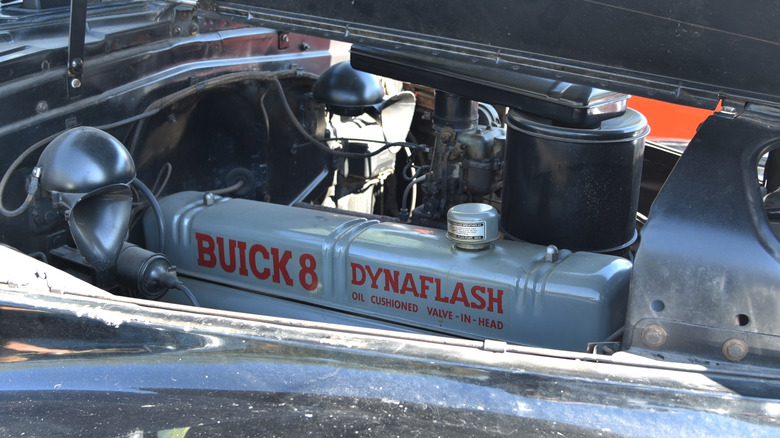
The good news for car engineers and drivers who still wanted powerful engines was that the V8 engine — which had taken a huge leap with the debut of the groundbreaking Ford Flathead V8 in the 1930s — could now take the straight-eight's place while having a much smaller physical footprint, along with lower costs. Even so, some of the most popular and most mainstream American straight-eight engines enjoyed relatively long lifespans that lasted well into the post-war era.
One of these engines was the Buick Straight-Eight, which was in production from the early 1930s through the early 1950s, when Buick replaced it with its new V8 design. Pontiac had a similarly popular straight-eight engine during that same period, before it was replaced with the new Pontiac V8 for the 1955 model year. Packard, meanwhile, holds the honor of being the last American automaker to make a straight-eight engine, with the performance of those engines reaching some impressive highs in the early 1950s.
By the mid-1950s, the straight-eight was gone, and the V8 had cemented its place as the default layout for eight-cylinder engines. That's how things have been ever since — and with the increasingly tight packaging constraints on modern vehicles, it's hard to imagine the straight-eight layout coming back. You could say the straight-eight's overall design was flawed, or you could look at it another way and say that the automobile itself simply evolved in a way that made the straight-eight obsolete.