

Is It Safe To Take Your Pontoon Boat Into The Open Ocean?
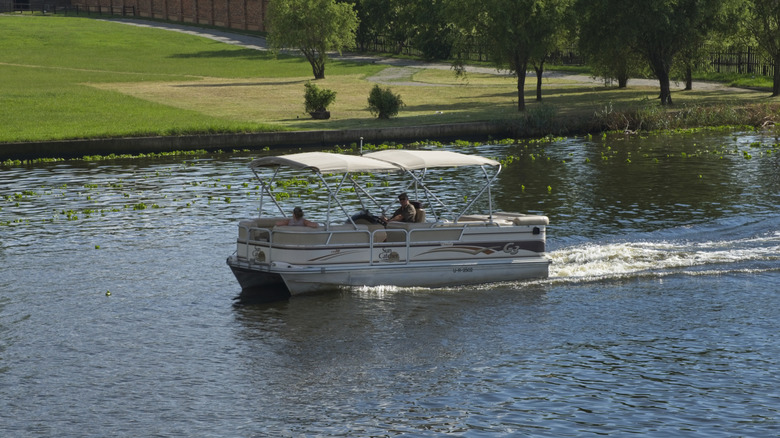
In general, a pontoon boat is ideal for locations that offer some amount of protectionfrom waves and wind, such as bays, rivers, and lakes. If the ocean surface is calm and the wind is minimal, there's no reason why a pontoon couldn't explore coastal ocean waters. The problem is that there is a wide spectrum of conditions out at sea, some so severe they'd throw around monohull vessels many times the size of the average pontoon.
A monohull sailboat, for example, is much better suited for ocean voyages, with greater stability in rough water due to ballast (weights) added to the keel (the bottom structure of the vessel). The tubes on a pontoon boat, by contrast, are the hulls that support the frame. While this setup provides some stability, and driving one is straightforward, pontoons don't handle larger waves well. The bow (front) of a pontoon doesn't float as high in the water as other types of boats, which allows swells in rougher water to splash on deck. This can range from getting passengers' shoes soaked to more serious situations that could potentially compromise the vessel.
In July 2026, the U.S. Coast Guard was called after a large 50-foot pontoon boat was reported in distress near Alcatraz Island in San Francisco Bay. Even though the vessel wasn't in the open ocean, those who witnessed the incident recounted the exceedingly choppy water conditions before the pontoon capsized. Unfortunately, one passenger was killed and three more were reported missing despite search efforts.
Weather checks and best practices
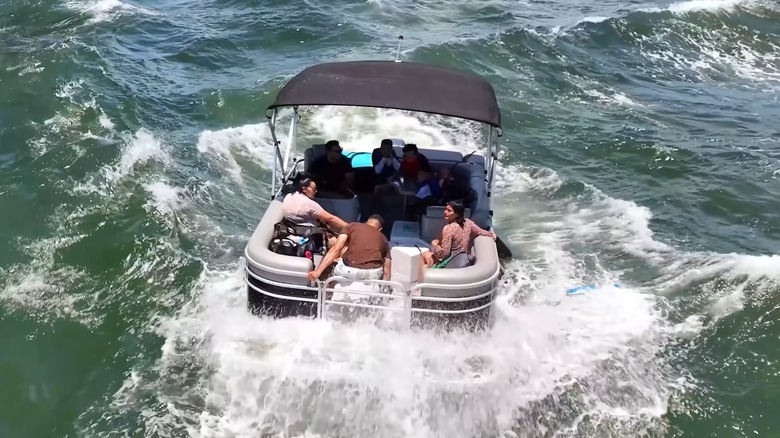
If you must take your pontoon out onto the ocean (coastal waters, not the open sea), there are some crucial safety factors to consider first. Routinely checking the weather is essential, so you and your passengers aren't caught off guard by hazardous conditions. According to Crow Survival, even waves of 2 to 3 feet can cause problems for a pontoon, with escalating risk from larger waves. One of the biggest concerns is "tube stuffing," which happens when a pontoon's tubes dip into oncoming waves instead of going over them.
It's not only waves that can spell trouble for a pontoon, but also wind. Because these vessels have large, flat side panels, they can be significantly influenced by a strong breeze. As one poster on iBoats explained, "In heavy wind, the relatively high sides of a pontoon will act like a sail."
The size of the pontoon has an impact on how well it'll do in ocean water. After all, one of the differences between a ship and a boat is size, with larger ships able to handle more severe conditions. Shorter vessels under 20 feet might struggle in conditions that a boat closer to 30 feet would withstand better. How well your pontoon handles waves and wind is a matter of your experience at the helm, which is something you should consider earning in protected waters first. If you're looking for a vessel with ocean voyages in mind, you might also consider a catamaran instead.