

5 Drawbacks Of Using Directional Tires
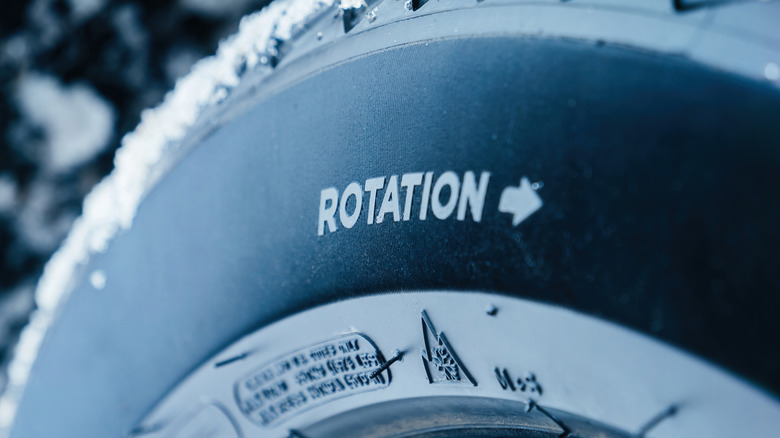
Directional tires are designed to roll forward in one direction, and you can often spot them by the V-shaped grooves across the tread. This design helps push water out of the way as the tire rolls, which might come in handy when you have to deal with standing water on the highway. Also, an arrow on the sidewall shows which way the tire should turn.
However, that arrow is easy to overlook until it's time for some routine tire maintenance. Moving a wheel from one side of the car to the other can leave the tire rolling against the arrow, which limits your options during a rotation. The direction also matters if you're having a new set mounted or deciding what to carry as a full-size spare.
Some of the drawbacks are easier to notice once you start shopping, but others only become apparent when the car is out on the road. Certain directional tires can cost more, and more aggressive tread patterns can produce extra road noise on some surfaces. So, if you're considering a set, here are some things to keep in mind before buying one.
Directional spares are less versatile

A flat tire can happen on either side of the car, but a full-size directional spare is set up to roll as intended on just one side. This means that a spare mounted for the right side may still fit on the left, but its tread will roll backward when the car moves forward.
Some Lincoln owner's manuals even allow the original directional spare to run against its arrow when needed. However, the tire will perform better if it rolls in the marked direction. Even when the spare fits, you may give up some of the tread's ability to clear water on the road if the flat happens on the other side.
A compact temporary spare comes with its own restrictions, and some full-size spares are labeled for temporary use as well. Before you need to use yours, it's worth checking the owner's manual for the type of spare your car uses and any limits on where it can go or how long you can drive on it.
Incorrect mounting can hurt wet-weather performance
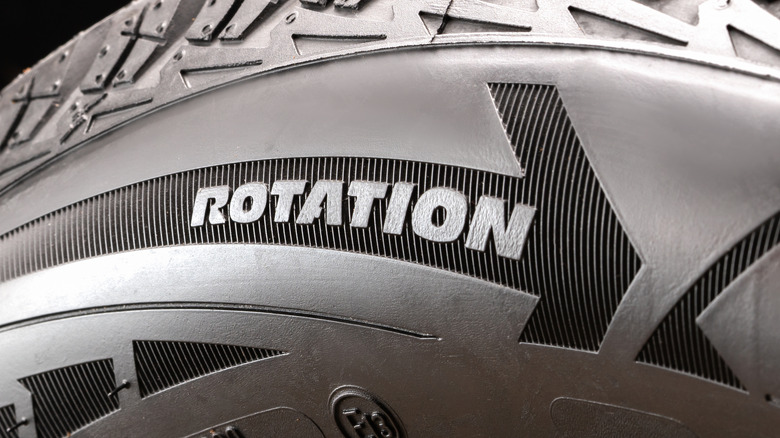
At first, a directional tire mounted backward can look fine. But the problem might only show up when the tread has to move water out of the way. Its grooves are arranged to channel water away from the area where the tire meets the road as it rolls forward. When the tread runs backward, the tire might lose some of that ability, reducing the resistance to hydroplaning that makes directional tires appealing in wet weather.
After getting new tires, one of the first things that you'll need to check is the mounting direction. Make sure the rotation arrow follows the direction the wheel turns as the vehicle moves forward. At the top of the tire, that means pointing toward the front of the car. If any arrow is pointing the wrong way, Continental recommends leaving it to a tire dealer to correct the mounting as soon as possible. The shop may need to take the tire off the wheel and remount it so the tread rolls in the right direction.
Directional tires limit your rotation options
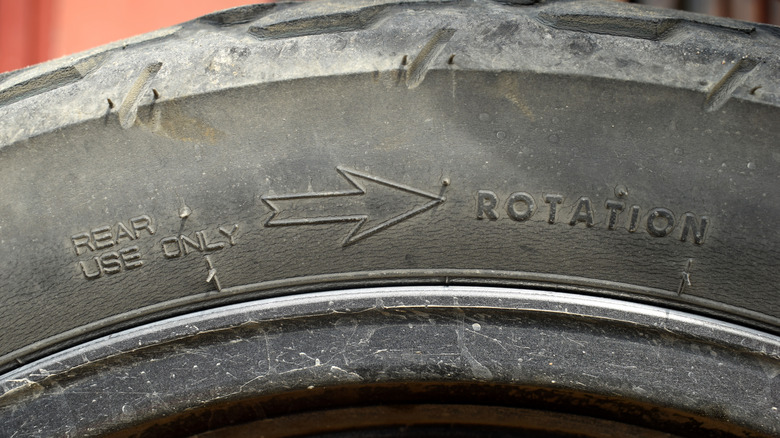
With four directional tires of the same size, a regular rotation usually means swapping the front and rear wheels on each side. The front-left wheel moves to the rear left, for example. Moving that same wheel to the rear right would make the tire roll against the arrow on its sidewall.
This eliminates the cross pattern used in some all wheel-drive tire rotations. If you want to switch a directional tire to the other side, the shop has to take it off the wheel, flip it over, and remount it so that the arrow points in the direction you want. That's extra work on a job that usually only involves moving the wheels.
Your options shrink further if the car has a staggered setup, with different tire sizes up front and in the rear. That size difference keeps each tire on its own axle, moving a wheel to the opposite aide would reverse the tread's rolling direction. This leaves you with no easy way to rotate the set.
Some directional tires cost more
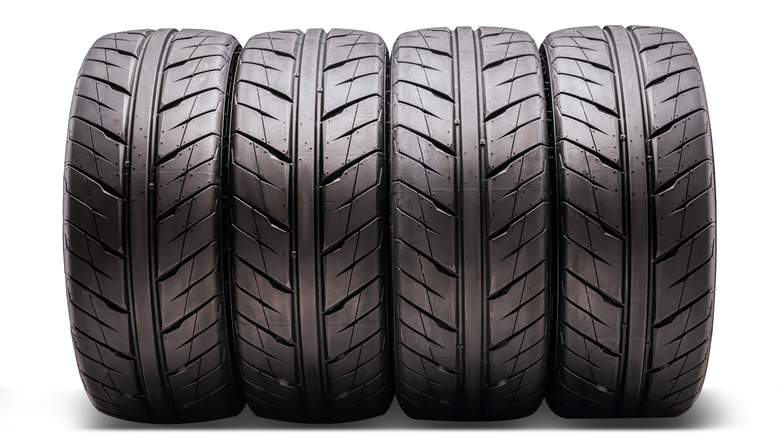
Even if you stick with the same brand and tire size, a set of directional tires can cost more than a set of non-directional one. Tire Rack listed the directional Goodyear Assurance WeatherReady2 in 225/60R18 at $224.99 per tire, while the ComfortDrive, which has a symmetric tread, was $179.99 in the same size. That's a $180 difference for four tires before installation.
While both are grand touring all-season tires, Goodyear designed them with different priorities in mind. The WeatherReady2 carries a severe snow service rating and has an extra-load construction in this size, but the ComfortDrive puts more emphasis on comfort. This means that the higher price comes with features beyond the directional tread, including a snow rating that may not be worth paying for, especially if you don't regularly drive in winter weather.
Start by comparing prices on tires that suit your car's size, load and speed requirements. Then check what the shop charges to mount and balance the whole set. When you get a quote with installation, it's easier to see how much room you have in your budget, especially when the difference is already three figures before labor.
Some directional tires can be noisier
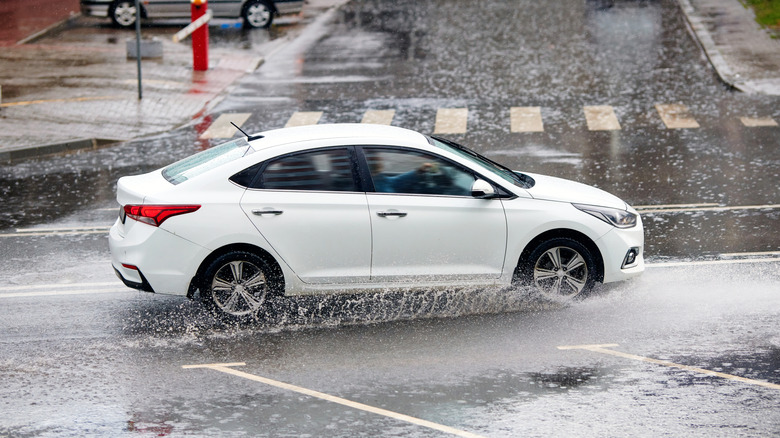
If your car has directional tires, you may notice a steady hum at highway speeds or a change in pitch when the road switches from asphalt to concrete. The way a tire's tread is laid out affects how the blocks hit the pavement and how air moves through the grooves. Manufacturers can vary the size and spacing of those blocks to break up a steady tone. So two tires with similar V-shaped grooves can sound quite different from inside the car.
According to Tire Rack testing, the Goodyear Assurance WeatherReady2 produced a repeating sound at highway speeds on asphalt and some pattern noise on concrete. The directional Michelin CrossClimate2 kept the noise on par, but a few distinct noises still reached into the cabin at highway speeds. If you spend a lot of time on the highway and want a quiet cabin, it's important to check out how noisy a tire is before buying a set.