

4 Michelin Tires With The Lowest Rolling Resistance
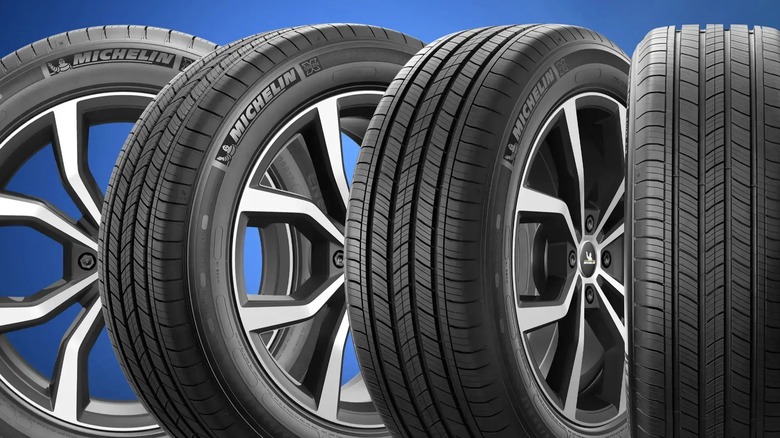
You have a lot of criteria to keep in mind when shopping for your next set of tires. Aside from key elements like the brand you choose to buy from and how much you're willing to spend, you want to consider what exactly your new tires can do. Fortunately, major tire brands like Michelin have a lot to say in regard to their products' distinguishing features. Therefore, if you care about rolling resistance, for example, Michelin makes it known which varieties you should prioritize.
If you haven't already, it's a good idea to make rolling resistance something you always consider before buying new tires. For those unfamiliar, rolling resistance is the force opposing a tire's movement as it rolls along the road. Several elements, such as wind drag and friction with the ground, cause rolling resistance, but energy loss from tire deformation is the primary culprit. Tires that struggle with rolling resistance use more energy, increasing fuel consumption in gas-engine vehicles and reducing driving range in electric ones.
Luckily for consumers, Michelin lets the public know which of its tires have an easier time with rolling resistance than others. Here are four of the brand's tires engineered to minimize rolling drag.
Michelin e.Primacy
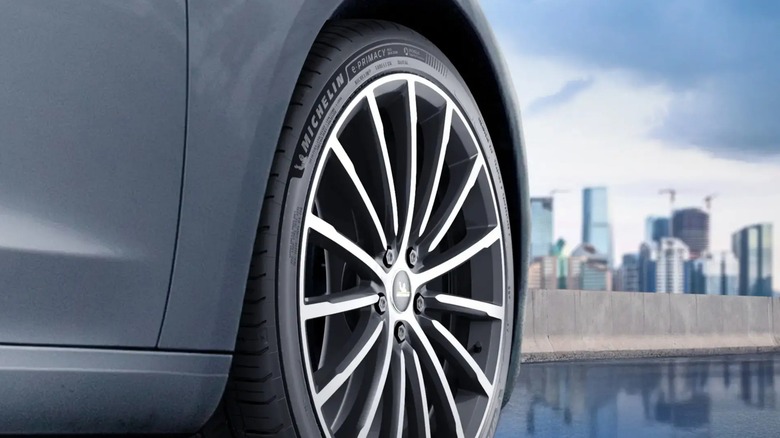
The Michelin Primacy range is marketed as a premium line for those who want maximum performance from their daily drive. This collection includes tires designed for different market regions and driving conditions, including models for summer and all-season use. Within this series is the Michelin e.Primacy tire, which is highlighted by the brand itself as a standout in the line. Much of the reason for this stems from the e.Primacy's excellent rolling resistance rating, with Michelin claiming that it can reduce opposing force by 27% compared with leading competitors.
In Europe, tire rolling resistance is classified using the letters A, B, C, D, and E, with Class A having the lowest degree of drag and E the highest. The Michelin e.Primacy has been granted a Class A rolling resistance rating on specified tire variants, meaning they are highly energy-efficient and can help drivers cut fuel consumption. On top of this, European regulators also classify tires with those same letters for wet braking performance. The e.Primacy has a Class B rating to its credit, so maintaining stopping power on rain-soaked roads isn't as much of a concern either. So, if you want Michelin tires that are safety-forward and good on your gas tank, a set of e.Primacys could be worth looking into.
Michelin Energy Saver A/S
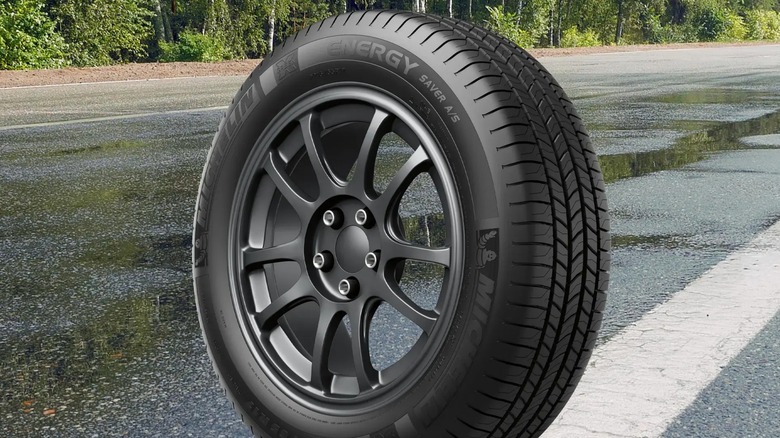
Rolling resistance affects a vehicle's fuel economy, so it's important to be aware of a tire's resistance level. As the name suggests, the Michelin Energy Saver A/S prioritizes energy performance and lower rolling drag. These tires are advertised as being made from a specialized rubber compound that increases cooling while driving. It also features Michelin's MaxTouch Construction, which means it makes contact with the road surface evenly and distributes the impact of vehicle acceleration across each tire. This helps improve tire longevity.
While the Energy Saver A/S lacks an A-to-E rolling resistance classification like the e.Primacy, since it's a predominantly North American tire variety, when put to the test, these tires have shown their ability to combat this unavoidable reality of driving. For instance, Consumer Reports put the Energy Saver A/S up against a set of comparable tires. It found that the model had the lowest rolling resistance among all-season tires it had tested up to that point. Meanwhile, Tire Rack also describes the Energy Saver A/S as having exceptionally low rolling drag, noting that it matched or outperformed highly efficient Michelin summer tires sold exclusively in the European market.
Michelin X One Line Energy D2
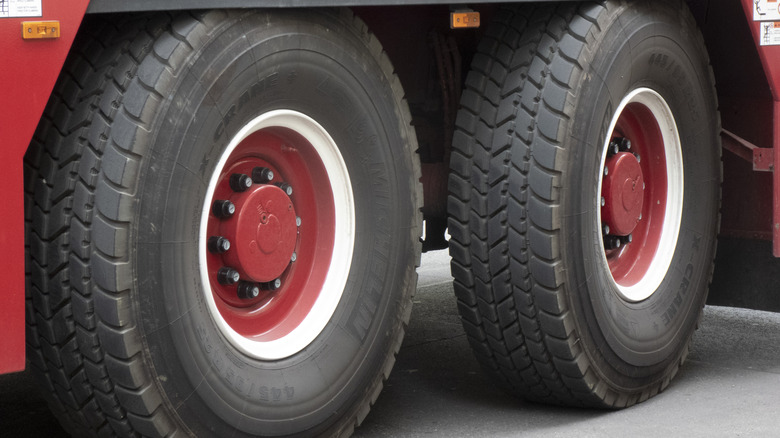
Of course, it's worth highlighting that Michelin tires aren't made only for cars and other passenger vehicles. The brand manufactures tires for other, more specialized uses, too, such as those designed for operation on heavy trucks and tractors. The Michelin X One Line Energy D2 tire is one such example, being specifically recommended by the brand for long-haul scenarios where durability and tread longevity are essential for driver safety. According to Michelin itself, these are its lowest rolling resistance heavy-truck drive tires released to date. So if you drive commercial, you'll want to keep the D2s in mind.
Not only are these tires designed to suffer through as little rolling resistance as possible, but they're optimized top to bottom to save money on the road. Michelin claims that the X One Line Energy D2 can deliver $2,317 in annual fuel savings compared with rival products, based on third-party testing. The compact tread design is intended to conserve energy on the road, making it a fuel-efficient choice for these massive, often fuel-cost-heavy vehicles. On top of this, they feature surface patterns that can handle challenging weather conditions. For long-haul trucking, these seem like a good choice for those looking to reduce rolling resistance for performance and financial reasons.
Michelin X-Ice Snow Plus
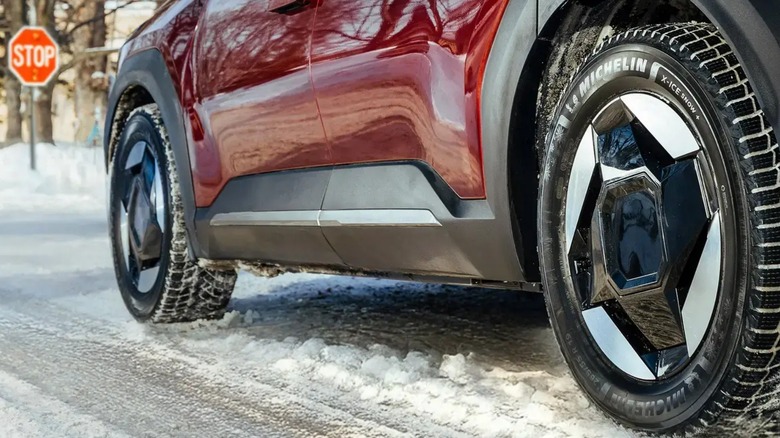
In addition to manufacturing all-season tires and products for larger commercial vehicles, Michelin also offers winter tires for sale. Though they're designed predominantly with snow and ice performance in mind, the brand doesn't cut corners for the sake of winter driving effectiveness. For example, the Michelin X-Ice Snow Plus is marketed as a winter tire that prioritizes lower rolling resistance. In fact, the company claims the X-Ice Snow Plus delivers around 7% better fuel efficiency than its leading competitors' offerings in third-party tests, in addition to providing drivers with at least two more seasons of cold-weather use than competing models.
Not only does the Michelin X-Ice Snow Plus claim to provide superior rolling resistance reduction compared to those in its class, but it's said to be a real powerhouse in the snow, too. The product description emphasizes that it's more than capable of holding onto the roadway while braking on ice, snow, or freezing rain, thanks to Michelin's Flex-Ice 3.0 tread compound. It's also advertised as featuring strong lateral grip to aid in slippery turns. On top of all of this, the tires offer a quiet ride due to the presence of Piano Acoustic Tuning Technology, which helps reduce road noise. Michelin isn't considered one of the highest-rated snow tire brands on the market for nothing.