

Is A Train Really More Efficient Than A Plane?
Long-distance travel in the United States can often be a messy, and pricey affair. It's even pricier when oil and gas costs surge. For some people, how efficiently we travel goes beyond a question of personal effort and budgeting; it's an issue you actively plan around, advocate for, and vote on. You might have debates about trains versus planes on your mind, so let's get it out of the way: Yes, trains tend to be more energy-efficient than planes, though not every route.
Data reported by Amtrak to the U.S. Department of Transportation indicates it used about 1,874 British thermal Units (Btu) to move a single passenger one mile in 2024. On domestic flights, the airline industry at large spent 2,163 Btu per passenger-mile, or about 15% more energy. While total energy usage includes plenty of overhead consumption, from deadhead movements (tris run without paying passengers) to waste in electrical generation and distribution, it does give us the best sense of how efficient each mode actually is across complete operations.
Fundamental modal differences, such as how many stops a train versus a plane, rule out individual trip comparisons based on publicly available datasets. That said, for any comparable origin-destination pair outside of the Northeast Corridor — Amtrak's busiest line, electrified end to end — energy efficiency is a toss-up between the two modes. Along the Boston-to-Washington megalopolis, Amtrak will tend to fare better.
How train and plane efficiency has changed over time
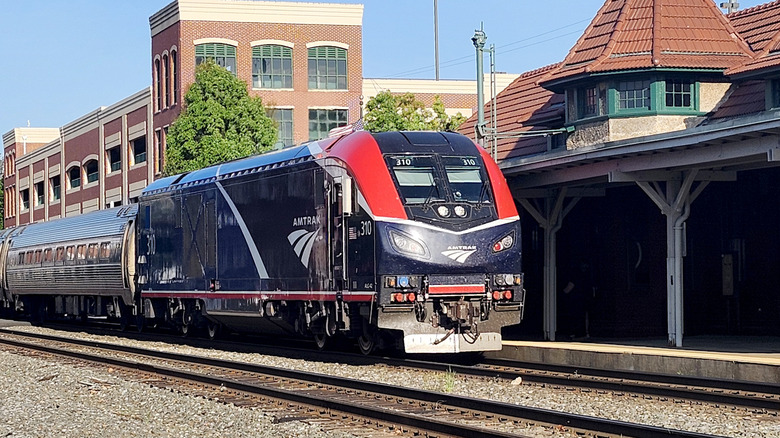
Amtrak's latest numbers are the best they have ever been, but efficiency worsened around the turn of the century as the quasi-public carrier navigated chronic disinvestment before more recent service expansions and record ticket sales. Its biggest efficiency advantage over air travel comes from the electric locomotives that run up and down on its most popular Northeast Regional and Acela services, which carried a combined 15.2 million trips — 44% of all its traffic — between October 2024 and September 2025.
The electrical system that powers those trains is not without its flaws, though. Amtrak relies on multiple plants feeding a legacy electrical network south of New York and a modern one north of the city, and a significant amount of electricity is lost between the plants and the trains. Still, train travel is enjoying a renaissance in the U.S, and the Mardi Gras route has become so popular that Amtrak had to add extra capacity to some trips.
Air carriers have volume on their side: What Amtrak carries in a year, they handle in about two weeks. While progress on efficiency has slowed over the past decade, domestic airlines have come down 75% from their 1975 performance thanks to steady passenger growth and improvements to fleet efficiency.
Highly refined kerosene remains the fuel of choice for commercial jet operators, but mechanical and operational changes have helped economize usage over the years. Boeing expects that engineering advancements in combustion avionics will contribute the majority of future impact to efficiency through the year 2050. We could be flying on electric planes, or at least hybrid-electrics, by that time, but the manufacturing startups of today are still burning money trying to engineer their way to that future. Until then, the train keeps its edge wherever the wires run.