

What Temperature Should Your Garage Be In The Fall?
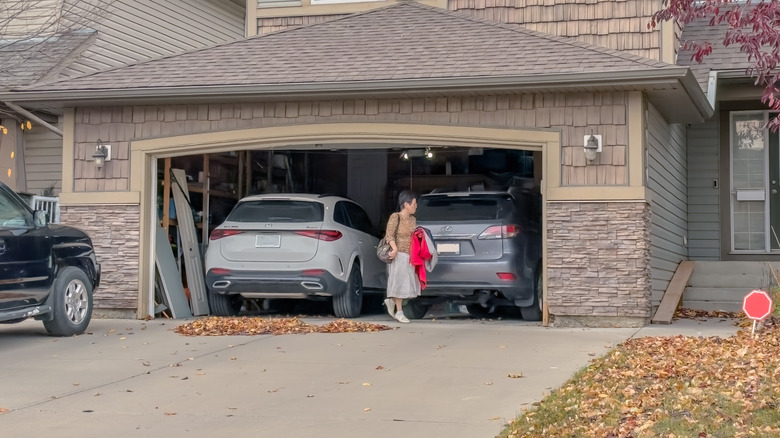
When fall temperatures arrive, most would agree their primary concern is keeping their house comfortable. But what about the garage? It makes sense: Even the most project-obsessed among us will ultimately spend more time inside the house than in the garage. Too cold inside, you just crank up the thermostat. Too cold in the garage, you just add another layer or two before getting back to work. For the sake of your car, your storage, and even your health, it's worth being a little more attentive to the temperature inside your garage.
Now, that's not to suggest your garage needs the same kind of climate control as the rest of the house. While there are simple ways to upgrade your garage for year-round comfort, that's a little much. Nevertheless, letting your garage get excessively cold or damp in the fall and winter can create all sorts of problems. As a rule of thumb, you should try to keep the surfaces in your garage above the dew point to prevent condensation. The ideal temperature beyond that will depend on what the garage is used for.
Different temperature requirements for different garages
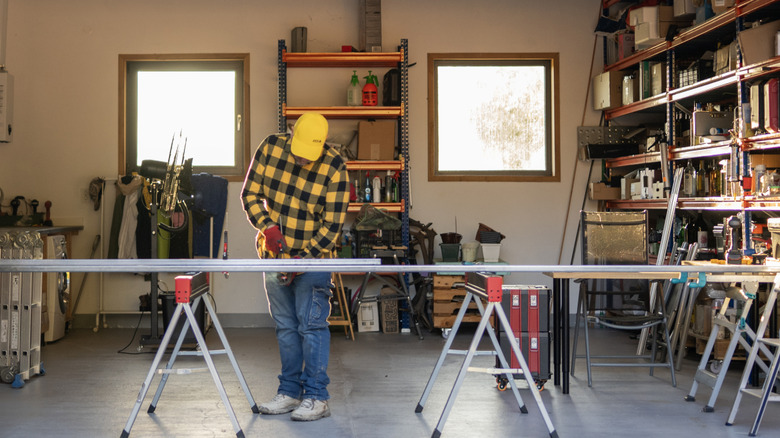
Whether your garage has plumbing, expensive tools, or other mechanical equipment and how well it's insulated are all factors in determining the temperature your garage should be when the weather gets chilly. As long as you keep things above the dew point, you can avoid condensation on your car as well as the walls, floor, and ceiling. You want to avoid condensation because it can lead to mold, which can harm the structure as well as your health. Moisture can also penetrate the building materials and cause damage as temperatures fluctuate above and below freezing.
A garage that doubles as a workshop or houses water pipes needs to stay above freezing, even if the dew point is lower than that. A modest goal of no lower than 55 degrees Fahrenheit is a good place to start, especially if you have tools or other equipment that shouldn't be exposed to harsh conditions. Keep in mind that there are also things you should never store in your garage. Maintaining humidity around 30% to 40% is also ideal during cold months. Any higher, you risk condensation. Any lower, you risk drying and cracking materials (not to mention your skin). In these use cases, a designated garage heater may be your best bet.