

How Do Emergency Vehicles Get Traffic Lights To Turn Green?
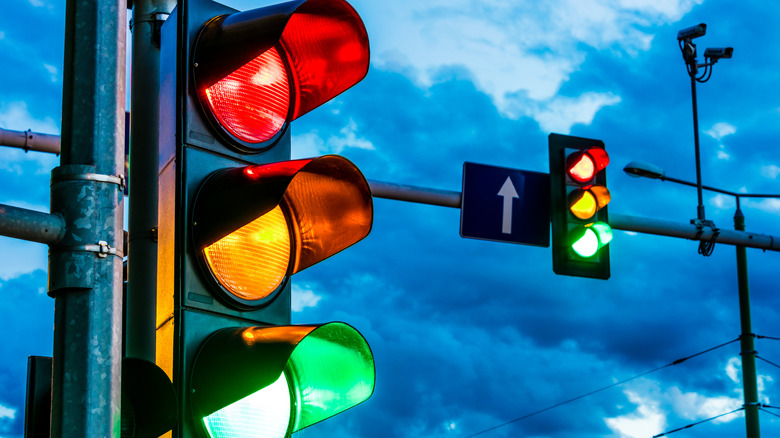
Emergency vehicles responding to urgent calls cannot always afford to wait for traffic signals to change. Fire engines, ambulances, and police vehicles need to cross busy intersections quickly, but giving them an unrestricted green light could put other motorists and pedestrians in danger. Emergency Vehicle Preemption (EVP) addresses this problem by allowing traffic signals to prioritize approaching emergency vehicles.
The technology connects emergency vehicles with traffic-control equipment, allowing an approaching responder to request a change in how an intersection handles traffic. When a request is received, the traffic controller adjusts signal timings to stop conflicting traffic and give the approaching emergency vehicle priority. EVP is only available at intersections equipped with the necessary hardware. Emergency vehicles can receive priority at selected intersections along their routes, but the technology does not automatically extend to every traffic signal they encounter. At unequipped junctions, responders still have to deal with regular traffic signals.
How EVP helps first responders beat traffic
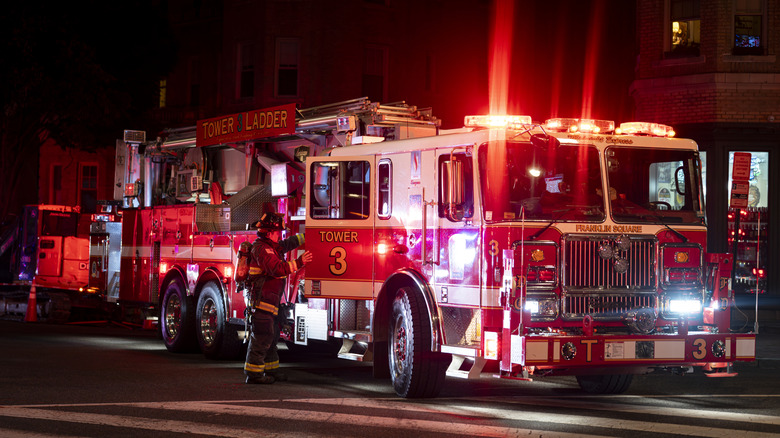
One way EVP works is through equipment installed in emergency vehicles and at traffic signals. A transmitter carried by an ambulance or fire engine sends a request as it approaches an equipped intersection, and a roadside receiver picks it up. The receiver then passes the request to the traffic controller, with systems using technologies such as infrared sensors, optical signals, and radio communication.
Instead of depending on equipment installed at individual intersections, some EVP networks manage signal priority through a centralized control system. GPS-enabled vehicle tracking provides information about an emergency vehicle's location, while traffic management software uses that data to coordinate signal requests along its route. This allows agencies to manage multiple intersections through a connected system rather than treating each signal as a separate installation.
This tech has helped emergency vehicles cross busy intersections for six decades. One of the earliest commercial systems, Opticom, was first sold to Buena Park, California, in June 1966. Some intersections also have confirmation beacons, such as Bismarck's system, which uses dark, solid white, and flashing white lights to indicate whether a request is waiting, being processed, or competing with another active request.
How modern EVP systems are advancing
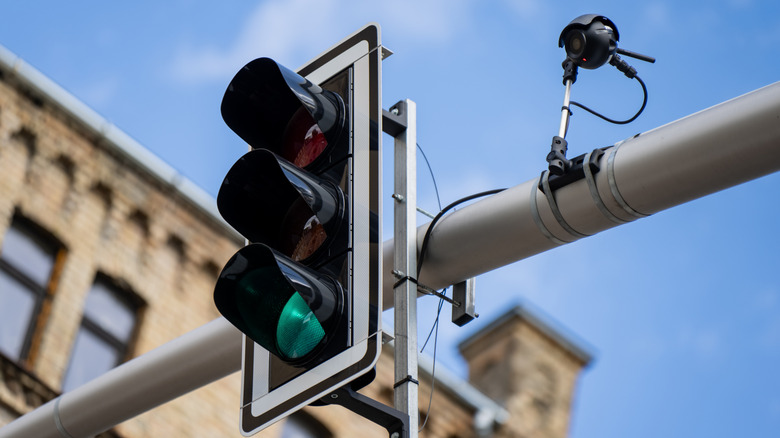
Early EVP systems relied on vehicle transmitters and roadside receivers, which could struggle when emergency vehicles were too far away, or traffic queues blocked their signals. Connected-vehicle technology is extending that reach by allowing emergency vehicles to communicate with traffic infrastructure over a wider area. Seminole County, Florida, provides a real-world example of this shift. The Florida Department of Transportation upgraded its EVP infrastructure with vehicle-to-everything (V2X) communication, allowing emergency vehicles to request priority from farther away. This also helps address situations where traffic queues could interfere with older line-of-sight systems. The deployment improved average emergency response times by approximately 90 seconds. When lives are at stake, getting first responders to the scene 90 seconds sooner can make a monumental difference.
Researchers are also exploring whether machine learning can make these systems more responsive. A May 2026 joint study involving Georgia Tech and Oak Ridge National Laboratory proposed a machine learning-based Emergency Vehicle Preemption system (MLEVP) that uses emergency vehicle locations, traffic sensor readings, and signal information to predict when intersections should prepare for an approaching responder. The approach could eventually allow EVP networks to anticipate an emergency vehicle's arrival instead of simply reacting to it.
So, the next time you find yourself waiting at a red light you expected to turn green, remember that an emergency vehicle could be approaching. First responders may be relying on EVP to navigate the intersection safely and reach someone in need as quickly as possible.