

What Exactly Is Stiction & What Causes It?
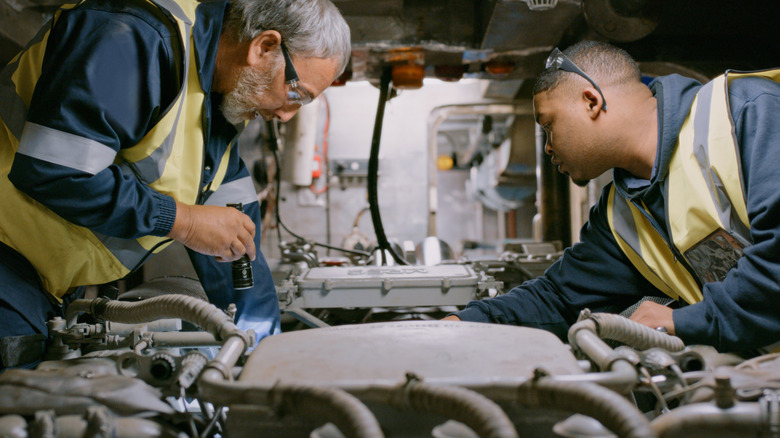
Diesel engines are built for tough jobs, from pulling heavy loads to being ideal for long-haul trucking. And like any engine, diesels have their pros and cons, one particular issue being stiction. In case the term is unfamiliar, stiction is short for static friction, and it refers to the resistance that must be overcome to get two touching surfaces moving.
This means it isn't technically exclusive to diesel engines, although it's used to describe when a moving part inside the diesel engine gets stuck or moves sluggishly instead of sliding back and forth like it's supposed to. This usually occurs when dirty, degraded oil turns into gunk, preventing engine parts inside from sliding freely.
Specifically, when engine oil gets too hot, it breaks down and forms a sticky varnish that clings to metal components, which makes diesel engine parts work less efficiently. Stiction is often an issue for any engine using HEUI (hydraulically actuated, electronically controlled unit injector) injectors, as they rely on hot, high-pressure engine oil to push fuel into the cylinders. However, stiction is also present in common rail direct fuel injectors, as the engine oil can still break down over time, forming sludge.
What triggers diesel engine stiction?
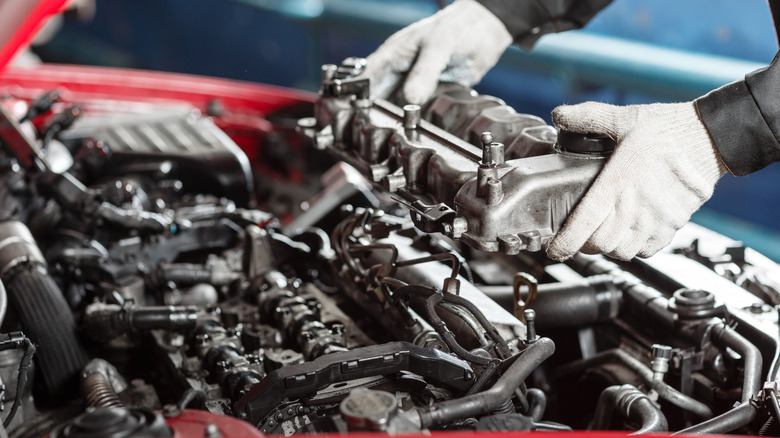
A few different things can cause stiction in diesel engines. For starters, oil degradation is likely the most prominent cause, as extreme heat weakens engine oil over time. When that happens, the oil leaves behind a sticky residue that coats internal parts, preventing the engine from operating smoothly. Not surprisingly, skipped oil changes and poor maintenance are another reason, since the longer you go between changes, the more time oil has to break down. Moisture can be an issue as well, because if the oil never fully warms up, moisture will get in. Frequent short drives can cause this issue to pop up since the engine won't have time to warm up completely.
Cold weather makes the stiction issue even worse because cold oil thickens up. That said, if the fuel injectors are affected, common signs of stiction include loss of acceleration and overall pulling power, and a shaky idle or an unevenly running engine. Decreased overall fuel efficiency is another symptom. Luckily, there are ways to combat stiction, from using diesel additives to picking a high-grade synthetic diesel oil. The latter can help keep the injectors clean and give the engine the strongest defense against wear. Additionally, sticking to a regular oil change schedule and using a quality oil filter will go a long way too.