

Should You Sharpen Your Chainsaw At A Higher Or Lower Angle In Cold Weather?
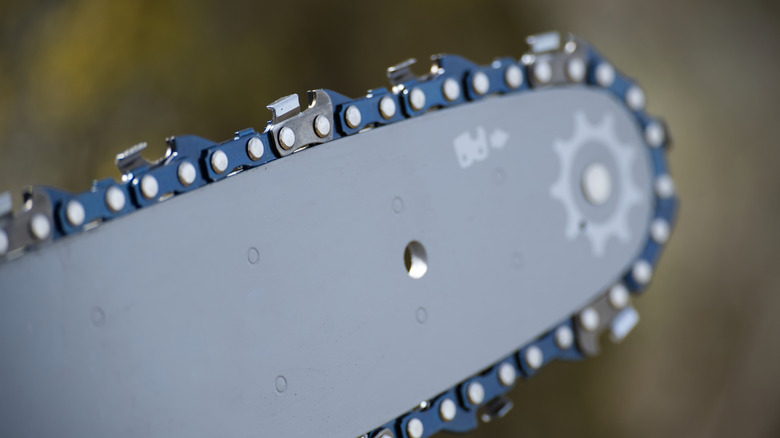
So long as you maintain it properly, a chainsaw chain can last a reasonably long time. This entails not pushing it beyond its physical limits, remembering to clean it, and, naturally, sharpening it once the blade edges begin to dull. Adding further nuance to that third task, you should be mindful of the angle you're sharpening the chain blades. As it turns out, when temperatures drop and winter is in full swing, you want to slightly lower the blade angle more than you normally would. This is done to make wood-cutting easier, and put less stress on your tool in the process.
The reasoning behind this comes down to how wood reacts to colder temperatures. Temperatures drop and lead to freezing, which makes trees and branches notable harder than they would be during warmer weather. Thus, you don't want an especially sharp, high-angled series of blades on your chain, as their cutting edge will struggle and break faster on the hardened wood. Instead, you should bring your sharpening angle down by about five degrees, finding a nice balance between your chain's ability to bite through the wood and remain durable enough to avoid breaking down quickly.
Additionally, this angle lowering will put less strain on your guide bar, since you won't find yourself pushing it through the wood with prematurely dulled blades. That said, as important as lowering your chainsaw blade's angle is, it's just one part of winter chainsaw use to keep in mind. There are other precautions and chainsaw additions to consider before trimming branches or felling trees in the cold.
What winter chainsaw use looks like beyond the chain
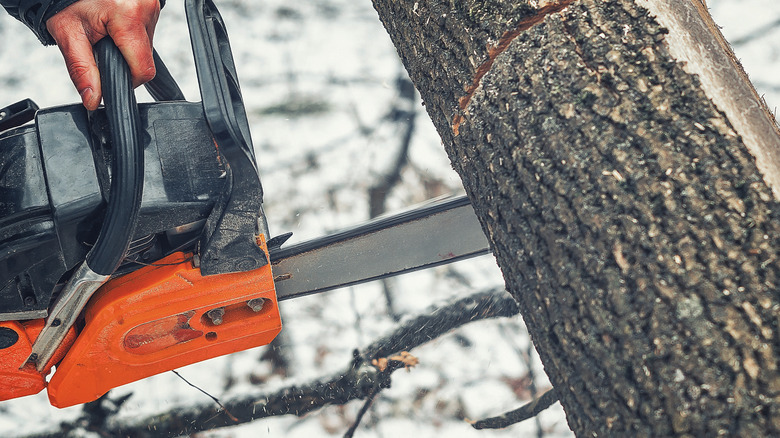
By keeping your blade angle low during the freezing winter months, you've taken care of just one key element of chainsaw use and maintenance during this time of year. There are a few other elements worth highlighting to further ready your chainsaw for winter, such as changing out the chain and bar oil for a winter-specific blend. For the latter, this oil type not only prevents rust and keeps essential parts moving smoothly, but its lower viscosity nature prevents gelling when temperatures get especially low. Therefore, you don't have to worry about performance struggles in this regard during wintertime.
Another great way to prepare for winter chainsaw use is to invest in winter-specific parts for your chainsaw, like starter housing and a winter air filter. This housing piece is excellent for keeping snow from entering the engine area and inhibiting performance, while a winter filter prevents ice formation that could bring similar negative impacts.
Additionally, like in any season, you want to keep your chainsaw clean during winter. That means wiping away debris, and not leaving it covered in snow and water, which could soon become ice. Snow can enter the fuel tank and impair performance, sawdust can trap moisture, and ice can expand and crack sensitive plastic and rubber components. When the work is done, don't forget to store your chainsaw properly, too.
Chainsaws, especially great ones, can accomplish a lot, even in the worst of conditions. Still, there's no need to make winter especially hard for your tool, hence why something as simple as adjusting your blade sharpening angle and other minor winter preparation tasks are paramount for making the season's labor just a bit easier.