

What Are The Disadvantages Of Pontoon Boats?
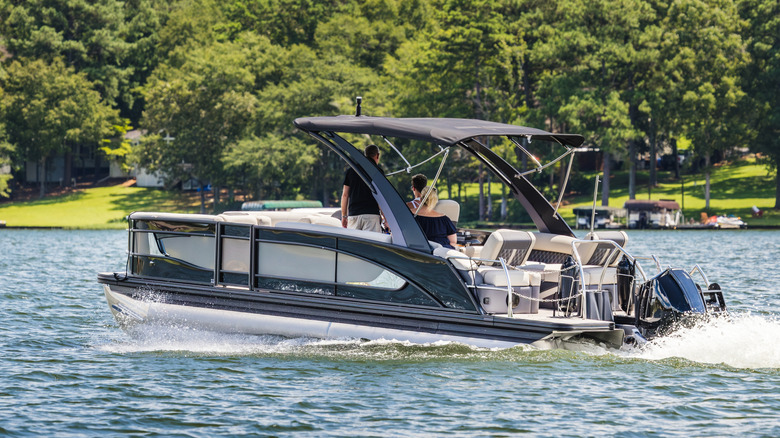
The pontoon boat has been a staple of recreational boating for decades now. Though its origins aren't definitive, it's believed the first pontoon boat was invented back in 1952 by a man named Ambrose Weeres. He took a flat piece of wooden deck and tied two hollow aluminum tubes to each side to keep it afloat. Though it's been refined over the years, that's still the basic idea of the pontoon boat. Nowadays, they're no longer made out of wood, and you'll typically have a motor and modern driving controls as well.
Pontoon boats are particularly popular for parties. Because they are generally these wide, flat surfaces, there's a lot of room for many people to be milling about on the deck, and the hollow metal tubes keeping it afloat also offer a good deal of balance as well. Because the design is so simple, there are many different ways you can use the boat's big, open space. Of course, you could also want a pontoon boat for other reasons, be it some relaxing fishing or taking the family out to the middle of a lake for a swim.
These boats can make for a really fun day on the water, but they aren't great for everything. The design of pontoon boats can make it difficult to do certain things other boats can do on the water or actually hinder the more casual experience they're designed for. Here, we're going to look at several of the possible downsides to using a pontoon boat that may make you want to choose a different design when you want to go out on the water.
Limited speed for water sports
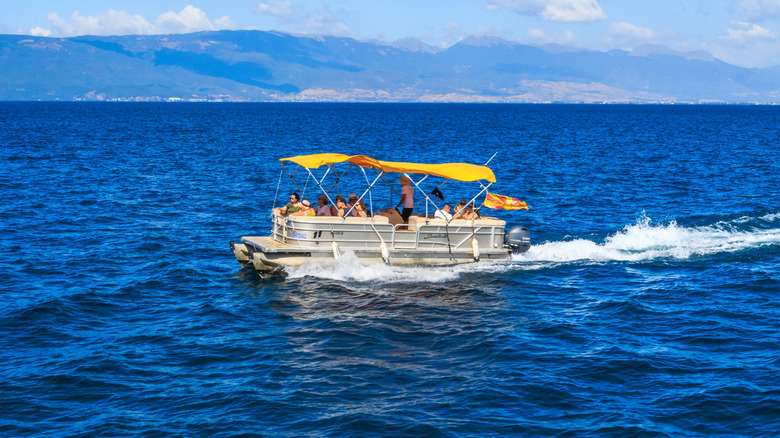
Few people can resist the thrill of driving a boat really fast on the water. When all you have is open water surrounding you, you want to push the capabilities of that boat and feel the wind in your face. Beyond that, many people enjoy water sports like water skiing or wakeboarding. If you're going out to engage in these activities with a large group of people, the natural instinct may be to get a pontoon boat because it will comfortably hold everyone. However, these boats put somewhat of a limit on how fast you're actually able to go.
Pontoon boats typically cruise somewhere between 20 and 30 mph. You certainly can water ski, wakeboard, or tube at these speeds, and for families, kids, or inexperienced people, these speeds are perfectly adequate for a fun time. However, if you're going out on the water looking for some serious thrills, a conventional pontoon boat might not deliver.
For these people, a V-hull speedboat is the preferable option. With a high-quality engine, you can reach speeds up to 50 or 60 mph with these boats. Plus, their design gives them more maneuverability, making it easier to take sharp turns for even more excitement. Speedboats designed for water sports are also better equipped for towing activities, allowing for a better experience when you're being pulled behind the boat. The speed of pontoon boats may be plenty exciting for some, but others may want a lot more from their thrill-seeking.
Safety issues in rough waters
One of the major benefits of a pontoon boat is its steadiness. Since its buoyancy is at the opposite sides of the boat rather than at one point in the center, you won't experience as much rocking on the water as you would with a more traditional V-hull design. Some pontoon boats even have a third metal tube along their center, called a tritoon, for even better stability. That's why pontoon boats make for such great boats for parties or entertaining, as deck-focused activities won't be disrupted all that much by the constant back-and-forth swaying of the boat.
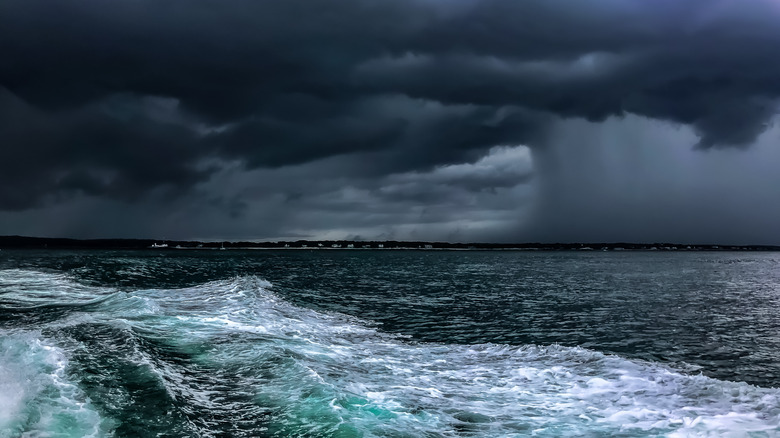
However, a pontoon boat's steadiness is really only achievable in calm or minimally choppy waters. Once the waters really start rocking, whether from inclement weather or even the wake of a larger boat passing by, you could be in a world of trouble. These boats are designed to be flat surfaces that float on top of the water. If water starts flying up onto the boat, you could find yourself with a lot of very wet passengers. If the boat takes on too much water, it could become swamped, potentially causing it to capsize or sink.
A V-hull design is much better equipped to handle rough waters. That centralized buoyancy that is actually beneath the surface allows it to cut through waves far easier. So, if you're planning on going out on the water with a pontoon boat, make sure you double-check the weather conditions and stay away from other boats as best you can. If that's not possible, choose a different kind of boat.
Possible noise problems
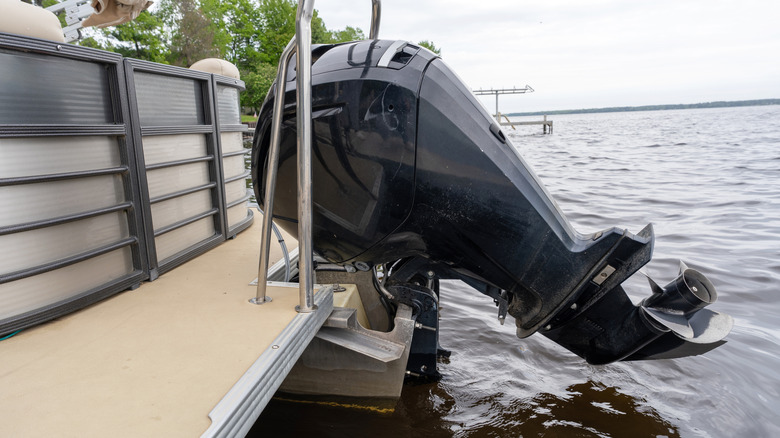
It's a little tricky to figure out where exactly you should put the motor on a pontoon boat. Most designs opt for an outboard motor. This means that the motor is externally attached to the stern of the boat, fully exposed to the air. Some of the coolest pontoon boats have inboard motors inside the hull, but that's rarer. In terms of driving the boat, there's no issue with an outboard motor in the slightest. Where the issue can come in is with how much noise it produces.
With an inboard motor, you're naturally going to have some muffling of the sound, as the parts of the motor are either underwater or concealed within the hull. An outboard motor being exposed means that there's less of a barrier to block the sound, which can result in a louder experience on the water. Because you likely want to use a pontoon boat for entertaining purposes, a loud outboard motor could make it difficult for people to comfortably talk to one another, drown out music playing onboard, or just be a general irritant to passengers.
Some modern motors have been able to decrease the amount of sound they produce. However, if you're renting a pontoon boat, you have no control over what motor is affixed to the stern, and if you own a boat, that means purchasing an expensive new motor just for sound control. If your pontoon boat party is okay with dealing with the noise until you get out to a certain part of the water to turn the engine off, great. If not, you could have a lot of people yelling at one another to be heard.