

How To Flush A Tankless Water Heater (And How Often You Should)
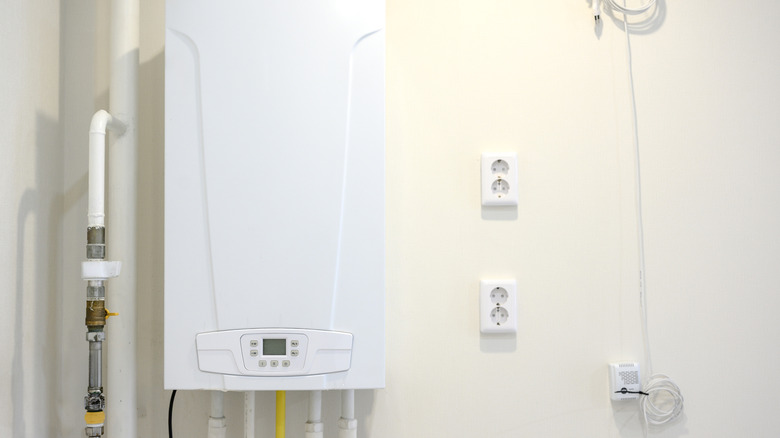
From supplying hot water on demand to the compact and unobtrusive form factor, tankless water heaters are a great addition to any home. Plus, a tankless water heater has a significantly longer lifespan than a traditional unit, meaning the higher upfront investment can be worth it. However, one of the most prominent disadvantages of a tankless water heater is the cost of repairs. Proper routine maintenance, including flushing the system, can help avoid issues and repairs. So, how do you flush a tankless water heater on your own?
For this, you'll need a cleaning agent. Pure white vinegar will do. The type matters, though, and you're best off using 2 to 4 gallons of white vinegar with a 5% concentration of acetic acid. You'll also need a 5 gallon bucket to hold the cleaning agent, two hoses, and a sump pump.
Alternatively, you can opt for a specialized flushing kit that contains everything you need, which costs as little as $70. For deep cleaning, you may also want to ditch white vinegar in favor of a high-grade descaler. This solution may cost at least $20 extra, but it's a specialized concoction that contains stronger acids. Because it is a stronger chemical, be sure to check your water heater's manufacturer guidelines before using a descaler.
The process of flushing a tankless water heater
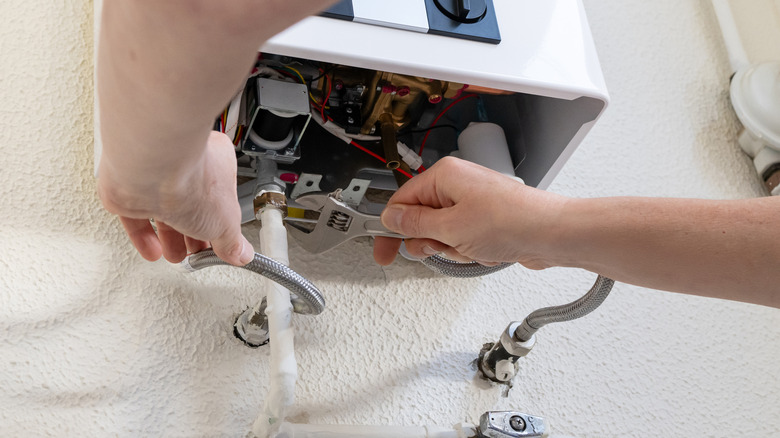
The entire flushing process takes about an hour. Here's how to do it:
- Avoid damaging the unit by first shutting off the water heater's power, gas, and main water supply.
- Pour 2 to 4 gallons of the cleaning agent into the bucket.
- Connect one hose to the cold-water service valve on one end and to the sump pump's output on the other end.
- Attach the second hose to the hot-water service valve. Then, place the other end of this hose into the bucket, along with the sump pump.
- Open both service drain valves and power on the pump to flush the system.
- Keep an eye on the pump while it runs for about 45 minutes.
- Shut off the pump once this is complete and let the cleaning agent drain.
- Close the cold-water service valve and remove the hose.
- Flush the cleaning agent out of your water heater. First, move the unconnected end of the hot-water hose into a sink or drain. Then, open the main cold-water isolation valve and let clean water run through the system for at least 5 minutes. Check that the water is clear of any cleaning agent before closing the cold-water isolation valve.
- Close the hot-water service valve, then detach the hose.
- Clean any debris caught in the water heater's filter screen.
- Turn on the main water supply to the water heater, and run hot water from a faucet to clear air or sediment from the line. Also, take this time to double-check for leaks.
- Restore gas and power to the water heater.
- Run hot water from different faucets across your home to ensure the water heater is working correctly.
After you've completed the process, you'll probably feel confident enough to flush your tankless water heater more often.
How often do you need to flush a tankless water heater?
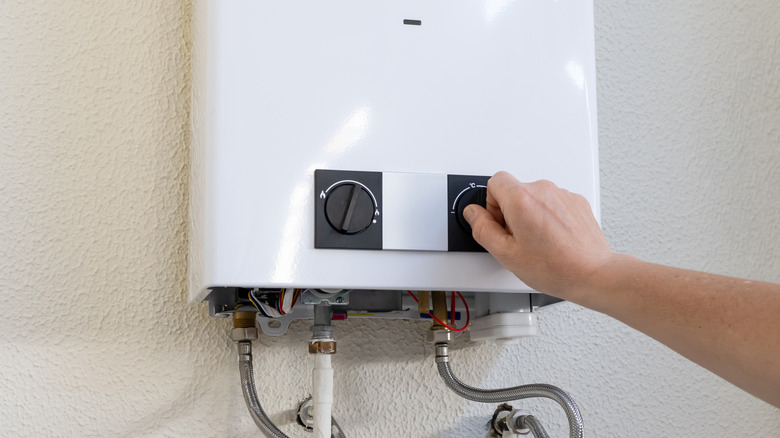
This should become routine maintenance. That said, you should probably drain your tankless water heater more often than you do. Most areas in the US have varying levels of hard water filled with mineral sediment. Thus, to keep the water heater operating as efficiently as possible, the bare minimum is to flush once a year. In areas with extremely hard water, you should flush your tankless water heater at least twice a year — in the spring and in the fall.
How can you tell if a tankless water heater needs to be flushed? Chances are, you'll notice it struggling to provide hot water when sediment starts building up. You may even feel the water pressure dropping or see cloudy hot water coming from your faucets. The dead giveaway is popping sounds coming from the unit. By sticking to routine maintenance, you'll keep these symptoms at bay, and your heater will work as intended for years to come.