

Full Vs Semi-Chisel Chainsaw Chains: Does The Shape Of The Teeth Make A Difference?
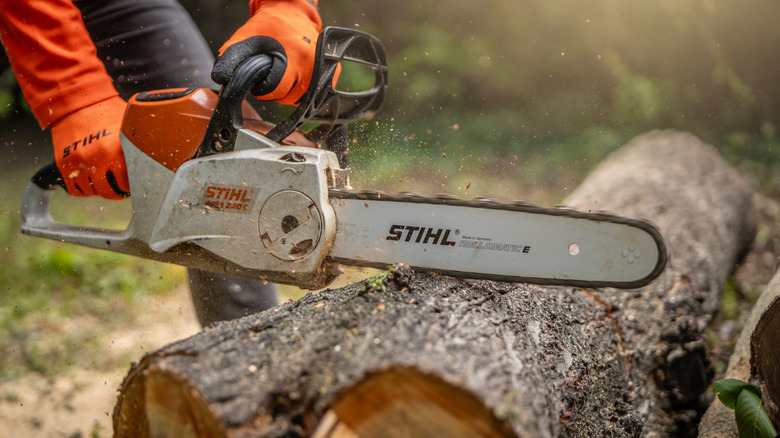
Depending on your needs, a chainsaw can be a good addition to your tool collection. But if you don't have that much experience using one, you may not be familiar with the difference between full-chisel chains and semi-chisel chains. The difference boils down to the fact that the shape of a chain's cutters affects the tool's overall cutting speed.
The flat top shape of a full-chisel chain allows for a faster cut compared to the rounded edges of a semi-chisel, which tends to cut more slowly. However, full-chisels have the potential to dull faster if they cut through gritty wood. In other words, if a full-chisel runs into dirt or other debris, it may not keep its sharp edge quite as long as a semi-chisel operating in the same conditions. The chain you choose and ultimately use will depend on why you need the chainsaw and the conditions you are cutting in.
For example, if you're cutting firewood or cleaning up trees after a storm, a semi-chisel chain is the better choice. That's also true if you're cutting wood in the winter time, as semi-chisel is better when dealing with frozen wood. But if you're cutting down a hardwood tree like maple or oak, a full-chisel is the way to go because it is more suitable for cutting through clean hardwood than a semi-chisel.
Sharpening and maintaining your chainsaw chain
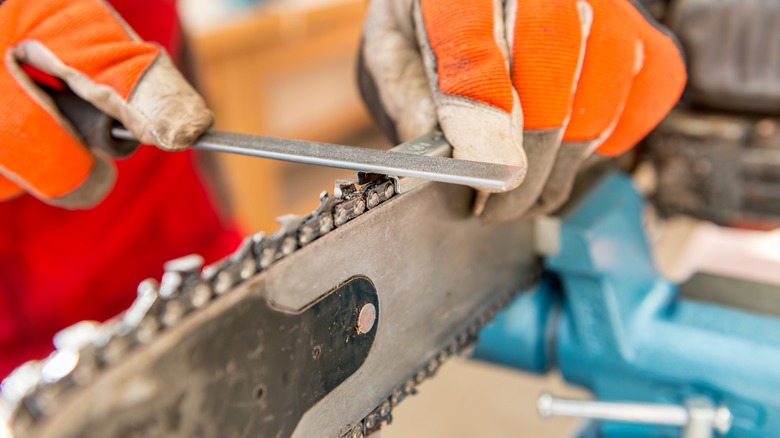
Getting the best performance from a chainsaw chain, whether a full-chisel or semi-chisel, means sharpening it regularly. Check your owner's manual for specific guidance on what this process looks like for your exact model. It may be that you can sharpen your chainsaw by hand, using a round file (also known as a blunt round file) designed to go between the cutting teeth. The file size you need does depend on the chain's pitch, so be sure to get a round file with the right diameter for your specific chain. You could also use a filing guide, which can help maintain both alignment and consistent tooth height while you're sharpening.
However, there may be times when you shouldn't try sharpening the chain yourself. If it has any loose parts, excessive wear, or broken cutters, it's a good idea to stop before you attempt to sharpen it. You may need to have the chain inspected by a professional before going any further, so that they can perform any necessary repairs. In some cases, it may simply be beyond saving, and you'll need to replace it.
Performance can dip if you're not keeping up with proper chainsaw chain maintenance, which is why you should keep an eye on the chain's tension before using. You should also keep the chain lubricated before using. After you're done, be sure to clean it up as well by removing sawdust and any other debris that may have come into contact with the chain. Take the time to also clean the chainsaw's bar groove and oil passages.