

Should You Switch To Winter Tires In The Fall Or Wait Until It Gets Colder?
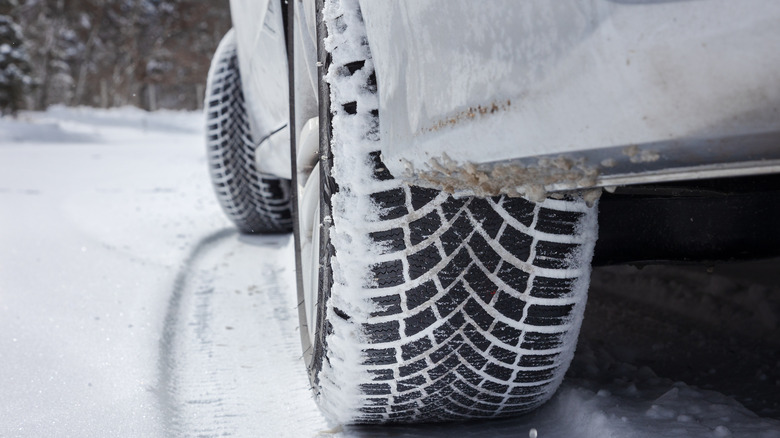
In a perfect world, you could just use winter tires in non-winter weather and save both money and hassle. But the world doesn't work that way. Winter tires are designed for the best possible grip and flexibility on snow-covered roads in temperatures of 45 degrees Fahrenheit and below. Since fall can get quite chilly, the question is whether it's reasonable to simply slap on the winter tires then and forget about proper timing.
Technically, you could, but once you consider the consequences, you'll probably abandon the idea. Due to the design of winter tires, cruising with them on warmer roads isn't optimal and will lead to faster wear, which directly impacts your wallet. Winter tires may also struggle on dry and wet roads, and in addition to having a negative impact on both the car's maneuverability and its braking response, they will hurt your fuel economy.
To be on the safe side, stick to the 7-7 rule for tires, which suggests switching to winter tires when the temperature drops under 45 degrees Fahrenheit (or 7 degrees Celsius) for seven consecutive days. Of course, local weather will play a role here. Some northern areas may see the first frost as early as mid-September, while in warmer coastal areas, it may not arrive until early November or later. Either way, the 7-7 rule will help keep you safe on the road and help you save money.
Can you stick with all-weather tires in the winter?
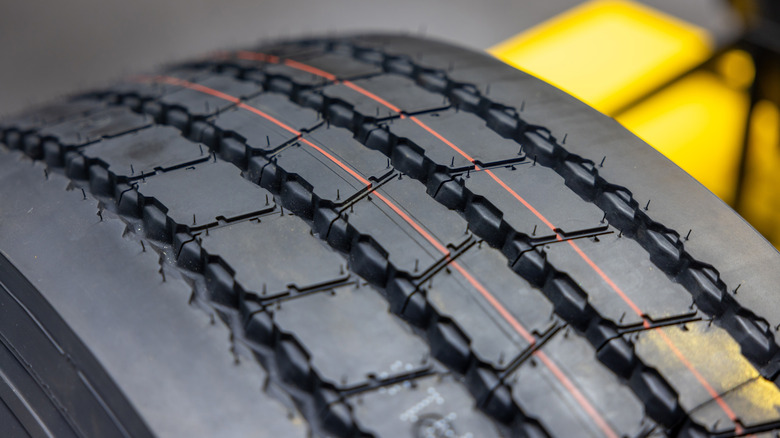
Timing-wise, the 7-7 rule can be a tricky guideline to follow due to the unpredictable nature of the weather. For instance, one day during the fall can be quite mild, while the next one could bring in the first chills. It gets even more convoluted when you add in factors like your commute time, as the temperatures you experience if you set off at dawn may be wildly different from those if you leave later. That's why all-weather tires come in handy as a way to bridge this gap. While they're technically non-winter tires, they can work in areas that have all four seasons since they feature the Three-Peak Mountain Snowflake (3PMSF) symbol. This means they were spin-tested on medium-packed snow, making them winter-worthy, and thus great for those in-between temperatures some drivers may experience before winter officially starts.
Nonetheless, there are significant drawbacks of using all-weather tires, and one of the most important is that they don't grip the road as effectively as tried-and-true winter tires. The 3PMSF rating means they're effective in mild winters with light snowfall and little ice, but the test itself doesn't measure ice traction or guarantee strong cornering or braking in snow. So, if you have winters where ice is a common occurrence, it's much safer to go with proper winter tires, as all-weather models (despite being super nifty for late fall) won't provide the same capabilities as those designed for maximum grip on actual winter roads.