

Does This Vaseline Hack Actually Do Anything For Your Tire Pressure?
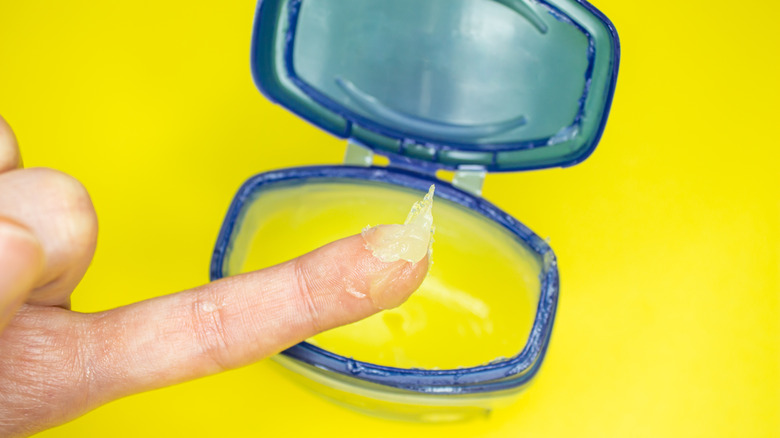
Keeping your tires properly inflated isn't just a safety concern, it can actually increase your fuel efficiency and extend tire life. It's not surprising, then, that people have tried all sorts of bizarre methods to ensure their tires aren't leaking air, including smearing Vaseline inside the valve stem. The idea is that packing petroleum jelly into the valve stem's core cavity and smearing some on the threads will make a seal between the stem and the cap, so any air that may naturally leak out of the valve, especially one that's slightly faulty, will be unable to escape.
In theory, Vaseline, like anything that can help create a seal, is a fine temporary solution for a leaky valve and can help keep your tire pressure at the optimal level. However, it's important to note that many modern valve stem caps include sealing o-rings that are specifically designed to prevent air loss. While the Vaseline hack might be useful with an ordinary dust cap, it shouldn't be necessary with a sealing cap.
Of course, valve stems are designed to admit or release air and then naturally seal, even without a cap. However, slight imperfections may allow air to trickle out, especially if the valve is older or damaged. In this case, an application of Vaseline may help stem the flow. That said, it's important to note that Vaseline is not a solution for leaks caused by punctures or damage to any other part of the tire.
A short-term solution at best
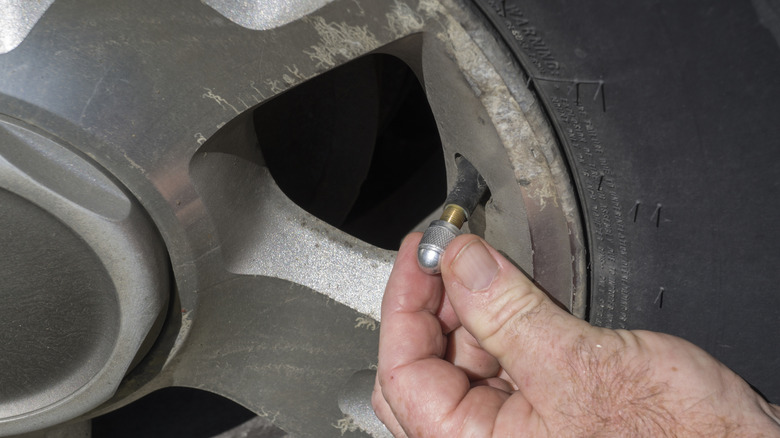
Vaseline may be helpful if you suspect a leaky valve, but you'll want to keep a close eye on things by frequently (and properly) checking pressure with a tire gauge. There is also an element of risk anytime you're applying Vaseline where it may come into contact with rubber. If the petroleum jelly reaches rubber parts made from a petroleum-sensitive material, such as EPDM or butyl, it could cause swelling that compromises their seal. This is a serious consideration if any part of your valve stem is made of rubber (which they often are). If you're unsure what your valve's rubber parts are made from, Vaseline is a big gamble.
A better, lasting solution is to skip the temporary fix and get any pressure loss investigated by a qualified mechanic. Damage to or contamination of valve cores can often cause leaks and should be replaced during tire service. Make sure you're using the right replacement parts, as well; the wrong caps can actually promote corrosion, while a cap with an internal sealing ring gives you another buffer against any potential leaks.
Also, bear in mind that a little pressure loss doesn't necessarily mean you've got a leak. Tires naturally lose some air over time, and pressure drops a little bit in colder temperatures. Significant, persistent losses, on the other hand, should always be promptly investigated.