

Not Toyota, Not Honda: These Are The Fastest-Growing Hybrid Car Brands In 2026

Ongoing geopolitical uncertainty and stubbornly high gas prices have pushed buyers towards more efficient cars in recent months, and some automakers have seen sales boosts as a result. Hybrid vehicles in particular have seen a spike in popularity, since unlike battery EVs (BEVs), hybrids can offer significant fuel savings without needing to rely on the public charging network. Toyota remains the biggest player in the U.S. hybrid car market according to Q3 data from Cox, but it isn't the fastest growing.
That title instead goes to Kia, which sold 36,000 more hybrid vehicles in the last quarter compared to the same time last year. Its sister brand Hyundai wasn't far behind, selling 30,000 more hybrids than it did the previous year. Still, it's not like Toyota had a bad quarter — it still shifted 32,000 more hybrid vehicles than it did in a year ago. That gave it a 44 percent share in the overall hybrid market, a slightly smaller share in percentage terms than last year, despite selling more hybrid vehicles than before.
As well as Hyundai, Kia, and Toyota all benefitting from the hybrid vehicle boom, several other Asian manufacturers are also cashing in. Both Honda and Subaru recorded higher hybrid sales than Q3 2025, although their sales gains were not as significant as their Korean rivals. Honda is said to be planning to focus its future plans around hybrid cars, with recent reports suggesting that its best-selling models like the CR-V might be ditching gas-only engines altogether.
The EV market is more of a mixed picture
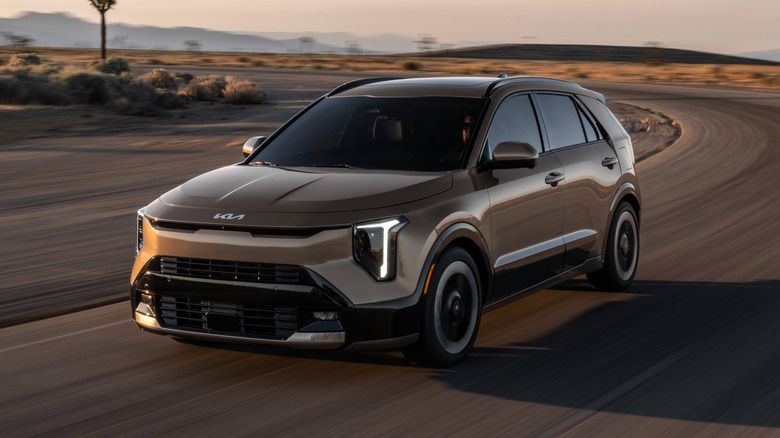
Hybrid vehicles are proving increasingly popular with buyers, but the same can't be said for EVs. According to Cox, EVs made up around 6 percent of the market in Q3 2026, a significant drop compared to their market share in the same period in 2025. However, there's a good reason for that: Federal EV tax credits were axed in late 2025, which led to a spike in EV demand in Q3 as buyers rushed to take advantage of the scheme before it ended.
As such, EV demand in Q3 2025 was unusually high, and Q3 2026 is more representative of the ongoing demand, according to Cox's analysts. Buyers looking for a used EV in the last quarter would have found that more inventory was available compared to the same time the previous year, although average used prices have increased even as the average price for a new EV has dropped.
Although market trends continue to change, the broader picture is that electrified vehicles are still becoming increasingly popular with American buyers. Demand for BEVs remains, albeit at a smaller level than last year, and some buyers still think PHEVs are the smartest choice, but the convenience of fuel-sipping hybrids (HEV) has proven to be the biggest draw for buyers in recent months.