

What Temperature Should You Set Your Thermostat To When Fall Weather Hits?
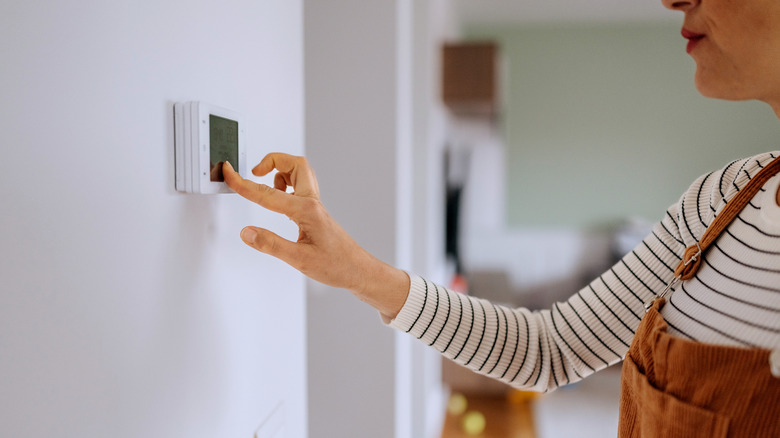
When fall temperatures begin dropping, it's only natural to wonder if your thermostat needs to start rising. But if you want to keep your system running as efficiently as possible (not to mention preventing your heating bill from skyrocketing), you're going to have to adjust your thermostat — maybe even a couple of times a day or more.
Many experts (including the ones at the U.S. Department of Energy) say the best temperature to set your thermostat is about 68 to 70 degrees Fahrenheit while you're up and about. When it's time to head to work (or as you're getting ready for bed), you should lower it. This could be as little as a degree or two or as many as 10 degrees. Whatever you ultimately go with, that temperature adjustment can help reduce heating expenses without lowering your comfort level along with it.
It makes sense. Instead of sticking to the same temperature around the clock and heating an empty house, you can save a little on your utility bill by letting your home cool slightly when you aren't home or awake.
Home maintenance tips to help your thermostat this fall
Thermostat adjustments work best when combined with basic home maintenance. (And maybe a little smart tech, too.) Start by checking all your windows and doors for drafts, then seal gaps with weatherstripping or door sweeps. If you don't have a programmable or automated temperature control device, it's worth understanding how smart thermostats work because they can make these adjustments a whole lot easier. These gadgets can automatically change temperatures throughout the day by sensing activity in the home or following schedules you set based on your overnight or working hours.
Some argue that lowering the temperature during these windows of inactivity is actually counterintuitive because the house will eventually have to work harder to get back to that ideal setting. But consider this: A cooler home loses heat more slowly than a warmer one when it's cold outside. When you lower your indoor thermostat, you shrink the Delta T.
The rate of heat loss is directly proportional to the indoor-outdoor temperature gap, so turning down the thermostat will decrease the amount of heat escaping over time. The reverse is also true when deciding on the ideal temperature to set your AC to in summer. These little adjustments can help your thermostat work more efficiently during fall and throughout the year.