

Why Some License Plates Have '5G' On Them (It's Not What You Think)
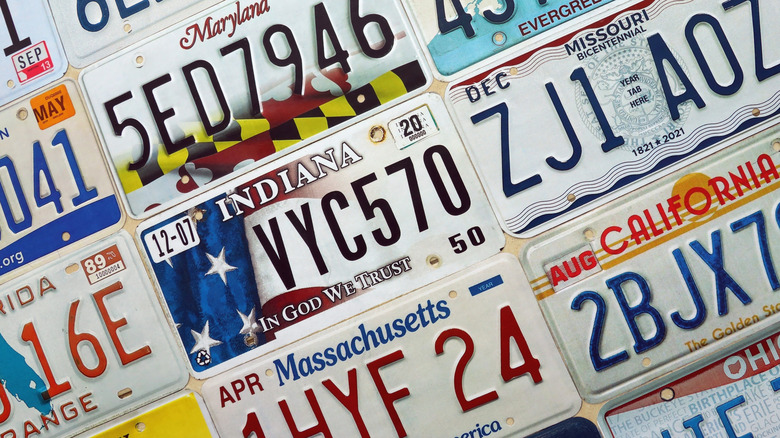
A license plate is about as low-tech as things can get on a car. After all, it's a simple, flat piece of aluminum. The fanciest bit about it is probably the reflective film. However, a video that went viral on Facebook posted June 4, 2026, claims that some of these plates in Indiana may actually be carrying wireless tracking capabilities — and it all has to do with the plates being labeled "5G."
At first glance, it looks pretty suspicious, too, since the label is a tiny mark on the side of the plate. As if the Flock cameras that capture a lot more than your license plate aren't enough, it seems Big Brother is now bypassing the need for cameras entirely.
However, the actual answer is much less intriguing. According to a fact-check by AFP, which cited the executive director of communications at the Indiana Bureau of Motor Vehicles (BMV), the mark is simply a manufacturer's date code for the reflective sheeting. All it does is help the BMV identify when the material was produced, so if that specific batch turns out to be faulty, they can easily identify it. The executive even sent AFP multiple photos of plates with other similar codes carrying labels like 3S and 5H to allay fears.
More evidence is provided by 3M, a major producer of the reflective film itself. In its April 2026 bulletin for its Preclear plate sheeting, the company says the whole point of these marks is to help officials identify the year the film was made. There's a warranty angle as well. Since 3M offers a warranty on its plate sheeting for up to five years, marks like those help it identify the plates and honor claims.
The code has nothing to do with 5G
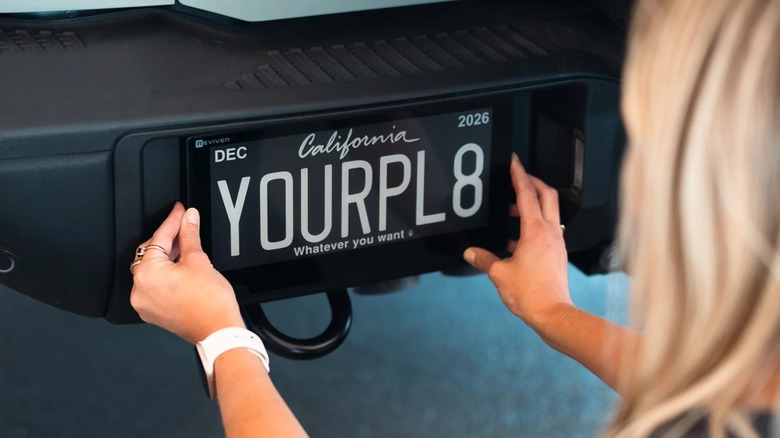
Of course, there actually are fancy plates out there that feature e-ink displays instead of real print. The state of California even started testing them back in 2015 as part of a pilot program. They came from a company called Reviver, which today also sells the $899 RPLATE digital plate, featuring Bluetooth and LTE connectivity. Having these would mean the device is either connected to the car's electronic system or packs a built-in battery. Of course, the standard-issue license plate supports neither.
After that initial pilot, California went a step further and opened digital plates to all drivers in 2022. Some of these can even feature GPS, though geolocation tech is limited to fleets, since ordinary vehicles are banned from using GPS-enabled license plates. In the specific case of Indiana, the state doesn't even offer digital plates.
Of course, ordinary plates do get tracked, sometimes through AI but more usually through something far more traditional: roadside cameras. Typically set up on poles, Indiana is estimated to have 3,604 automated plate readers across the state, according to the advocacy group Eyes Off Indiana.