

The Red Sea's Water Hides A Graveyard Of Classic Toyotas Beneath The Surface
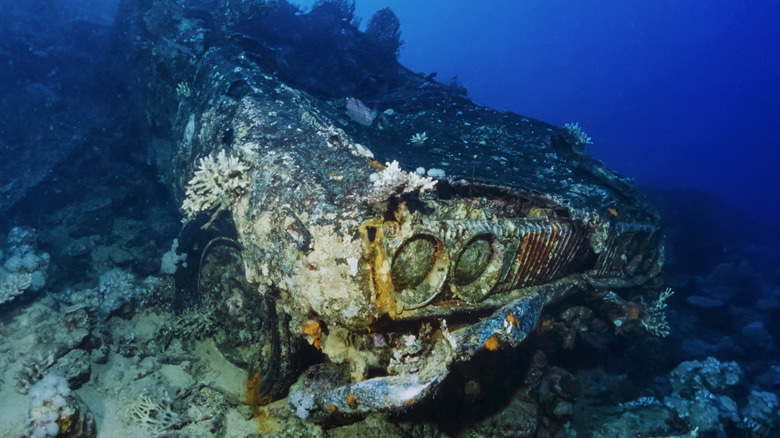
Occasionally automotive carriers sink beneath the waves, like what happened to a ship named Blue Belt in 1977 in the Red Sea off the coast of Sudan. Reportedly, it was carrying 190 Toyotas when it hit a reef in the Shaab Suedi area. There are no records of any cars being recovered, so they were presumably all considered lost. However, for a time, the wreck of the Blue Belt was visited as a popular diving spot for recreational divers. Sea Wolf Safari, an Egyptian diving company noted that huge manta rays could be seen among the Toyota Hiluxes, Coronas, and Crowns.
Reportedly, the wreck of the ship itself has become too dangerous to dive since 2013 when it fell off the reef. Additionally, Sudan and South Sudan have been issued level 4 "Do Not Travel" advisories by the United States State Department, meaning the area is likely dangerous for recreational divers.
No hope in restoring the cargo
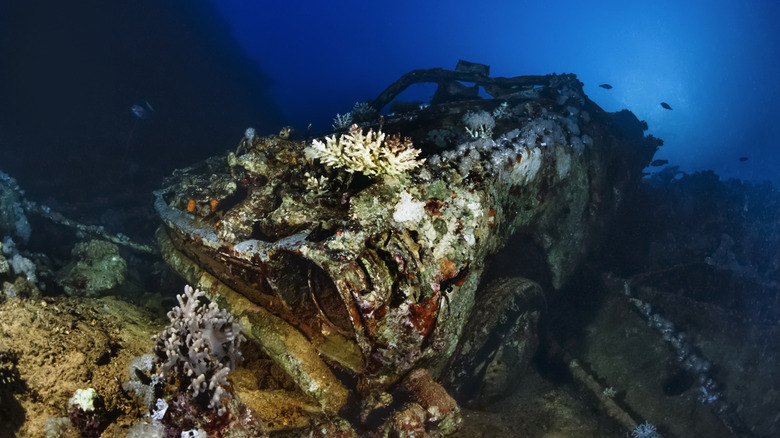
As one may expect, saltwater and ocean life are not kind to cars underneath the waves. It's unlikely, after almost 50 years in the Red Sea, that there's a pristine 1977 Toyota Celica just waiting to be restored. While there may be "plenty of fish in the sea" as the saying goes, the number of restorable classic Japanese cars sitting at the bottom of the ocean is vanishingly small.
Cars, trucks, and other bits of automobilia have been getting lost in the ocean essentially as long as ships and ferries have carried automobiles. In fact, when the Titanic sank in 1912, a French Renault Type CB Coupé de Ville was in the cargo hold. The former battlefields of the Pacific Theater of World War II are littered with combat vehicles from all sides of the conflict. Entire ships have even remained relatively intact after sinking, like the German cruiser Prinz Eugen, which has sat overturned near the Marshall Islands since it was used as a target for nuclear weapons testing after World War II.