

5 Ways WD-40 Can Help Maintain Your Chainsaw
Chainsaws can last a long time with proper maintenance, so you should make sure you're doing the work to keep yours in good shape. This includes things like keeping it clean, replacing parts as they wear out and make it harder for the tool to function, and not pushing the chainsaw beyond its physical limits. Throughout your chainsaw care journey, you should also be aware of which products can help you out at certain stages. For example, WD-40 can come in handy in multiple ways, so long as you use the right product from the brand on the right parts of the chainsaw.
While WD-40 is known as a single product, in reality, it's an entire diverse product line. The reason is that the regular WD-40 multi-use product isn't intended for use on everything. It's not recommended for application on certain plastics, and its flammable nature makes it risky to use on electrical components, and overuse can cause rubber to swell. Thus, if you want to use a WD-40 product on a chainsaw, you should pay close attention to which kind of WD-40 you're using and where you plan to apply it. Otherwise, you run the risk of doing significantly more harm than good.
On the whole, though, the WD-40 product line can do a lot to help out a chainsaw. These are some instances where it can serve as a maintenance aid.
Cleaning and degreasing
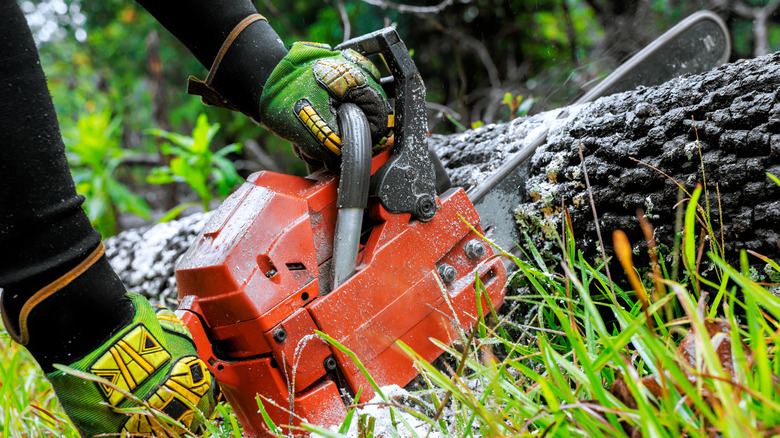
With extended use, the entirety of a chainsaw is bound to become covered in grease, dirt, and debris. While there are multiple ways to approach cleaning a chainsaw, if you have it on hand, a product like WD-40 Specialist Cleaner and Degreaser can go a long way. This specific product comes in a spray bottle, so you can apply as much as you need to impacted areas. It's able to break down stuck-on grime that regular cleaners may struggle with. It's also safe on materials such as most metals, plastics, rubber, neoprene, and carbon fiber, and it's non-flammable. Even so, you should remove any fuel or, in the case of electric chainsaws, unplug it or disconnect the battery before using this cleaner-degreaser combo.
Using this type of WD-40 product for chainsaw cleaning doesn't take much finesse either. It's as simple as taking a wire brush to loose debris, then spraying the cleaning solution throughout the tool. After letting the cleaner sit for a little while, you can use a clean rag to wipe it away along with the lifted grime, or even bring back in that same brush to work on problem areas that have yet to release. WD-40 also advertises this product as capable of protecting against flash rust with its built-in corrosion inhibitors, so using it gives freshly cleaned metal parts some short-term protection, too.
Chain maintenance
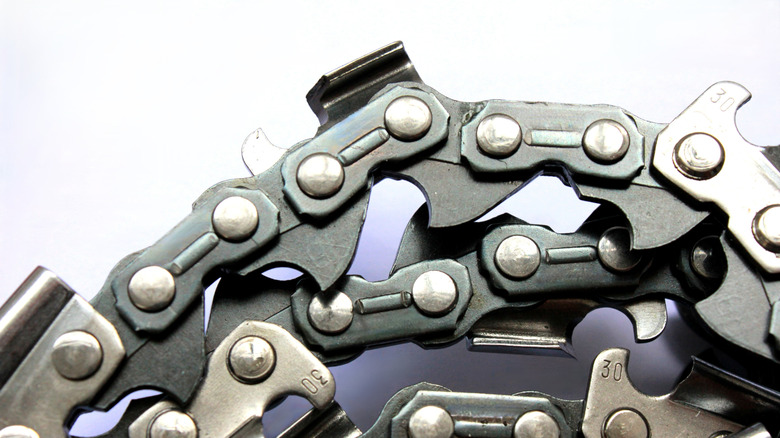
Naturally, the chainsaw chain itself takes a beating with each use, so proper care is essential to put off replacement for as long as possible. This looks like routine sharpening – you could even sharpen your chainsaw chain with drill attachments — and cleaning, with WD-40 coming in handy in the latter scenario. This is another case where the WD-40 Specialist cleaner and degreaser is the product to use, though regular WD-40 Specialist degreaser is a solid choice, too. Both can break down and remove all of the debris that can accumulate along a chain, potentially wearing it down and reducing its effectiveness prematurely.
First and foremost, you have to remove the chain from the chainsaw so that you can clean it effectively. Give the chain a 10- to 15-minute soak in a shallow dish or pan filled with degreaser. Then carefully wipe it down with a clean rag, bringing in a brush for any debris that refuses to budge. Once the chain is clean, give it a good rinse with water, pat it down with a dry towel, and hang it somewhere so that it can fully air dry. Don't forget to lubricate the chain once it's dry using manufacturer-recommended bar oil.
Bar protection
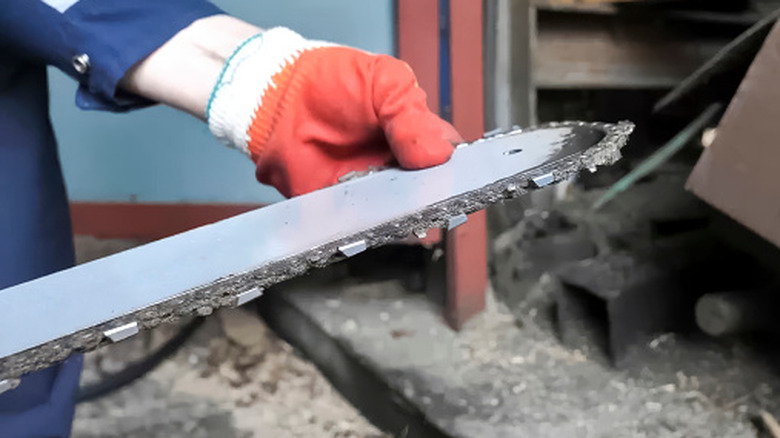
While chain maintenance is undeniably important, the last thing you should do is ignore the bar it attaches to. The bar goes through a lot of wear and tear as well, so it's crucial to take good care of it. Part of this process is preventative maintenance, using products that will protect your bar from breaking down over time. In this case, the WD-40 product that can help is the standard WD-40 multi-use product, since one of its main attributes is displacing moisture that could otherwise eat away at metal components like a chainsaw bar.
With the chainsaw bar cleaned, all you need to do is wipe down the chain-free bar with a cloth dampened with this specific WD-40 product. The WD-40 leaves behind a protective coating that prevents rust and corrosion from taking hold. If the regular multi-use product doesn't get the job done, though, there are other, stronger preventative WD-40 products to give a try. The WD-40 corrosion inhibitor is designed to block rust in the long term, with the brand behind it claiming that it provides defense for up to a year or two. It is worth noting that WD-40 recommends this product more so for long-term storage, so it's a good idea to utilize it on your chainsaw bar during the branch-cutting off-season.
Sap removal
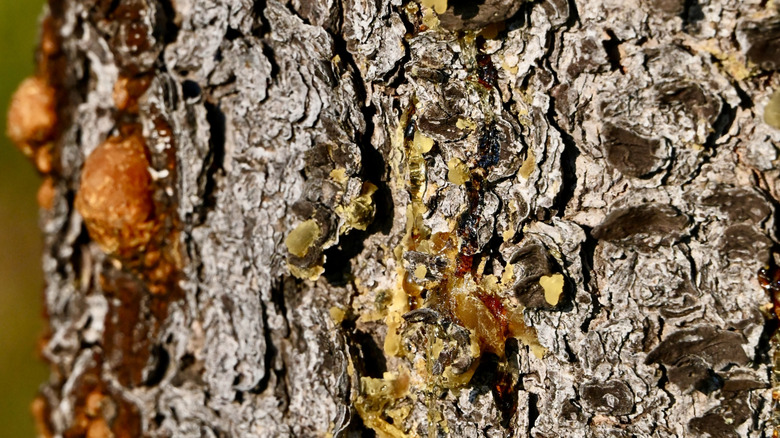
A frustrating reality of chainsaw use is contact with tree sap. This sticky, gooey stuff gets everywhere, and odds are it'll end up all over your chainsaw, from the handle to the chain to the bar. Removing it isn't a simple soap-and-water job either, so you have to employ something stronger. As it happens, the WD-40 brand can help out tremendously with sap removal. Better yet, the original WD-40 multi-use product is more than enough to remove stubborn sap.
Sap removal from a chainsaw is pretty quick and easy with WD-40 around. Put on a pair of gloves and apply WD-40 to the sap-covered area. You then take a rag or paper towel and wipe the sap and WD-40 away, pushing in a single direction rather than scrubbing. It may take a few passes, and you may need to reapply the WD-40, but it should clear all of the sap from the chainsaw in no time. If the sap is on a plastic part of the chainsaw, make sure to use something plastic-friendly like WD-40 Multi-Use spray to do the cleaning and avoid damage. It's also worth noting that WD-40 is one of several methods for removing tree sap from a car, if your car is a sap magnet as well.
Carburetor cleaning
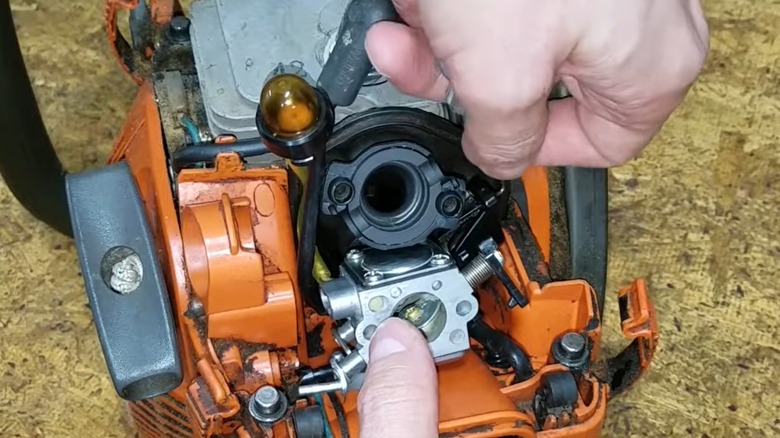
A carburetor is essential for a gas-powered chainsaw to function, blending the correct amounts of fuel and air to power it up and sustain said power for the duration of the job. Frustratingly, it can get dirty and clogged, dragging down the chainsaw's overall performance. If you're comfortable doing some chainsaw disassembly, you can clean the carburetor to, ideally, get it running smoothly again. As part of that process, you can use a couple of different WD-40 products on specific pieces to get them back into working order.
To clean a chainsaw carburetor, you have to disassemble it and clean each part for best results. Throughout this process, it's recommended to use the Smart Straw version of the WD-40 multi-use product, which handles both the carburetor body and its narrow fuel passages and jets. Spray the body down as needed, then aim the straw's narrow stream into each passage and jet to blast out built-up grime and debris. Alternatively, especially clogged passages and jets can be cleared out with WD-40 Specialist carburetor and throttle body cleaner. Just don't forget to scrub away any leftover varnish and deposits with a small brush, like a toothbrush, once you're finished.