

This Former Tech Retail Giant Launched CarMax In '93 As A No-Haggle Dealership
Once upon a time, you had to walk into a car dealership to buy a vehicle. Similarly, before national big-box chains or online retail giants, you had to walk into a Radio Shack or small regional shop to get hold of the latest electronics. Such is the case with Wards. No, not Montgomery Ward, though the confusion is understandable given their nearly identical names.
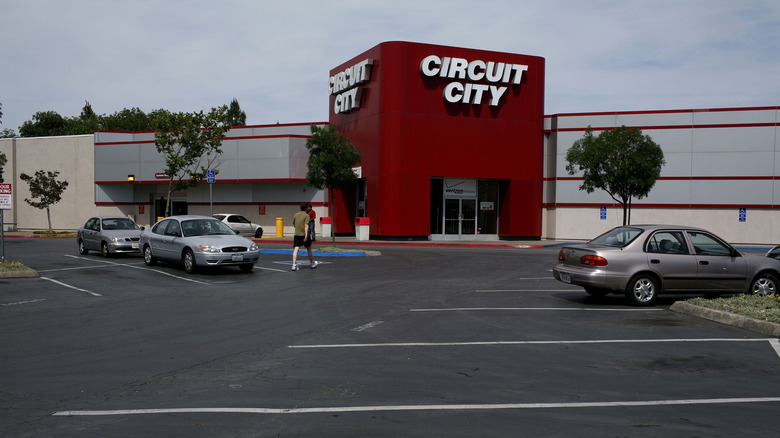
The Wards in our story opened in 1949 in Richmond, Virginia. Founded by Samuel S. Wurtzel, Wards started out selling televisions from a building that also housed a working tire store in the back. Instead of naming the business after himself, which he thought would be too hard to pronounce, he drew on his family members' names for the business: "W" stood for Wurtzel, "A" for his son Alan, "R" for his wife, Ruth, "D" for his son David, and "S" for Sam. In 1984, that company became Circuit City.
By the early 1990s, Circuit City was an electronics juggernaut, with some 375 stores and $7 billion in sales. Then-CEO Rick Sharp wanted to grow and diversify beyond consumer electronics, so in 1991 he began asking customers about their experiences buying a new or used car. More often than not, that experience was bad. Convinced he could do better by using the Circuit City model (and its money to finance the startup), Sharp and a team that included W. Austin Ligon opened the first CarMax auto superstore in October 1993.
The circuit blew, but its car company went to the max
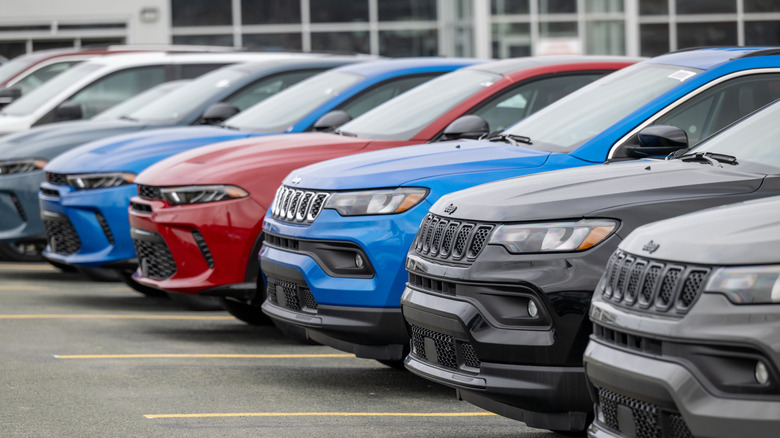
Rick Sharp and his colleagues sought to create a better place to buy and sell used cars, one with a far less aggressive sales posture and an upfront "no-haggle" policy, both of which were fundamental cornerstones of the business model. The first lot in Richmond, Virginia, opened as a wholly owned subsidiary of Circuit City under the CarMax Group. It had 500 cars, all under five model years old, with less than 70,000 miles on the odometer. The building included a service shop, and the sales floor featured computer kiosks that showed inventory with specific details about every car on the lot.
By 1996, CarMax had expanded to five locations, generating $305 million in sales. In 1997, it created a tracking stock and sold 22.5% to the public, raising $412 million. By 2001, 41 retail CarMax locations generated $3.2 billion in revenue and $91 million in net income. The following year, CarMax became a separately traded company.
Today, CarMax operates some 263 stores in 42 states. While CarMax has faced some controversies, including the illegal repossession of vehicles belonging to active U.S. military personnel, the chain sold about 780,000 used vehicles and another 540,000 wholesale vehicles at its auctions in the fiscal year ending February 2026, building a $16 billion portfolio in the process. Unfortunately, the same can't be said for Circuit City. After years of fighting the likes of Best Buy and Amazon, the electronics chain filed for Chapter 11 bankruptcy protection on November 10, 2008, and shuttered all remaining stores on March 8, 2009. The Circuit City brand was briefly resurrected in 2016, but once again fell victim to creditors in 2019.