

Do Electric Lawn Mowers Cut Grass As Well As Gas Mowers?
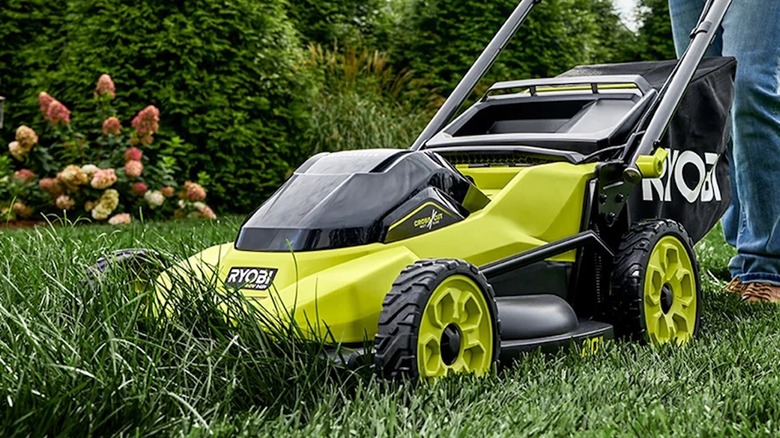
When it comes to outdoor power tools, there's often a debate as to whether battery-powered tools can measure up to the traditional gas-powered ones. People worry that switching to electric means giving up the performance they're used to, and the industry significantly shifting its priority away from gas doesn't help their worries. One of the more common gas-powered outdoor tools is the lawn mower, and tool brands of all kinds have come out with electric models. Most people maintaining a typical home yard shouldn't fret in the slightest about the performance they'll get with one of these more environmentally friendly lawn mowers.
For a small home lawn that receives regular maintenance, a battery-powered lawn mower is going to work just about as well as a gas-powered one. Depending on the battery, you could be getting anywhere from 30 to 60 minutes of continuous cutting. For instance, a Ryobi 40V HP 20-inch self-propelled mower with an 8Ah battery can get you up to 55 minutes of cutting on a single charge, which should cover a half-acre. For comparison, this is the same area coverage you'd get with a Toro 21-inch Recycler Self-Propel Gas Lawn Mower with a 140cc Briggs and Stratton engine. The cutting heights you can get from the two are quite similar too, with the Ryobi ranging from 1 to 4 inches and the Toro from 1.25 to 3.75 inches. For your average suburban lawn, there's very little difference between what a battery- and gas-powered lawn mower can accomplish. However, there are still times when a gas-powered mower is preferable.
When you want a gas lawn mower
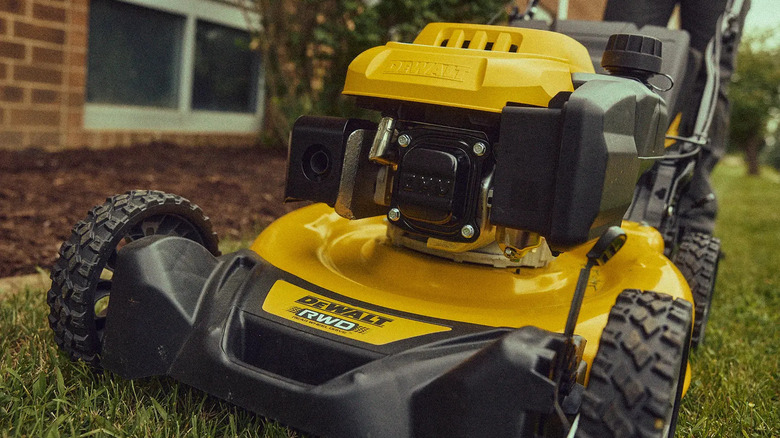
Like most electric lawn tools, battery mowers can stack up well against gas-powered ones, but they have to be put in pretty specific circumstances to do so. In a tight, controlled environment like a suburban front lawn, you aren't being overly demanding with what the mowers need to do. However, once you expand beyond those parameters, the ability of an electric mower to keep up starts to go down.
If you're on a larger property, where you need to regularly mow an acre or more, you'll find it more difficult to track down battery-powered walk-behind mowers that have the battery life to handle that. In that same Ryobi 40V battery system, the most coverage you're going to get is about three-quarters of an acre with a runtime of up to 70 minutes. Reaching that figure also requires two 40V batteries. Ryobi also has an 80V battery model with a 30-inch deck that handles one full acre, which will cost you $2,399. Meanwhile, a Toro 30-inch TimeMaster gas-powered mower with a 223cc Briggs and Stratton engine and electric start can get you an acre of coverage for $1,799, and it's the most expensive gas-powered walk-behind mower the company offers.
Gas mowers are also more useful in situations where you need to cut really tall grass that isn't regularly maintained. Your charge will drain faster when the mower is chewing through thick, overgrown grass, since any motor has to strain more in those conditions, and battery life is generally less than a tank of gas to begin with. You'll also have a harder time on rougher terrain with an electric mower, which is best used in flat, smooth environments.
Other pros and cons of electric lawn mowers
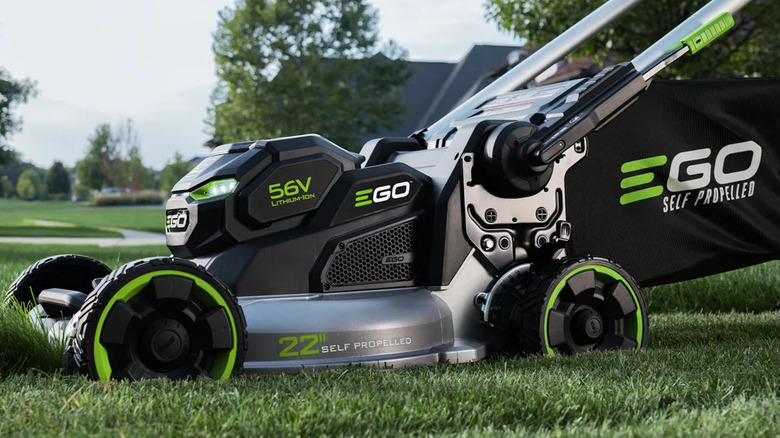
If you don't need the extra runtime and power of a gas mower to cover a lot of land, there are plenty of great reasons to switch over to an electric lawn mower from a gas one. Despite their upfront costs generally being higher than those of gas mowers, you're going to save money over time with these thanks to two big factors: maintenance and fuel. For the former, all you really need to do is make sure your blades are sharpened. Gas mowers require far more maintenance, from oil changes to spark plug inspections.
For fuel, you just need to have a battery and charger. Gas means constant purchasing, which can get extremely pricey if you mow regularly. Burning through a half-gallon of gas a week means you're spending roughly $111.80 per year, based on the current $4.30 national average as of this writing, and gas prices could always rise more. That fuel bill alone goes a long way towards making electric lawn mowers cheaper to own in the long run.
Electric mowers are best for small, suburban environments and are significantly quieter than gas-powered ones. Of the 77 electric walk-behind mowers tested by Consumer Reports, 62 aced their noise production tests for when you're right next to the mower or 25 feet away. None of the 38 gas-powered models tested even came close to doing that, with only three models getting an above average rating for noise at 25 feet away.
We've focused entirely on electric mowers with battery power. Though rarer, there are corded electric mowers too. With these, you aren't limited by battery runtime, which is great, but you are limited by the length of your cord or extension cable, making them impractical for some people. Still, these are relatively inexpensive, good options for those who don't mind the tether.