

Faulty Tire Sealant Bottles Cause Honda To Recall Thousands Of Cars For A Second Time
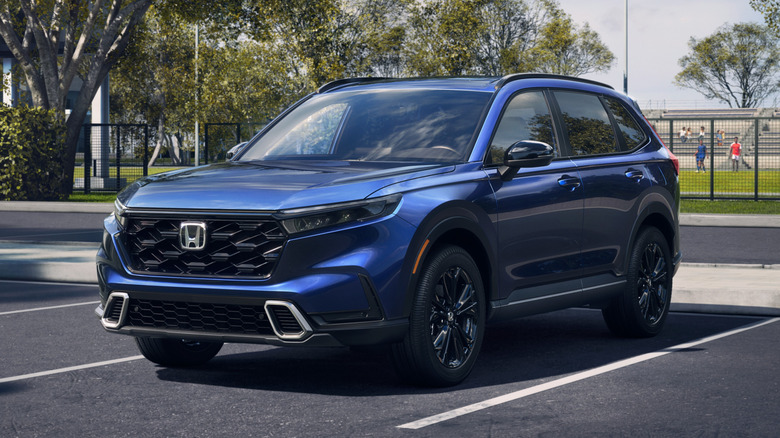
Honda is recalling thousands of Accord and CR-V models for a tire repair kit problem that was supposed to have been addressed. The issue first led to a June 2026 recall (26V366) covering 1,049,883 vehicles — one of many Honda recalls that have impacted millions of cars — with dealers instructed to replace the affected components. However, some vehicles may have received defective replacement parts during those repairs, leaving them with the same problem they had gone in to fix. Honda is now recalling 4,804 of those potentially affected vehicles for a second time.
The problem is with the sealant bottle inside the temporary tire repair kit, which uses a compressor to send air and sealant into a punctured tire. If its nozzle isn't properly connected to the tire valve, pressure can build inside the bottle. Should the pressure-relief valve also fail to work as intended, the bottle cap can detach forcefully, potentially injuring the person using the kit.
The original NHTSA investigation traced the issue to a design that didn't adequately account for this pressure buildup, along with improperly adjusted relief valves. By May 28, 2026, Honda recorded 53 warranty claims and eight injury reports, with no reported deaths. According to Honda's October 14 statement, this second recall includes 2,745 CR-V Hybrids and 2,058 Accord Hybrids from the 2023 through 2026 model years, plus one 2025 CR-V fuel-cell vehicle.
Honda's supplier accidentally shipped defective replacement parts
Honda introduced a redesigned nozzle after the first recall, but its supplier, Tek Corporation, failed to separate the old and new components. According to the October 8 NHTSA filing, inadequate controls at Tek's warehouse led to the recalled parts getting mixed in with the replacements. Some were shipped to Honda in place of the updated versions, defeating the purpose of the first repair.
Honda discovered the mix-up on July 3, when a dealership received incorrect replacement parts. After reviewing inventories and shipments, it identified the affected vehicles in September and approved the second recall on October 1. As of that date, Honda had received no warranty claims or reports of injuries or deaths linked to the mix-up.
Honda dealers will inspect the repair kit and, if necessary, replace its nozzle with a redesigned version without the problematic one-way valve, free of charge. Owners can check their VIN through NHTSA's recall lookup or Honda's official recall website. The new recall is numbered as 26V663 by NHTSA and PPW by Honda. Until the repair is completed, Honda advises affected owners not to use their existing kits. If a tire goes flat first, Honda directs them to Roadside Assistance at 866-864-5211.
Honda has recalled more than 3 million vehicles in 2026
The tire repair kit isn't Honda's only major recall story of 2026. By October 16, the automaker had filed 14 U.S. safety recalls covering roughly 3.1 million vehicles. Note that some models have been part of more than one campaign, and the figure also includes Acura vehicles and Honda motorcycles.
One of the biggest came in June, when roughly 960,000 Acura and Honda vehicles were recalled over rear subframes that can corrode due to road salt, leading to potential suspension failure. Affected models included older Pilots, Passports, Ridgelines, and Acura MDXs. Honda also recalled around 440,000 Odysseys in April because their side airbags could deploy unexpectedly after impacts such as potholes or road debris.
Honda recalled another 325,588 Odysseys in July because water damage could corrode the rearview cameras' circuitry and cause them not to display an image. Like the tire sealant issue, this was a follow-up recall after an initial campaign didn't fully resolve the original problem. Some Odysseys had already received redesigned cameras from supplier Magna under a 2020 recall, but those replacements remained vulnerable to water ingress. Honda's July recall campaign replaces them with cameras from a different supplier, Sony.