

5 Power Tools That Are Worth Buying Corded
Cordless power tools have come a long way in the last couple of decades. Many craftspeople once considered corded tools superior because of the inherent power and long-term reliability of AC compared to old NiCad batteries, but the advent of lithium-ion batteries and brushless motors has given cordless tools more power and longer runtimes than ever, making them a much more practical solution.
Untethering your tools offers many obvious benefits. You aren't dependent on being near an outlet, and they can be less hazardous because you don't have to worry about tripping over long cords strewn across the worksite. I've been collecting and using power tools for decades, and I tend to prefer the cordless options 90% of the time. That said, battery-powered tools have drawbacks, and I've found a handful of situations where you're better off buying the corded version.
Beyond the cost of high-capacity lithium-ion batteries, cordless tools have a few practical disadvantages. As powerful as battery-powered tools have become, corded models still typically have the edge in raw performance. What's more, certain power-hungry tools tend to drain even the highest-capacity batteries quickly. Batteries can also add a fair amount of weight, and on some tools, a dip in performance can cause serious damage to the piece you're working on. For these reasons, I believe most people would be much better off buying corded versions of a few tools.
Table saws
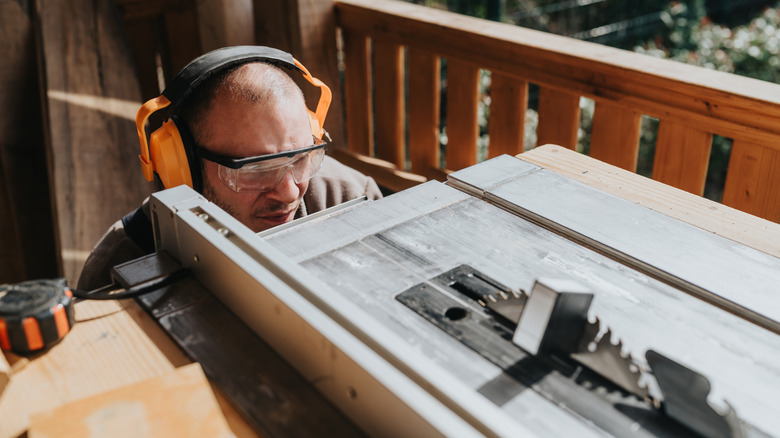
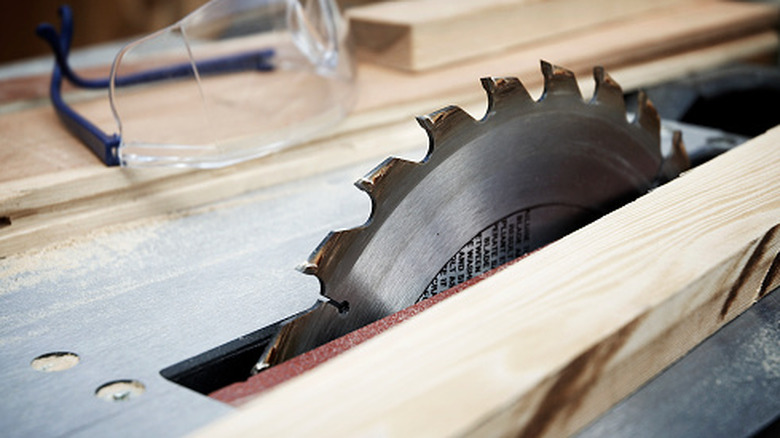
I've built furniture, shelves, and cabinetry for years, and I would never consider buying a cordless table saw unless I had no other choice. Several battery-powered table saws are available, but corded models are the best for most woodworking projects.
First, table saws are among the most power-hungry tools you're likely to encounter. Battery-powered versions of these tools demand the highest-capacity batteries available on their respective platforms to run smoothly, and even then, you'll probably burn through them quickly. A battery-powered model is a legitimate solution if you need a table saw for an off-grid jobsite without access to power outlets, but you'd be much better off with a standard corded one in virtually any other situation. There's no reason to keep swapping batteries on a large, mostly stationary tool when you can leave it plugged into a reliable power source.
Performance is a factor as well. High blade speeds and torque are absolutely essential for getting clean cuts without burning, tear-out, or kickback. This is true for most materials, but it matters even more with dense hardwoods like oak, maple, or walnut. Corded table saws generally deliver stronger, more consistent power, so you don't have to worry about power dipping when a battery starts to run low. This not only provides cleaner, safer cuts overall, but it also helps prevent accidentally ruining a cut or damaging a piece if the blade slows or sticks mid-cut due to a power loss.
Miter saws
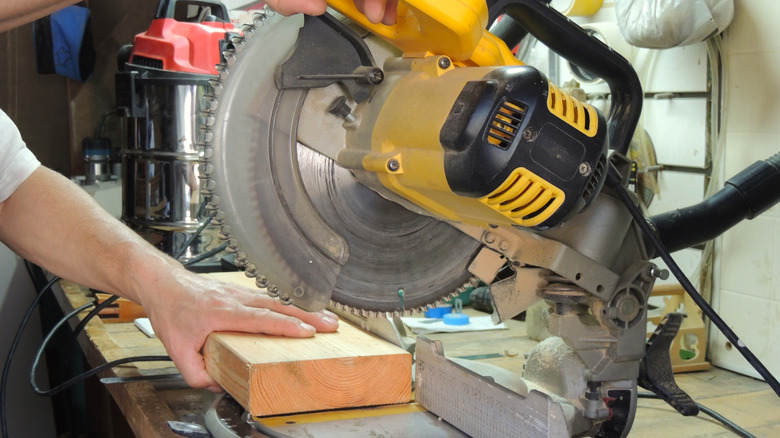
There is a little more justification for getting a cordless miter saw than a table saw. These tools are slightly smaller. They're also used much more often in construction projects where portability and gridless power are far more advantageous. You can often get away with dozens, or even hundreds, of cuts on soft pine or fir construction lumber, MDF or particle board, thin flooring, and trim or crown molding without too much trouble on a high-capacity battery — especially since miter saws are usually used in short bursts for crosscuts rather than rip cuts that require the tool to be engaged for longer. Even so, I still think that having a corded version is the better choice if you have reasonable access to a power outlet.
The reasons corded is generally better for miter saws are pretty much the same as for table saws. These are high-draw tools that drain batteries quickly when you force them to cut through dense materials like hardwoods or pressure-treated lumber. The higher, more consistent speed and torque you typically get from a corded tool also lead to more consistent cuts and less chance of the blade binding as power drops. Losing power mid-cut can even damage that last piece you're working on before you swap out the battery. A good blade running at high speed is much less likely to cause chip-out or fiber tearing on the piece you're cutting. Those using their miter saw in a shop are better off with a corded version, without question.
Sanders
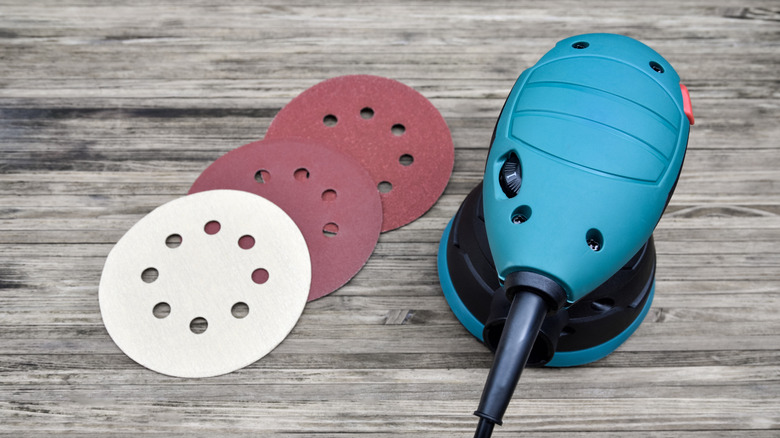
Some tasks only require a tool to be active for a few seconds at a time, while others can take hours. I've built tabletops and bookcases that required extensive planing and sanding. Other jobs, like smoothing primer on a car, can also require long hours with a palm sander.
Belt sanders are powerful tools that shave down uneven material to a rough but level surface fairly quickly. The downside is that they draw a lot of power, so cordless models often require heavy, high-capacity batteries if you don't want to swap them out all the time. On the flip side, random orbital sanders and finishing sanders have much lower power needs, but they often require longer runtimes when you use them to smooth large surfaces as you progress through a series of sandpaper grits.
I use 80-grit, 150-grit, and then 220-grit on most of my projects, which means I sand the entire thing to an even finish three separate times. I find that making sure the disks still have an adequate bite is enough to worry about without also needing to worry about whether the sander is still getting enough juice to operate at full speed and not slowly forcing me to spend more and more time on a specific area before I finally notice the battery is dying.
Another factor is that lithium-ion batteries are fairly heavy, and higher-capacity models weigh even more than the lightweight ones. A cord can be annoying, but it can also be irritating to use a bulky tool that weighs twice as much during a long sanding process.
Large angle grinders
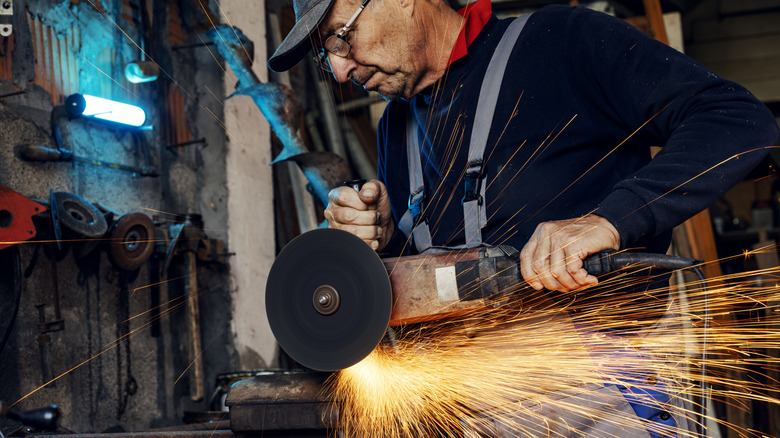
All angle grinders are high-draw tools. They need to rotate at high speeds, spinning heavy disks fast enough to cut and grind steel and other dense metals. Even so, small angle grinders are excellent cordless tools for most everyday work. Modern 18–20V lithium-ion battery systems provide plenty of power to cut through even the densest materials when you use a tool designed for 3, 4, 4 ½, or 5-inch disks. Big jobs might require one or two battery changes, but I've found that the added maneuverability is worth the trade-off most of the time.
The trouble starts when you want a larger model. Big angle grinders are designed to rotate 6, 7, 9, 10, or even 12-inch disks. These massive tools are fantastic for big industrial applications like large-scale metal fabrication, cutting rebar, or scoring concrete — jobs that require deep cuts and substantial material removal. However, they typically need bigger, more powerful motors.
The mechanical load the motor must bear increases exponentially with the circumference of the disk it's spinning. This increased friction requires a comparably higher torque to maintain speed. Forcing a disc without enough power can be dangerous, as it can bind, kick back, or even shatter. This is one of the main reasons angle grinders are considered one of the most nerve-wracking tools to use, even for pros. Corded models offer both power and consistency, making them safer and more effective.
Heavy-duty routers

Routers are kind of in the same camp as angle grinders. They draw a moderate amount of power, but a mid-to-high-capacity battery can give you enough juice to get most jobs done without much worry. There are a few different types of wood routers, and some might be better off corded than others. Smaller models designed for basic cutouts and trim work should be perfectly manageable on battery power provided you have a good, sharp bit. But in a few situations, heavy-duty routers are better off corded.
For example, you'll probably want to make sure that any router you plan to install in a router table is corded. Besides, you don't really need that same freedom of mobility anyway, and changing batteries and keeping them consistently charged is an unnecessary hassle when the router is installed in a table. Many router tables also have built-in power switches that only work with a corded tool plugged into them. It's also worth switching to a corded, heavy-duty router if you're doing any large-scale planing on a router sled. Tasks like this take a long time, and a corded tool means you don't have to worry about running out of juice halfway through.
In my experience, routers are among the trickiest woodworking tools to master, and losing horsepower mid-cut can make it even harder. The user is much more likely to damage the piece with burn marks, tear-out, or bit chatter.