

Should You Store Your Chainsaw Vertically Or On Its Side?
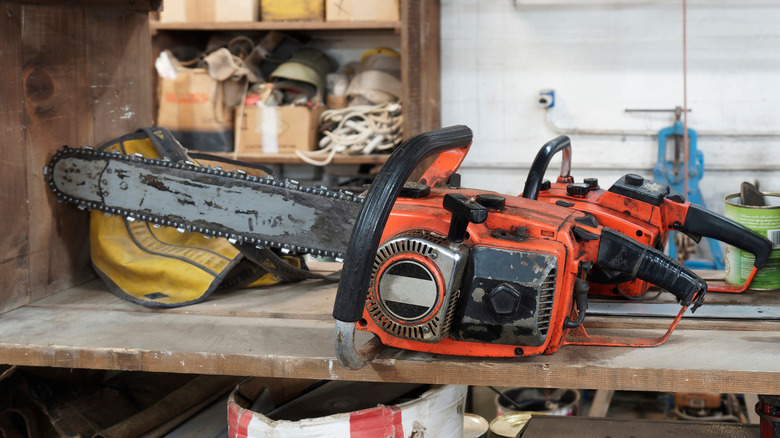
For a robust chainsaw like a Stihl, you'll have to cough up around $700. Since that isn't a small amount, you want to maintain your new purchase regularly to keep it running for a long time. The oft-ignored part of chainsaw maintenance is proper short- and long-term storage. Just like storing your power tools in the wrong place can decrease their lifespan, the same applies to your trusty chainsaw. So, should you store it vertically or on its side once you're done working?
If you plan on using it again soon, then the preferred method is to find a stable and flat surface and store the chainsaw upright. Even if it's for a day or two, dry and clean the chain to avoid any rust accumulation. In case you already have a designated spot for the chainsaw, feel free to hang it upright, but be sure to empty out the fuel tank first. Should chainsaws be stored on their side? While it won't instantly cause damage, only store it like that when in a pinch. When a chainsaw is too long in that position, it could lead to an oil leak.
When you're all done with it for a few months, then it's generally recommended to store the chainsaw without gas. Start by draining the fuel, and upon removing the guide bar and the saw chain, give them a thorough scrub. You should also clean other components, like the cylinder ribs. Finish it off by spraying some protective oil on the chain's surface and pouring a bit of specialized bar oil into the reservoir. One of the best tips for securely storing chainsaws is to cover them with a sheath that goes over the chain. For best protection, you can get a dedicated case or mount.
How to maintain your chainsaw
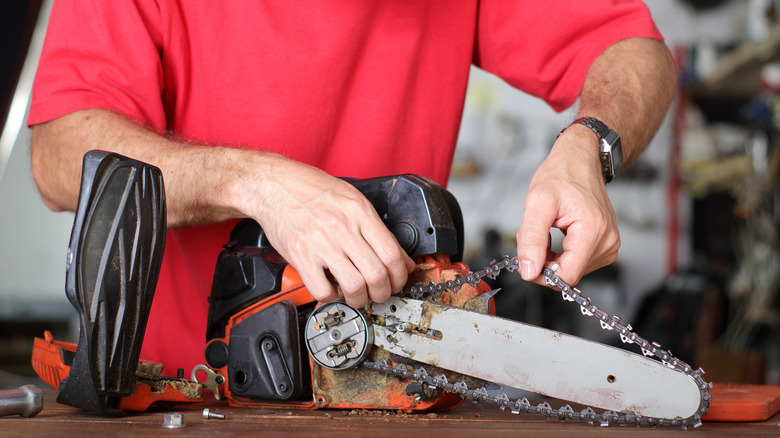
For your trusty tool to work at the top of its game, you'll probably need to do frequent servicing. Of course, cleaning it is a given. Every time you cut something, remove any debris from the chain. It seems like too much, but it will pay off as you won't have to deal with any wood buildup. Same thing for the air filter, which you should clean occasionally.
Most servicing has to do with the chain itself. You'll have to sharpen it periodically with a round file, and to make the process a lot easier, get a file holder. After securing the chainsaw, position the file on the chain's tooth with a file holder and sharpen each tooth individually. Do the same with the chain tension, which matters for cutting performance more than you think. Your goal is to get the chain to lie close to the guide bar without slacking, but not too tight. Start by loosening the guide bar's nuts and adjust the chain by loosening or tightening the small adjustment screw with a socket wrench.
Doing these few things will get you plenty of mileage, but if you need optimal performance, make sure to check its overall condition each time you use it. If the chain is dry, lubricate it and add extra oil if you're running low, which will keep it cutting perfectly and extend its lifespan. Eventually, the chain will wear out, and so will other components like the air filter. Nothing is impervious to Father Time, after all, but proper maintenance will save you money in the long term, as well as make the chainsaw a joy to use.