

What Does A Yellow Road Sign With 12-6 On It Mean?
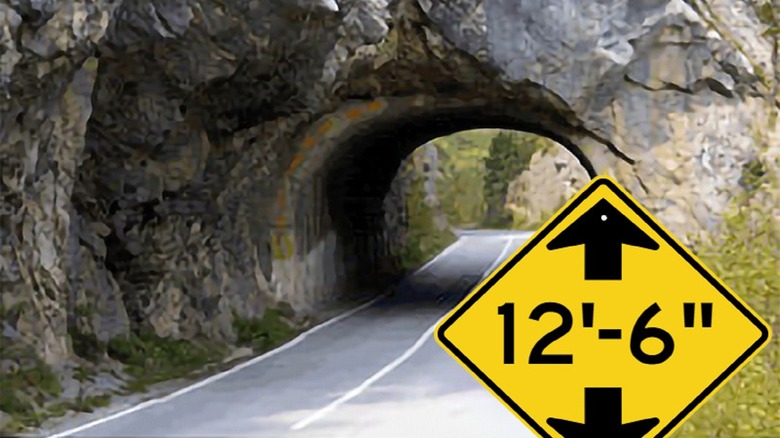
Roadways are full of signs that can often be difficult to parse at a glance, especially some of the more confusing examples. A good example is the 12'-6" sign you might have spotted; while it's possible you intuited that it's referring to height based on the apostrophe and single quotation mark, it may not be clear what height is specifically being referenced.
Called a Low Clearance sign, the 12'-6" is shorthand for 12 feet and six inches. On a yellow sign such as this, it indicates the distance from the road to the lowest overhead obstruction, including things like a bridge beam or the ceiling of a tunnel. It indicates the absolute maximum possible height of a vehicle for safe clearance.
The fact that the sign is yellow is no coincidence either. Yellow is the standard color in the U.S. for permanent warning signs, used to alert drivers to a hazard or upcoming hazard, like the common yellow and black, diagonally striped signs. Note that 12'-6" isn't a universal height; the actual numbers and height can vary depending on the height of the obstruction, and the Manual on Uniform Traffic Control Devices (MUTCD) calls for a Low Clearance sign anywhere that clearance is less than 12 inches above the statutory maximum vehicle height, which varies from state to state.
What drivers should do
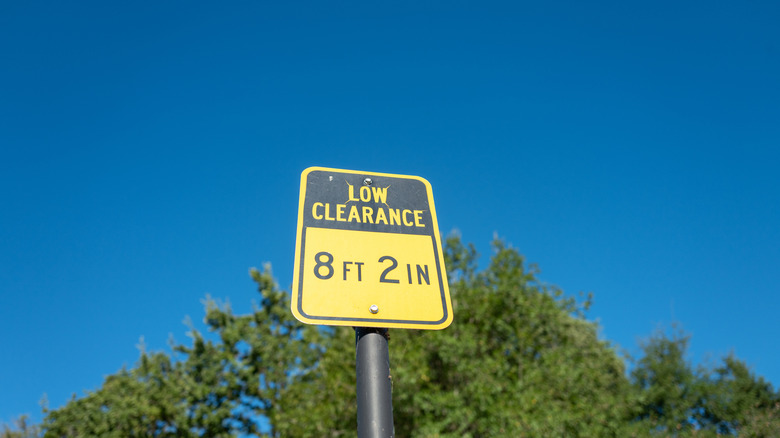
Like a yellow sign with a black T on it, a Low Clearance sign calls for a specific response from a motorist. If any part of your vehicle exceeds twelve feet and six inches (or whatever the listed height on a Low Clearance sign is), stop immediately. You'll need to turn your vehicle around and figure out an alternate route before you reach the obstruction. Bear in mind that roof racks and other mounted gear, like cargo boxes or ladders, can significantly increase your vehicle's height.
A Low Clearance sign may be on the structure itself, or it may appear some ways in advance of it. If the clearance is below the legal maximum vehicle height, the MUTCD also requires a distance plaque at the nearest intersection (or wide point of a thoroughfare) where you can safely detour or turn around.
Because resurfacing or other road work/repair can change the height of the pavement, agencies need to reevaluate these signs periodically. For drivers, particularly those of large trucks, it's critical to know your vehicle's height, and never assume a low-clearance warning is approximate.