

What Happens If A Laser Pointer Hits Your Phone's Camera?
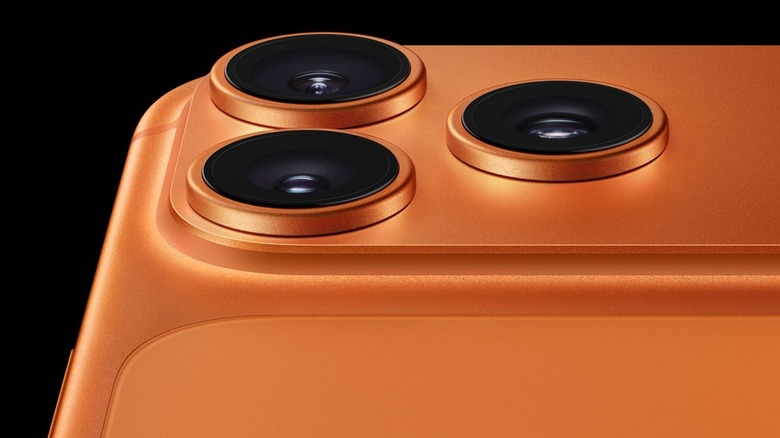
A laser beam hitting your camera lens in just the right way so as to cause visible damage is a statistical anomaly — but never impossible. Some green lasers are already known to damage Flock cameras. And in smartphones, with increasing complaints about such lasers resulting in problems ranging from pink dots to the whole sensor conking out, Apple has gone ahead and added a little note on its official iPhone handling guide. The note warns that lasers and lidar — the kind driverless cars use to see the world around — may "damage the image sensor." This damage can occur even if the camera is inactive. It's not reversible either, and you will see it as glitches in the camera preview, which then end up in the captured shots as well. Volvo's website already warns about the problem, but that hasn't prevented the EX90's Lidar from damaging the phone camera.
The thing is that a laser is a very strong light source that temporarily blinds cameras if it enters the sensor. The International Laser Display Association (ILDA) explains that as a beam enters the camera, the lens can concentrate it onto a tiny spot on the sensor. An image sensor is made up of millions of light-sensitive sites, but these spots are also pretty sensitive to heat. When a laser hits such surfaces, it causes them to heat up, resulting in damage.
How worried should you be?

Damage from lasers can certainly be worrisome and may even lead you to think about your eyes. Thankfully, while certain kinds can be dangerous, the types used at laser shows are typically only a problem for cameras. ILDA also notes in its research that camera sensors are generally more vulnerable to damage than the human eye. The kind of lasers that are more dangerous — pulsed lasers, like those used for tattoo removal — aren't frequently used outside in the wild. Concerts, for instance, almost always use the other kind known as steady continuous-wave lasers.
In fact, a 2017 study in the journal Optical Engineering found that steady lasers only cause minor damage to CMOS sensors (the same kind used in phones), like dimmer pixels. Meanwhile, the other kind can create bright "hot pixels" on the sensor, or in worse cases, lead to a whole row or column of failed pixels.
Certain types of lenses on a phone are more prone to damage, too — like the telephoto zoom camera. Car and Driver explains this is because they have smaller apertures and a more focused path for light, increasing the chances for a beam to concentrate on a spot on the sensor. Unfortunately, the best way to prevent this from ever happening is to avoid pointing the camera at laser light sources. At a concert, you can try to limit recording to parts without intense laser shows.
But what about the laser pointer in your drawer? Well, you generally don't need to worry about the legal, low-powered (5 mW) beam since it's far too weak to cause camera damage — even from a foot away, according to ILDA.