

Most Cars Haven't Made The Switch To Electric Water Pumps - Here's Why
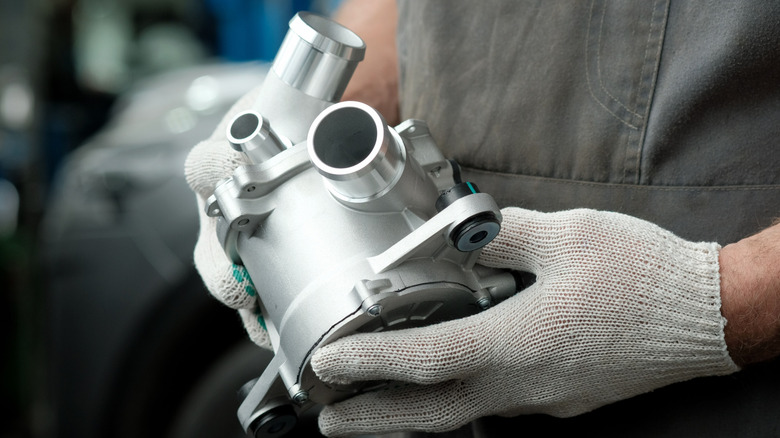
Unless you have a basic understanding of how an internal combustion engine works, you may not know that electric water pumps aren't the standard for gasoline cars. That might seem odd, especially in this era of high-tech advances in automobile design and manufacturing. Ironically enough, it's that level of technology that partly explains why most cars haven't switched over to electric water pumps.
An advanced electric pump contains built-in electronic controls that can adjust the speed of its operation in real time. This setup creates an added cost that automakers would need to consider during development and manufacturing. If the technology were implemented, the end result could be automakers offsetting that extra expense through the vehicles' MSRPs. Whether they would do this is another matter, but higher prices could make these vehicles less appealing overall, especially to buyers in the budget-car market.
Another issue that may be complicating mass adoption is the fact that a failing electric water pump isn't a quick fix. Since the pump's internal components are both electronic and mechanical, repairs can often be complicated. A damaged pump with cracks in its plastic case can also leak coolant, which can eventually spread to the engine and cause damage. Additionally, the electric components inside the pump can be vulnerable to the high temperatures under the hood. This adds another potential point of failure beyond just the physical wear.
The differences between electric and mechanical water pumps
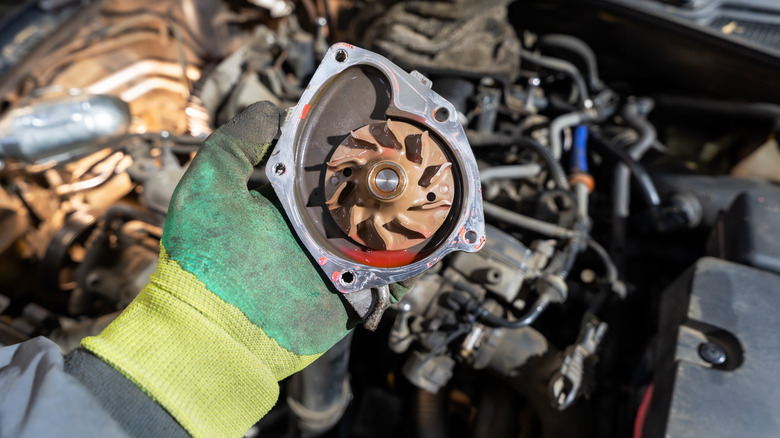
Although they're not as widely used in gasoline vehicles, electric water pumps are being utilized by some automakers in EVs and hybrids. These electric pumps move coolant through systems that control battery temperature. This thermal regulation affects battery safety, supports fast-charging, and helps maintain driving range for a more efficient operation. Some EVs may also have more than one electric pump to regulate the temperature of the vehicle's electronics and also control the interior climate.
A mechanical water pump in a conventional gasoline vehicle is typically powered by a drive belt. When the engine is operating, even if it doesn't need cooling, the mechanical pump keeps moving engine coolant throughout the system. Their design means that unlike electric pumps, mechanical models can't adjust their operation based on the cooling demands of the engine. The lifespan of a mechanical pump depends on a few factors, including installation, maintenance, and the condition of the drive belt, among others.
Perhaps the biggest reason why mechanical pumps are still so common in many vehicles is because of their simpler design versus electric models. Mechanical water pumps just don't have or need as many components in order to function, which means they can typically be integrated into the existing engine layout of a vehicle. As a result, automakers can add coolant circulation into the engine's mechanical systems without having to rely on a separate electric motor and its controls.