

Are Motor Oil And Engine Oil The Same Thing?
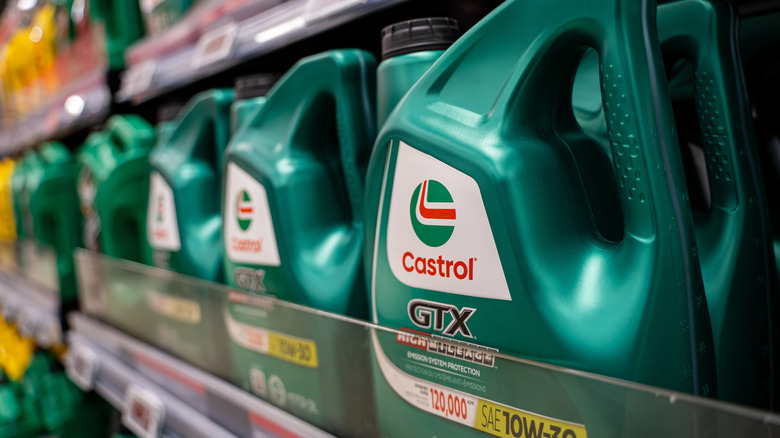
A car's engine consists of many moving parts. Those parts need proper lubrication to prevent damage. That's why, it's important to regularly check and change your vehicle's motor oil. It's worth learning about the different classifications of motor oil so that you can be more confident about using the right type of motor oil for your car. However, in your research, you might also hear of a product called "engine oil." Is this the same as motor oil?
Short answer: yes. Motor oil and engine oil are interchangeable terms. The American Petroleum Institute uses both to refer to the same types of products, although a review of its documents indicates it may be more likely to use the term "motor oil" in consumer-facing documents and "engine oil" in manufacturer-facing information.
That means you don't need to look for separate products when buying oil for your vehicle. If you've got the right motor oil, you've got the right engine oil. Still, you do need to know how to check your oil determine when it needs changing.
The importance of checking and changing motor (or engine) oil

Motor oil doesn't just lubricate essential parts of the engine. It also absorbs heat and distributes it evenly across an engine's components, keeping the temperature under control. Also, it removes or neutralizes contaminants and other corrosive elements that could otherwise cause harm.
To check your vehicle's oil level, first, consult the owner's manual. It can also tell you when the oil should be changed. It's always important to follow the manufacturer's instructions when completing these types of tasks. Generally though, the task involves fairly basic steps.
If your vehicle has a dipstick, the procedure typically start by parking on a level ground, turning off the vehicle, popping the hood, and checking for the dipstick. Consult the owner's manual if you're unsure where to find the dipstick. Pull out the dipstick, wipe it clean with a rag, and insert the dipstick fully back into the vehicle, then remove it again to check the oil level.
The dipstick markings indicate whether the oil level is within the recommended range. Check the oil level against these markings, and top up with recommended oil if necessary. You should go to a mechanic if you're unsure how to complete this process yourself.
Pay attention to the color of your engine's oil, as it can also provide valuable information. Again, your owner's manual can help you understand what the oil's appearance may indicate and when a change is due. Milky or creamy oil might warrant a trip to the mechanic so they can take a closer look. Dark oil however isn't necessarily a sign that it needs changing.