

What Do Buoy Tender Ships Do In The Coast Guard?
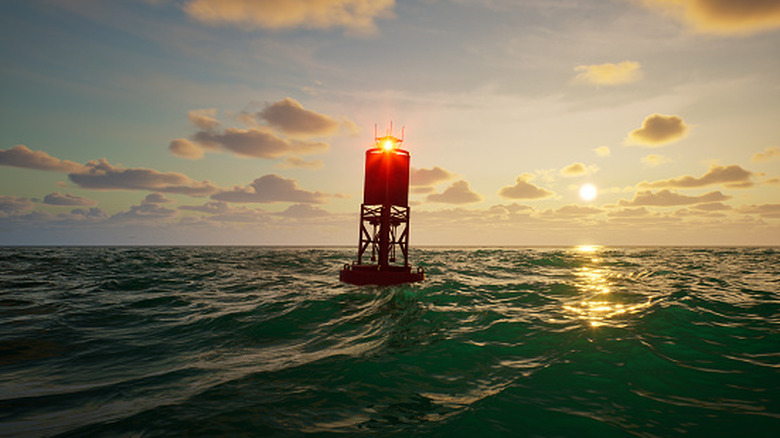
Buoys are essentially the boating equivalent of traffic signs and signals. In the U.S. Coast Guard, buoy tenders have the important responsibility of maintaining and replacing them. The term buoy tender refers to a vessel that handles buoy maintenance missions. In the Coast Guard, buoy tenders are cutters — a general term for larger Coast Guard vessels — and before the Coast Guard took over administration of the U.S. aids to navigation system in 1939, these vessels were referred to as lighthouse tenders.
A buoy tender's function has historically involved positioning, servicing, and maintaining buoys. This often requires removing buoys from the water. The process usually involves a buoy tender approaching a buoy slowly and hooking it with apparatus on the vessel. The buoy tender then lifts the buoy up onto the ship. Once it's secured, the crew can clean the buoy and perform repairs or any other upkeep tasks. In some instances, it may be necessary to replace a buoy entirely.
When the crew is done, the buoy tender releases the buoy back into the water. This involves first releasing the sinker, followed by the chainstopper, and then the chain. Finally, the entire buoy can be released back into position.
Additional roles of a buoy tender in the Coast Guard
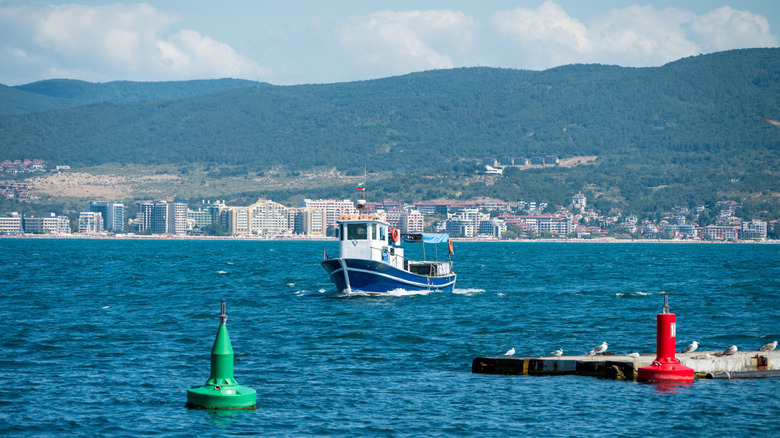
Buoy technology and designs have changed over the years. The job of buoy tenders has changed accordingly. For example, lighted buoys used to rely on primary 12-volt batteries for power. Buoy tenders were responsible for maintaining and replacing them according to a set schedule. When the Coast Guard began switching these buoys to solar power, buoy tenders were involved in swapping the primary batteries out for solar batteries. That's just one example of the way changing buoy technology has influenced the work buoy tenders do.
The Coast Guard may deploy buoy tenders to handle or assist with other tasks beyond buoy maintenance, including assisting with fisheries law enforcement and helping with spill cleanups. Buoy tenders may also coordinate with other agencies when necessary. For instance, a Coast Guard buoy tender deploying and servicing weather buoys in the Pacific Northwest works together with crews from the National Oceanic and Atmospheric Administration's National Data Buoy Center branch to complete certain missions.