

What Does The Yellow 'X' Sign Mean On Top Of Power Poles?
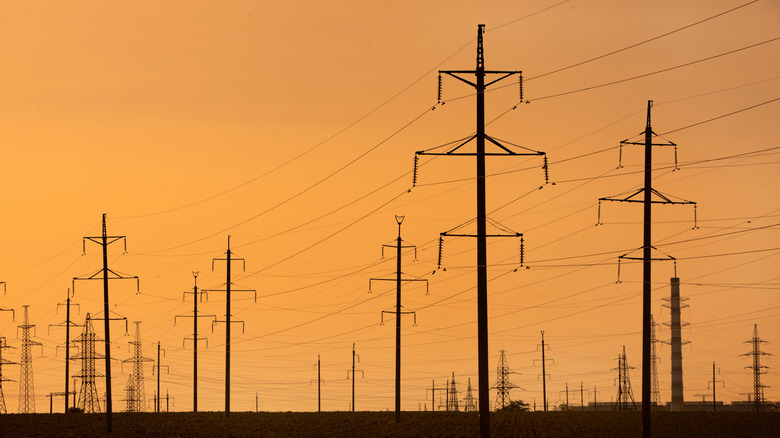
Whether you're driving or walking along, you probably pay little attention to the power poles and telephone lines overhead. However, if you look closely, you may notice the unique markings, signs, and visual elements on these poles.
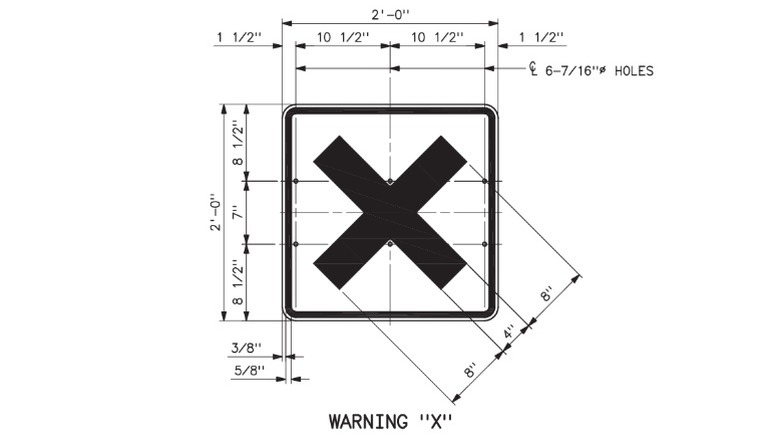
For example, some telephone poles have yellow grids on them, which serve as a visual warning for passing drivers, reflecting their headlights at night to help avoid collisions. Sometimes, though, you have to look even higher to see these signs or markings, and one you may find is a square-shaped, yellow sign with a black "X" in the middle. Unlike the yellow reflective sign, this one is mounted high on a pole where few motorists will see it.
That makes sense, though, because this particular sign isn't there for drivers. It's there for pilots, specifically those flying aircraft used to inspect and maintain power lines at low altitudes. The signs are known as aerial patrol warning signs, and as the name implies, are used to warn pilots — and more recently, drone operators — of power line crossings, unexpected changes in elevation, or changes in the line's direction, to avoid dangerous collisions or even just losing track of the line.
Signs for the sky
You probably haven't seen these yellow "X" signs on power poles, but you may instead have seen the orange and white balls sometimes attached to the power lines themselves. Those balls warn low-flying airplanes and helicopters about power lines and play a vital role in preventing deadly collisions.
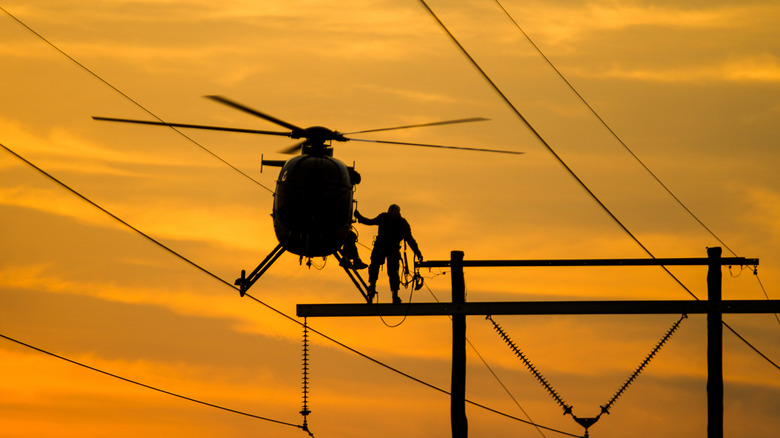
The yellow aerial patrol warning sign does a similar job but, instead of marking power lines to warn aircraft that might cross them, these signs are specifically for pilots who are following the lines as part of aerial inspections or transporting power company linemen to high, out-of-reach work areas. Power companies regularly use helicopters to inspect and maintain power lines from above, and the choppers can play a very important role in quickly inspecting and repairing downed and damaged lines. Some of this flying happens in poor weather and low visibility conditions, and these signs help pilots follow the power lines safely.
In recent years, drones have started playing a bigger role in these aerial inspections. While this lowers the risk of air crews being hurt in collisions, a drone colliding with a power line can still be dangerous for people on the ground, so the signs continue to play an important role.
Making a dangerous job a little safer
The Western Area Power Administration (WAPA), which operates under the Department of Energy, sets the guidelines for these signs. Often, the "X" signs are paired with other identifiers, including angle markers that indicate the line's new direction. If the change is 45 degrees or more, WAPA requires four warning signs to be installed, with the first one placed a minimum of 500 feet before the angled structure or pole, to give pilots plenty of warning.
Along with the "X" warning sign, power poles can have other signage for inspection and patrol aircraft, including warning arrows pointing out hazards or line changes, and mile markers so that aerial crews know exactly where they are on the line. As with the weights attached to power lines to increase stability, these yellow "X" signs might be small and go largely unnoticed by those who pass below them, but for those who pass above and work on them, the signs play a key role in making the dangerous jobs of power line workers and aerial inspection crews much safer.