

Does TCL Make Panels For Samsung TVs?
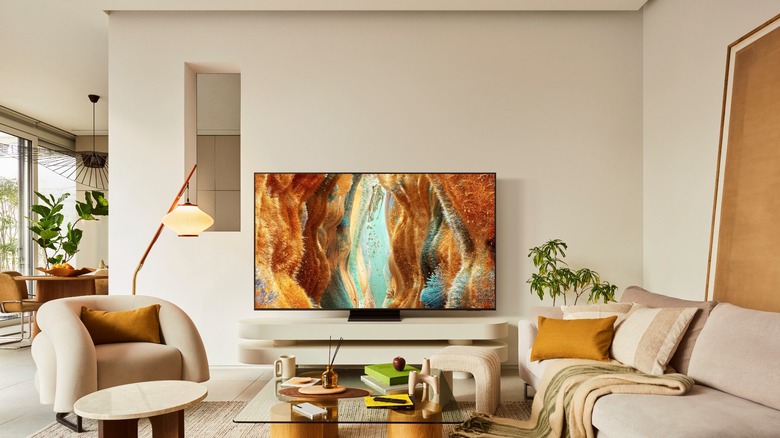
The logo you might spot on your TV's bezel doesn't always actually tell you who manufactured the panel itself — the most important part of the device, since it forms the picture. The thing is that most of the world's TV panels come out of factories run by just a few countries. And since there are many more TV brands than manufacturers, the math only really works out one way.
Most brands end up buying their panels from someone else. Samsung used to be an exception here, at least for its LCD TVs, until it shut that specific part of its business down. The company had been making LCD panels for TVs for roughly three decades, most recently through a sister company called Samsung Display. However, that business stopped making money, so Samsung wound it down to concentrate on OLED. Since then, the company's TV division has had to source its LCD panels from other companies.
One of those companies is TCL — though the manufacturer doesn't specifically carry that name. The actual name here is China Star Optoelectronics Technology (CSOT), TCL's display-manufacturing arm. It's a pretty big order, too, considering LCDs comprise the bulk of Samsung TV sales. Indeed, market research firm Omdia expects CSOT to supply around 7.3 million LCD panels for Samsung TVs in 2026. However, Samsung doesn't get all of its LCDs from TCL — the actual number for this year is around one in every five LCD panels.
How TCL became one of Samsung's panel suppliers
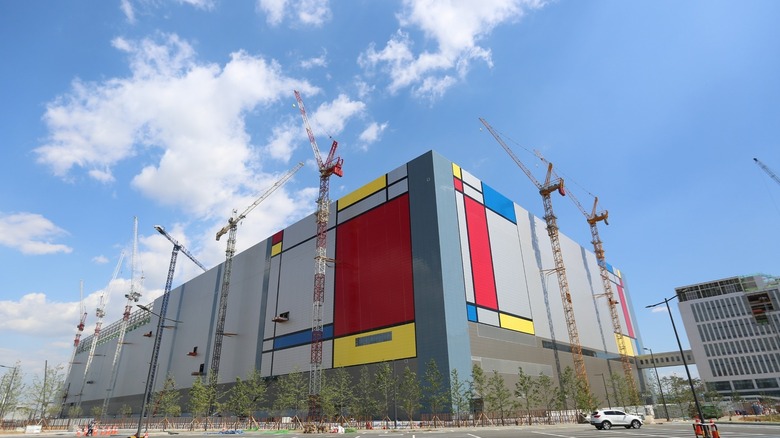
Weirdly, however, TCL also sells TVs under its own name, made mostly in Shenzhen, making it one of Samsung's head-to-head rivals in the global TV market. Clearly, that rivalry hasn't stopped the two companies from doing business with each other. Things actually started off with a factory. In August 2020, TCL said CSOT would buy a 60% stake in Samsung's LCD panel factory in Suzhou, China. Basically, TCL's panel business ended up taking over a Samsung plant.
That said, Samsung Display didn't walk away entirely. It went ahead and bought into CSOT itself by paying $739 million, which made it the second-largest shareholder in the company. In other words, Samsung Display swapped running the factory for owning a slice of the company. The partnership goes deeper than that, though. In June 2022, Samsung Display also handed its LCD patents over to CSOT, according to Korean trade publication The Elec. By the outlet's estimate, Samsung Display's entire LCD portfolio of about 2,000 patents went to CSOT.
All of this has helped make CSOT one of Samsung's main LCD panel suppliers. Still, that hasn't stopped CSOT's share of Samsung's orders from slipping. Omdia estimates numbers for each year, and for 2026, the estimate is significantly lower than last year's. CSOT is expected to supply 7.3 million panels for Samsung TVs in 2026, down from 9.2 million in 2025. The share is being eaten into by BOE, another Chinese panel maker, which has been on a roll lately.
Can you tell if your Samsung TV has a TCL panel?
You can only tell it to some extent, and it mainly has to do with the type of TV. Again, CSOT's work for Samsung is limited to LCD panels for it. For its OLED panels, the company has a different set of suppliers. Part of the OLEDs — specifically QD-OLED panels, Samsung's own take on OLED — are built by its sister company, Samsung Display. The other type of panels — WOLED, which is quite different from QD-OLED — is supplied by LG Display. In other words, your OLED TV is certainly not manufactured by TCL. For LCDs, there's a chance it is indeed made by TCL. Specifically, there's a one in five chance, as mentioned above.
Beyond that, though, there's usually no way of telling which company built the panel in a particular Samsung LCD TV. It also doesn't help that Samsung has a history of mixing panels from different suppliers into the same model — a practice some buyers have even nicknamed as the "Samsung Panel Lottery."
The good news here is that regardless of the panel you get, you will mostly get to enjoy the same picture quality. In fact, RTINGS actually tested one Samsung model in three sizes, each with a panel from a different company. It found only small differences between them. Amusingly, the panel that Samsung itself made for its own TV didn't pull ahead either.