

What Do Orange Flags On The Side Of The Road Mean?
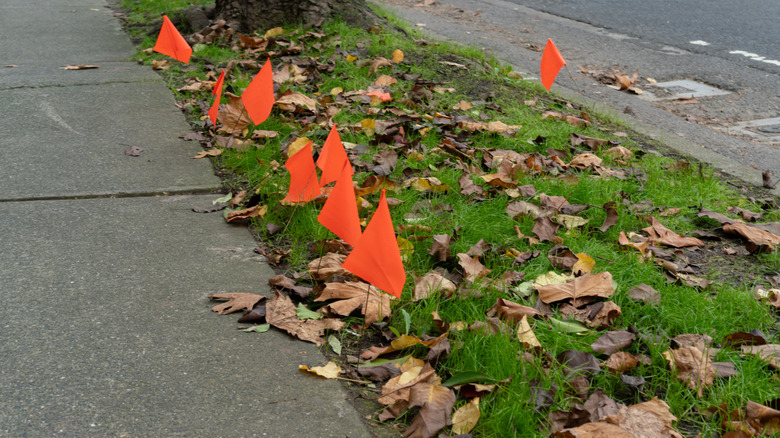
When you're driving down the road, you might see confusing road signs, markings, and flags, each indicating something. Knowing what each represents is important, as it helps you follow the rules, avoid fines, and stay safe. Sometimes, you'll also see orange flags on the side of the road or on someone's property. These may not be as common, but they are equally important.
Generally speaking, an orange flag on a staff is used to mark underground communication or utility lines. These include telephone lines, fiber optic cables, alarm-related lines, and other similar wiring. This is the standard practice based on the Uniform Color Code guidelines published by the American Public Works Association (APWA). These flags serve an important purpose: to warn others against digging in the area, as doing so could damage underground communication lines.
Occasionally, orange flags are also used during surveys to mark important reference points. This usually depends on the company performing the survey, but it's a possibility even when there are no underground communication lines in the area. Another thing worth noting is that you shouldn't move these flags. If needed, contact the utility company or the survey team that placed them.
Orange flags can have other meanings
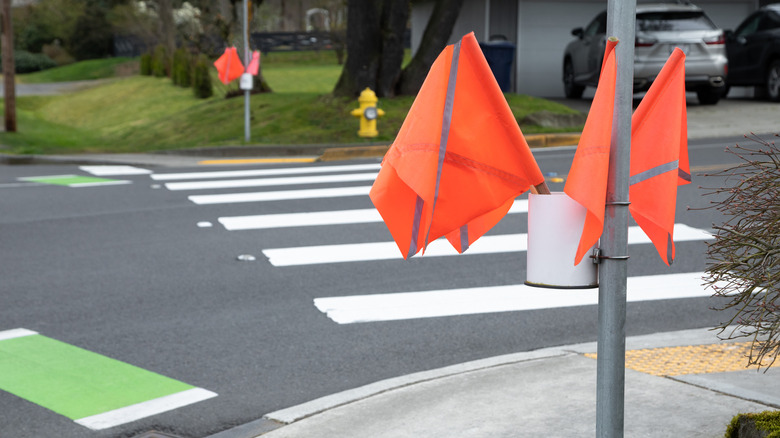
All that said, you must know that not every orange-colored flag or sign signifies the same thing. Where you actually see them is just as important. For instance, while a small orange flag on a staff on the side of a road or a property generally highlights underground communication lines, one on top of a stop sign could be used to draw attention or signal a change in traffic control. Similarly, there are orange poles with reflective stripes, which are primarily meant to help drivers identify road edges and turns. You may also see an orange diamond on top of poles and signs, like one over a speed limit sign, to get the drivers' attention.
Keep in mind that orange isn't the only color used for flags or signs. You have white flags, which indicate proposed excavation, red flags for electric lines and conduits, yellow flags for gas lines, blue flags for potable water lines, and green flags for sewer and drain lines. So, the next time you see a small flag alongside the road, atop a road sign, or on a property, you will know what it means.