

This Liquid Nitrogen-Powered Car Was Built To Kill The EV Boom
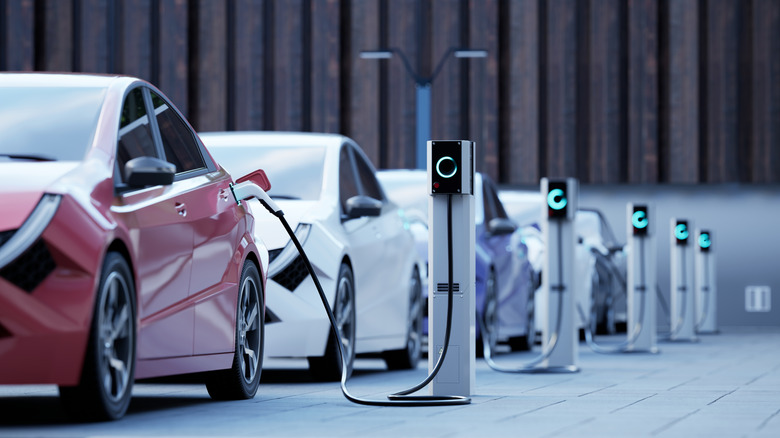
The idea that EVs aren't any greener than conventional, gas-powered vehicles is one of many common, completely false myths about electric cars, but it's not a new idea. In fact, back in the late 90s, it was the impetus for the creation of a new kind of vehicle that researchers at the University of Washington thought would replace standard ICE cars: The liquid-nitrogen powered LN2000.
Retired aeronautics and astronautics professor Abe Hertzberg believed that EVs were burdened with as many, or more, environmental and practical drawbacks as gas-powered vehicles. In response, he and his team built a prototype from a Grumman Kubvan mail truck, in part supported by a $360,000 grant from the U.S. Department of Energy. Underneath the mail truck's bodywork was a 15 horsepower pneumatic motor that was originally designed to operate the winch on a ship's anchor, as well as insulated tanks and plumbing.
The vehicle warmed liquid nitrogen from negative 320 degrees Fahrenheit until it reached temperatures where it transformed into gas. It made use of a heat exchanger that warmed the nitrogen using outside air and engine exhaust. As the nitrogen warmed and expanded, it drove the air motor before being shunted through the exhaust.
The prototype fell short of its ambitions
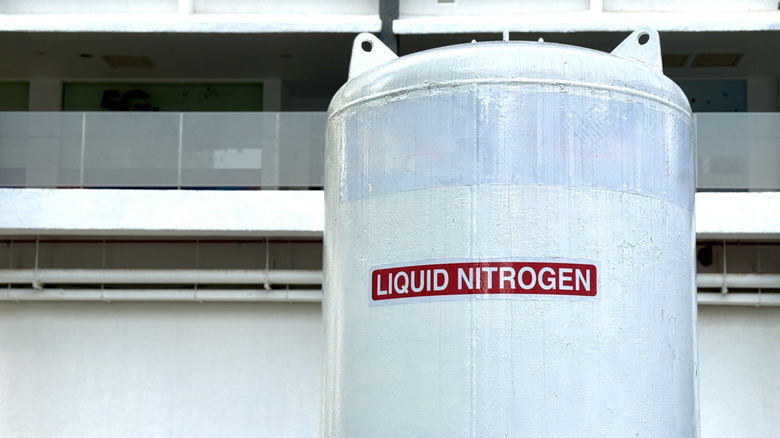
The best EVs are responsive and deliver significant torque, which were the main areas where the LN2000 fell short. Its speed topped out at a disappointing 22 mph despite consuming five gallons of liquid nitrogen every mile. It struggled to make it up steeper hills, as well, with a motor that ended up operating at less than 20% of the efficiency that Hertzberg's team had envisioned.
Hertzberg believed that a more efficient version of the LN2000 could reach 60 mph with a range of around 250 miles on a 100-gallon tank of nitrogen. However, demonstrated capabilities never approached those figures. The savings that the team sold as part of its marketing pitch were also highly conditional. They projected operating costs of $0.04 per mile under the assumption that the industry would reach mass produced nitrogen available for a mere $0.10 cents per gallon — hard to imagine even in a world of broad adoption.
They also used late 90s ideas about how EVs would function as a lynchpin of pitching them as an EV alternative. For instance, they thought EVs would need frequent battery changes, which is unlike most reliable modern EVs that have actually been developed. While market forces and an underperforming prototype meant an early demise for the LN2000, researchers and hobbyists occasionally revisit cryogenic engines for cars, or niche applications like commercial truck refrigeration systems or industrial energy storage.