

The Sprinkler Mistake You Might Be Making With Your Lawn In The Fall
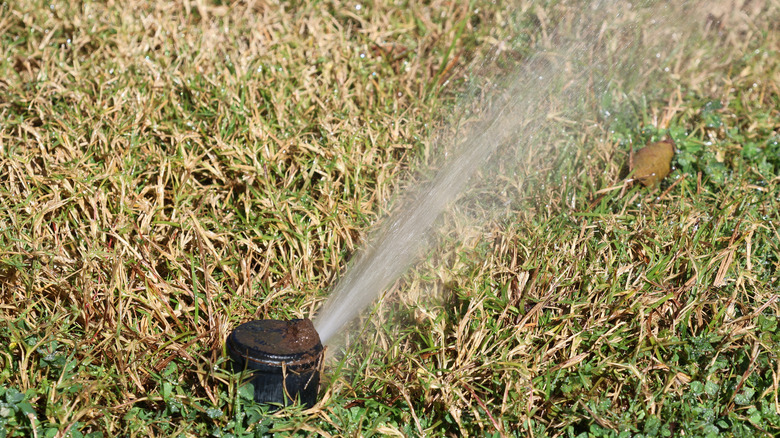
There's no doubt that energy-saving smart sprinklers and high-quality smart sprinkler controllers can do wonders for both your lawn and your utility bills. After all, the tech takes the hassle out of manual irrigation and allows you to establish a precise watering schedule that in most cases, helps your property. However, as seasons change from summer to fall, so should your care protocol. Similar to how it's best to turn on the sprinklers in the spring only after the first 10-day streak of temperatures over 40 degrees Fahrenheit, when the weather gets cool in the fall, you need to cut back on the water.
As a rule of thumb, your lawn may require anywhere from 25 to 50 percent less water in the fall than during the summer. Going overboard can, in the best case scenario, be categorized as wasteful, and in the worst case scenario can destroy your lawn due to overwatering. A 2022 study in the journal "Sustainability" showed that plant health doesn't directly increase with additional moisture past a specific point, meaning that it's possible to maintain aesthetics of your landscaping while also conserving water. At the same time, other researchers writing in 2023 in "Scientia Horticulturae" demonstrated that overwatered plants (specifically kale in this clase) showed similar morphology as underwatered specimens, exhibiting a massive reduction in mass.
Of course, switching up irrigation practices isn't exactly intuitive. It's common for the grass blades to appear dry in the fall despite the roots having enough moisture. In these circumstances, extra water could result in root rot or soil compaction, as well as a variety of fungal diseases.
What's the proper way to take care of a lawn in the fall?
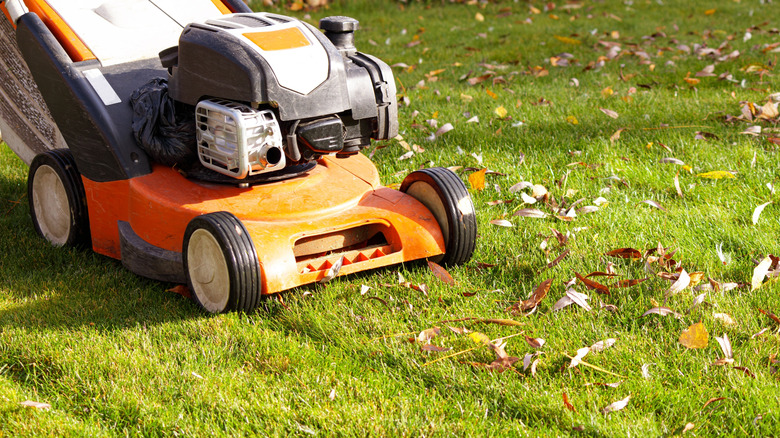
While cutting back on your lawn sprinkler schedule is a good start, irrigation is not the be all and end all of plant health. During the fall season, grass growth slows down proportionately to the drop in temperature, meaning you should adjust the mowing routine accordingly. Mowing too frequently could actually damage the grass by exposing plant crowns to cold temperatures in the winter, so reducing your trim schedule to between once every 10 days or two weeks until winter sets in is ideal.
At the same time, the fall season provides an opportunity to heal any damage that the lawn suffered during the blistering summer. For instance, dethatching the lawn with a power aerator (punching in, say, 1/4-inch holes into the ground) and applying healthy soil and new grass seed to the area can drastically improve air circulation. In turn, doing so helps the plants recover and improves the lushness of the lawn come spring. Combine mulching to protect the grass in the winter and adding extra fertilizer (which will now have extra room to work, courtesy of aerating), and in a few months time, you're likely to see positive results. Other than that, rake any dead leaves to allow the grass to receive better airflow and make the best of limited fall sunshine. That, and with your reduced watering schedule, you and your lawn will be well positioned for winter.