

Why Do So Many Modern Cars Have Plastic Engine Covers?
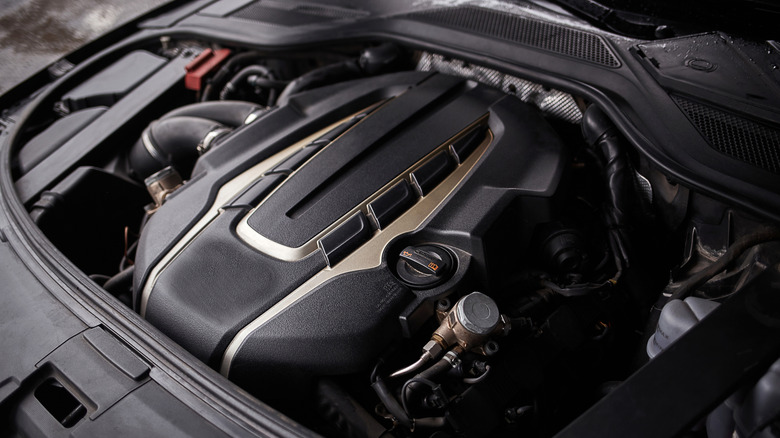
For decades, popping the hood gave you a clear view of everything that made a car run. The engine, the hoses, the wiring, and the intake were all right there, with nothing in the way.
Starting around the 1990s, that view began to disappear behind a piece of plastic bolted on top of the engine. Over time, cars have added more insulation, more plastic, and more fasteners, to the point where the covers on some modern vehicles now stretch across much of the engine bay. So why did the engine cover become standard issue, and does your car really need an engine cover at all?
Two reasons carry most of the weight. The first is sound. Modern cars engines are surprisingly noisy and the plastic cover helps absorb and redirect that noise outside of the cabin. This is backed by the industry's own vocabulary, since some manufacturers call these parts acoustic covers. Modern engines make plenty of mechanical noise from things like high-pressure fuel pumps, turbochargers and valvetrains. An engine cover, especially one lined with foam, helps keep more of that noise out of the cabin.
The second reason is appearance. An engine bay packed with wiring and hoses doesn't look great, especially on modern vehicles with so much crammed under the hood. A cover hides the clutter and can also help shield components from dirt and organize wiring. That's the short answer, but it isn't the complete one. Different covers are often designed with different goals in mind, and some of those jobs have nothing to do with noise or looks.
Are plastic engine covers necessary and what's the point?
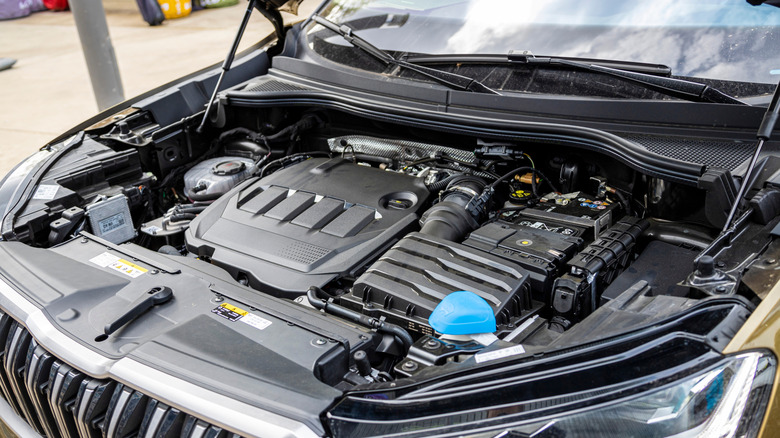
As we noted in the intro, sound is likely the strongest technical reason for plastic engine covers. There are companies dedicated to supplying foam and other specialized materials that absorb engine noise and reduce vibrations. A plastic shell on its own offers some insulation, but paired with sound-deadening material underneath, it can make a real difference.
Interestingly, French automotive plastics supplier Novares France filed a U.S. patent application for an engine cover in 2020, which was granted in 2024 as US 12,109,952 B2. In it, the company notes that the "first function is their aesthetic function," ahead of sound and protection. Even so, the patent does also specify an absorbing layer built into the cover to reduce engine noise. The protection it mentions isn't just about the engine, either. The patent describes a cover designed to help cushion a pedestrian's head if it strikes the hood above the engine in a collision.
Heat management can play a role too. Modern engines run hot, and some covers include insulation or integrated heat shields that help control where heat travels in the engine bay, while hot components like turbochargers often get shielding of their own. Engine temperature matters in other ways too, which is the reason why short trips are so hard on turbocharged engines.
Wiring can benefit as well, since some covers include dedicated guides for harnesses and ducts for air, which also help keep lines from rattling around the engine. A plastic cover can help keep water off some electrical components, and on some engines, it also helps keep fingers, hair, and sleeves away from moving parts. All in all, plastic engine covers serve several purposes, and while not every car needs one to run, carmakers clearly see enough value in them to keep putting them on most new vehicles.
Can I drive my car without the plastic engine cover?
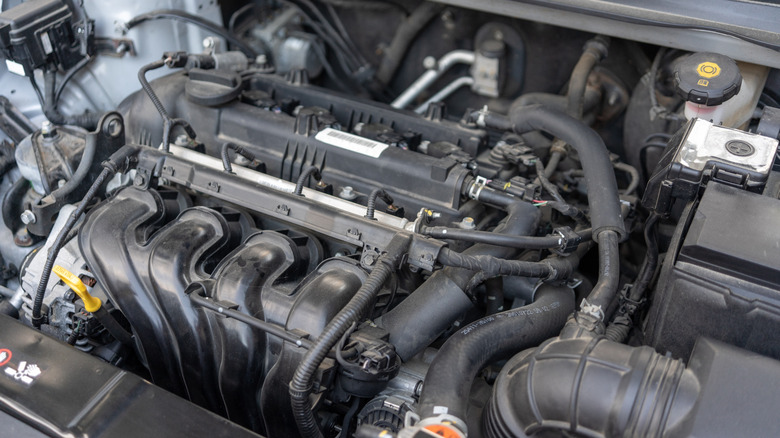
Most cars run normally without their engine cover, though Motor1 warns that removal is not "a free modification". In reality, few people would even notice their engine cover is even gone since they rarely ever open the hood. Volkswagen accidentally proved the point in 2022, when it recalled 4,269 eighth-generation Golf GTI and Golf R models in the U.S. because the cover could come loose under hard acceleration, touch hot components like the turbocharger, melt, and potentially start a fire.
The fix was simple: Dealers pulled the covers off affected cars, and Volkswagen built new ones without covers until a redesigned part was ready. Strangely enough, it doesn't even rank among the most absurd car recalls in automotive history.
There are even more reasons to remove the cover. A cover hides potential problems like corrosion, leaks and wear, which are best detected early. On the other hand, downsides of removing the plastic cover also exist. From dust and water onto critical electrical components, to rattling lines, a louder cabin and heat damage to the bonnet, there are good reason for the plastic cover to exist.
On balance, there's little reason to take it off. The cover adds hardly any weight, and it serves a purpose. If you simply don't like how it looks when you open the hood, you can swap it for an aftermarket option, such as one made from carbon fiber.