

Why Did F1 Cars Stop Using Turbocharged Engines For Over 20 Years?
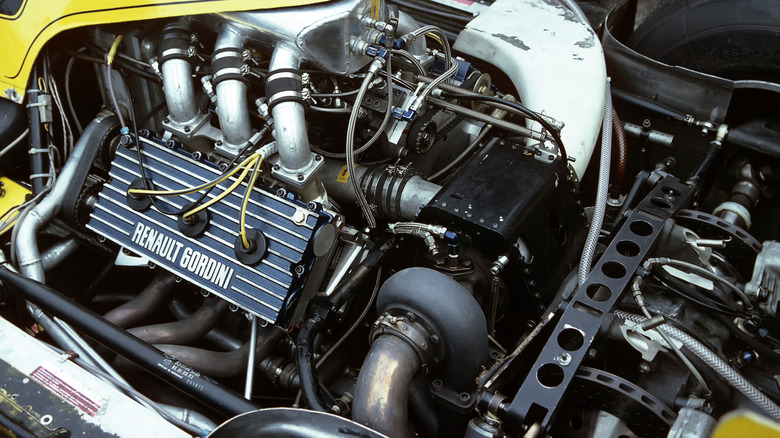
The evolution of Formula 1 racing from the sport's beginnings to today is undeniably fascinating. Part of it is the sport's massive global growth, but the race cars themselves have also changed significantly over the decades. The history of the Formula 1 race car is divided into distinct eras, defined by their own car designs and technologies.
One of Formula 1's most memorable periods was the so-called Turbo Era, which spanned from the late 1970s through the late 1980s. As the name suggests, this era was defined by high-horsepower turbocharged engines, which at the time represented the peak of motorsport technology and mirrored the rise of turbocharged engines in road-going performance cars. Eventually, safety concerns, rising costs, and poor reliability brought the original Formula 1 Turbo Era to an end in the late '80s. But that wasn't the last time that F1 used turbochargers.
Turbocharging returned to F1 in 2014 after a 20-plus-year hiatus, and turbos remain an important part of Formula 1 engine regulations today. As with production cars, though, these modern turbo engines are vastly different from their older counterparts, with the technology aimed at improving fuel efficiency and reducing emissions. Let's take a deeper look at why the original F1 Turbo Era ended and how those cars' engines differed from today's.
The rise and fall of the Turbo Era
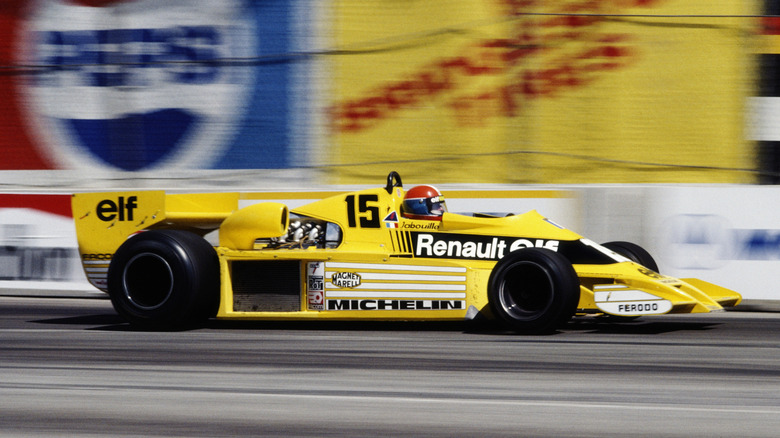
Sure, Formula 1 race cars don't appear to share much with their road-going, production-car counterparts, but many F1 tech innovations have made their way to production cars over the years. Formula 1's first turbocharged car arrived in 1977 in the form of the Renault RS01, and it would kickstart a wave of change across the F1 world. Turbos had already featured in some road cars like 1974's groundbreaking Porsche 911 Turbo 3.0, but they were still cutting-edge technology, limited to high-performance cars.
As the 1970s turned into the 1980s, turbochargers became more prevalent in road-going cars and Formula 1 alike. That said, while they made big power, F1's early turbo cars had significant reliability issues. It wasn't until engineers dialed the technology in that more teams started using turbos to keep up, even if the increased stress and heat still caused engines to fail.
Power output for these early '80s F1 turbo engines was astronomical, with some cars making as much as 1,400 horsepower in qualifying trim. Though they were awesome to see and hear, these high-powered, turbocharged F1 cars were not easy to drive, and their immense turbo lag could make power delivery unpredictable. As the 1980s progressed, it became clear that the cars were getting too powerful and too dangerous.
A new kind of boost
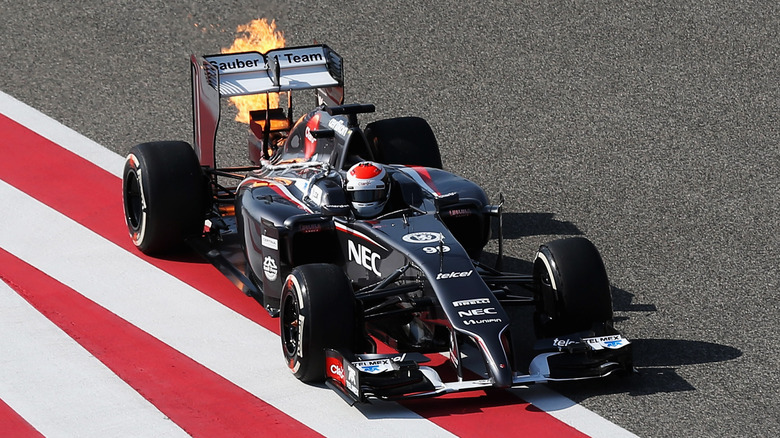
The FIA began implementing rule changes in the mid-'80s, slowing cars by dropping boost limits and reducing fuel tank sizes. The body would eventually ban turbo engines completely in 1989, ushering in new eras of iconic, screaming, naturally aspirated Formula 1 engines. Fast forward to 2014, though, and turbos were back in F1 — this time as a requirement, attached to smaller-displacement V6 engines and paired with hybrid electrification.
F1's return to turbos mirrored the growth of turbocharging and engine downsizing in production cars, many of which now have smaller-displacement engines and turbos, whether it's a fuel-sipping commuter car or a large pickup truck. As in F1, these modern turbos aren't always there to increase horsepower, but to balance power delivery and improve fuel efficiency.
Formula 1 has confirmed plans to move to V8 engines in 2030 and, while the specifics of the new powertrain package are still being worked out, it appears that turbocharging will still be part of it. The rationale is that turbo V8s will bring back a more traditional engine sound — one of the decision's stated goals — without being as loud as naturally aspirated V8s, which may run afoul of noise restrictions at some modern F1 circuits.