

Cat 6 Vs. Cat 6a: What's The Difference Between These Ethernet Cables?

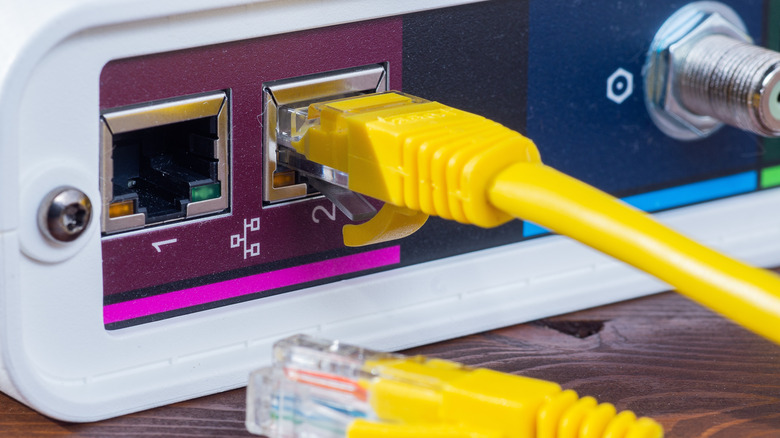
When it comes to Ethernet cables, there are several types of them, or more precisely, categories, each supporting different network speeds and bandwidth. Of these, two of the most popular options today, including for home users, are Cat 6 and Cat 6a. Visually, the two look similar, with the same RJ45 connectors at both ends. But when we consider the important aspects of the two, the differences become noticeable.
The biggest differences between Cat 6 and Cat 6a come down to their supported speeds and bandwidth. Though Cat 6 handles 10 Gbps Ethernet speeds, it only does so up to a distance of 165 feet. Beyond that distance, speeds may drop to 5 Gbps or lower. Cat 6a, on the other hand, can deliver 10 Gbps speeds up to 328 feet (100 meters). On the bandwidth front, the operating frequency of Cat 6 cables is 250 MHz, while that of Cat 6a stands at 500 MHz. This is the reason the latter is capable of supporting higher speeds at longer distances. If you haven't guessed already, the "a" in Cat 6a stands for "Augmented," reflecting its improved capabilities.
Beyond the technical specifications, the two categories, Cat 6 and Cat 6a, also differ structurally. Cat 6a cables are more robust, featuring thicker conductors and jackets than Cat 6 cables. This gives Cat 6a a distinct advantage when it comes to Power over Ethernet (PoE) as it can handle higher electrical loads and dissipate heat more effectively. At the same time, the thicker wires also have a downside: Cat 6a cables are harder to bend, which makes cable runs slightly more challenging, especially in cramped spaces.
Cat 6 Vs. Cat 6a: Which is right for you?
Now that you understand the differences between Cat 6 and Cat 6a, it's important to identify which Ethernet cable category is right for you. With the wrong one, you don't just end up spending more, but also risk wasted efforts and an underperforming network. Ultimately, the choice between the two comes down to internet speed and how much bandwidth you need, the existing setup, and plans for future upgrades. For home networks, where cable runs are typically shorter, Cat 6 cable can be the better choice for most users because you will still be getting 10 Gbps speeds, and won't be spending as much, since Cat 6a cables are more expensive. Besides, given their construction, it's easier to run and terminate Cat 6 cables.
However, there are cases where you should prioritize Cat 6a cables over Cat 6. For instance, if there are devices on your network, like PTZ (pan-tilt-zoom) security cameras, that that draw high power PoE, you should go with Cat 6a cables. It's not just about the current setup. Even if you plan to add such devices down the line, going with Cat 6a cables is the better call, since you are essentially future-proofing your network. Lastly, if there are many cables running adjacent to one another, Cat 6a can help deliver better performance. It's designed to minimize alien crosstalk, a type of interference that's a common problem when several Ethernet cables are bundled together.
Generally speaking, Cat 6 cables should do just fine for the average home user, but for advanced applications, such as critical networking devices that support higher speeds over Ethernet, Cat 6a makes more sense.