

Do You Need To Use Special Tires On A Hybrid?
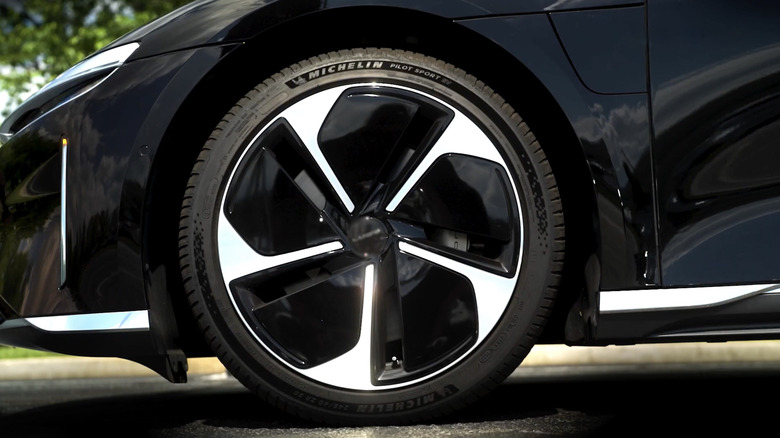
One of the first decisions you'll need to make when car shopping is whether you want to purchase a gas or hybrid vehicle, or a reliable electric model. Budget restrictions may play a role in that decision, as hybrids and EVs tend to cost a few more up front than a comparable combustion car. Apart from that, there are other factors to consider, one of which is what sort of tires they might need to maximize their efficiency on the road.
You will eventually have to replace those tires, after all, and when the time comes, you'll need to decide if you want to invest in a standard set of tires, or those that are specifically designed for vehicles with electrified powertrains — hybrids, in this case. To be clear, most vehicles with hybrid powertrains are fully capable of riding with a standard set of tires installed, so long as they fit the specs set out by the vehicle's manufacturer. Tires designed specifically for hybrids provide a few notable advantages, however, particularly with recommended load capacity, as they can benefit from tires with higher load ratings .
That's because hybrid battery battery packs can weigh in anywhere between 100 and 300 pounds, meaning that hybrids are heavier than combustion cars by default. Many of the other components utilized in a hybrid powertrain also add to the overall weight of the vehicle itself. Thus, the high load ratings of hybrid or EV-specific tires can be helpful in maintaining safety and performance standards while driving.
Load capacity isn't the only reason to choose hybrid-specific tires
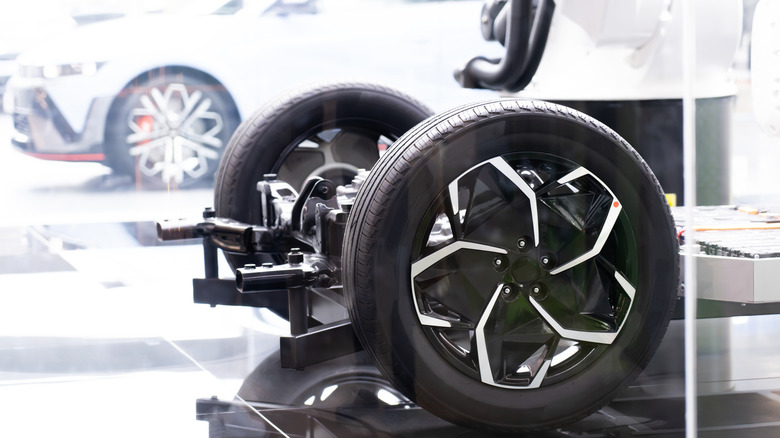
Many of the major tire manufacturers offer models for hybrids and EVs these days, of course, so you shouldn't have much trouble finding a set with high load rating numbers when the time comes. If you are still on the fence about whether you really need to pay a few extra bucks to outfit your hybrid with those tires, there are other reasons to consider them.
It may seem counterintuitive, but hybrids tend to provide an upgrade in on-demand torque over their combustion counterparts. The additional road friction puts added stress on the vehicle's tire treads during acceleration, which can affect the tire's lifespan. Specialty tires made specifically for hybrids and EVs are designed with that in mind, optimizing on-road grip and overall durability. The tires are also designed to effect factors like rolling resistance and ride range, which should help with efficiency and energy consumption.
Going back to some of the electric components used in hybrids, it's also worth noting that most hybrid models utilize regenerative braking systems. Those systems slow a vehicle differently than combustion cars, which can contribute to extra tread wear in the tire. Specialty tires are designed to account for those concerns too. On top of that, they are typically engineered to reduce the level of on-the-road noise you might hear inside the cabin. While hybrids aren't as consistently quiet-running as EVs, when running in electric mode, the reduction in noise can actually make a ride considerably louder, particularly when you're cruising down the freeway.